
So far, around the world, discussions surrounding AI have focused on the theft of knowledge, art, and creativity. In India, however, generative AI has acquired a more insidious political use: the Bharatiya Janata Party (BJP), the right-wing party that has governed India for much of the past decade, is using generative AI tools to spread anti-Muslim propaganda, especially in poll-bound states. These tools can produce convincing audiovisual content that viewers may struggle to identify as fake.
In the recent state assembly elections in Assam and West Bengal, both states with significant Muslim populations, the BJP employed generative AI to churn out images and videos targeting Muslims. Playing on existing stereotypes of Muslims as violent invaders seeking to eliminate Hindus, these campaigns framed the assembly elections as a manufactured existential crisis, shifting attention away from local governance and policy and toward communal fear.
Manufacturing a Muslim threat in West Bengal
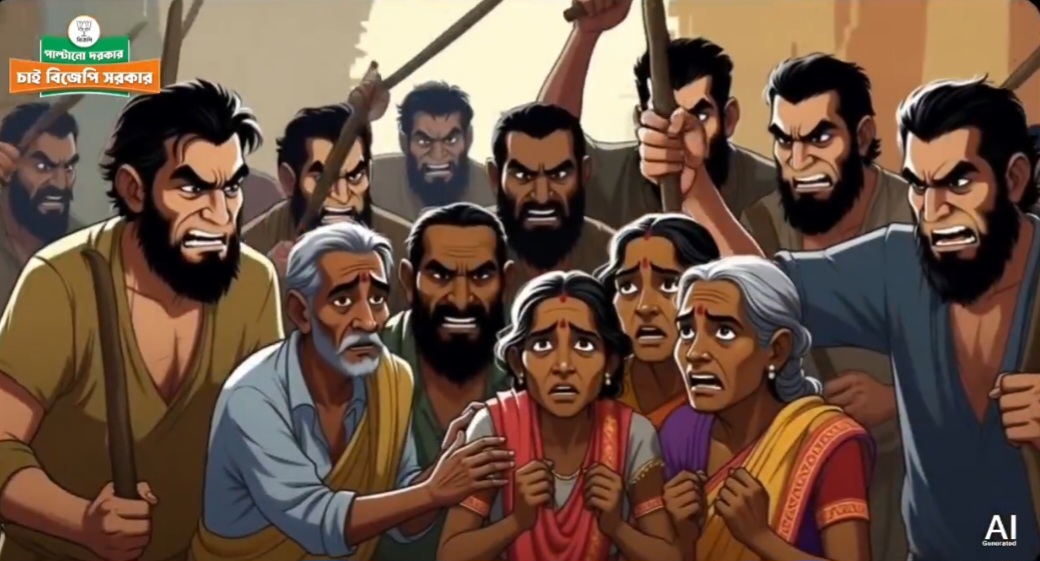
Still from an AI-generated video showing Muslims attacking Hindus.
Two weeks before polling began in West Bengal, the BJP’s state unit uploaded an AI-generated video to X, juxtaposing scenes of Hindu domestic and religious life with images of visibly Muslim men in caps and lungis attacking a neighbourhood.
A Hindu family performing pujo at home; a man worshipping at his shop; a bhajan gathering; and people sharing prasad. These scenes are followed by depictions of Muslim men rampaging through the streets. The video portrays Muslims as an inherent threat to Hindu safety, using fabricated imagery to give an established communal narrative a visual form.
Posted with the caption “All they wanted was peace and prosperity, safety and security,” the video implied that Bengali Hindus were being denied security under the incumbent Trinamool Congress (TMC) government, which the BJP repeatedly accused of appeasing Muslims.
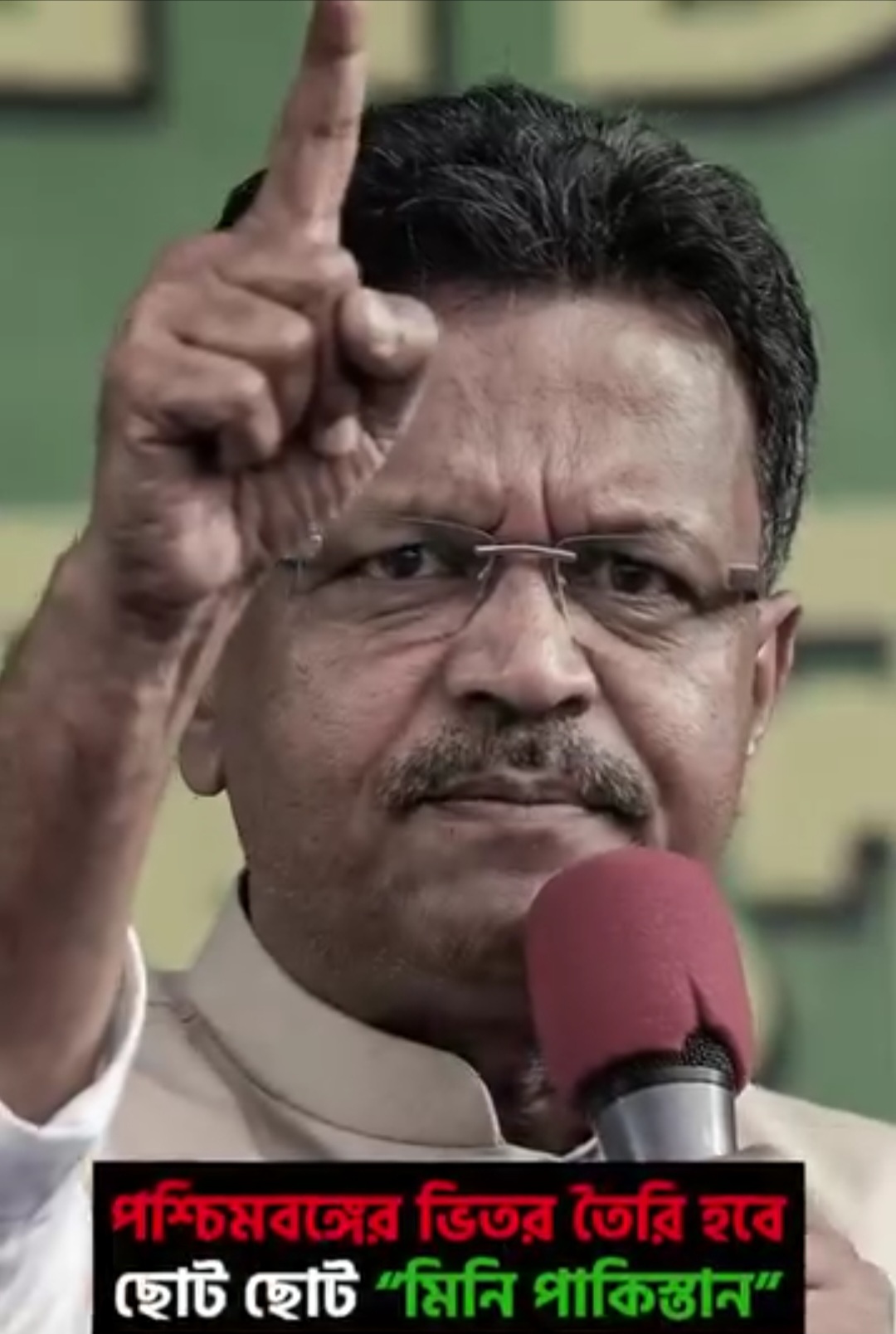
A still from an AI-generated video depicting West Bengal minister Firhad Hakim saying that there will be “mini Pakistans” in West Bengal.
Another video, posted on Instagram, used an AI-generated version of former Kolkata mayor Firhad Hakim triumphantly declaring his intention to create a “mini Pakistan” across the state. It depicted Muslims entering Bengal across the border following a TMC victory, followed by large-scale violence against Hindus. The imagery connected Muslim political representation with territorial takeover, illegal immigration, and the supposed destruction of Hindu life.
The BJP has repeatedly used cultural nostalgia to construct and reinforce communal divisions.
In a video posted by its youth wing on X, the BJP recreated the world of Thakumar Jhuli, the celebrated collection of Bengali folktales by Dakshinaranjan Mitra Majumder, to suggest that electing Mamata Banerjee as chief minister had resulted in the loss of Bengali identity, language, and culture.
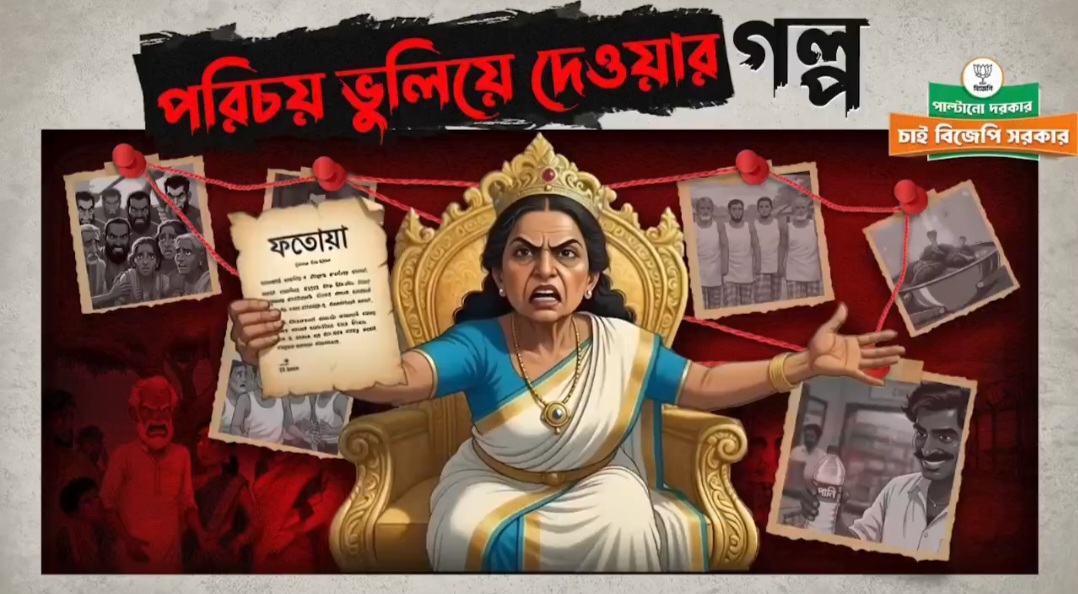
A still from an AI-generated video drawing on the imagery of Thakurmar Jhuli, depicting West Bengal Chief Minister Mamata Banerjee as an evil queen.
The video showed a saree-clad woman transforming into a burqa-wearing one as she pressed the TMC symbol on an electronic voting machine (EVM). Kheer becomes sewai, while jol is replaced by pani. Banerjee was cast as an evil queen, eventually dethroned and forced to flee to Bangladesh with her Muslim supporters.
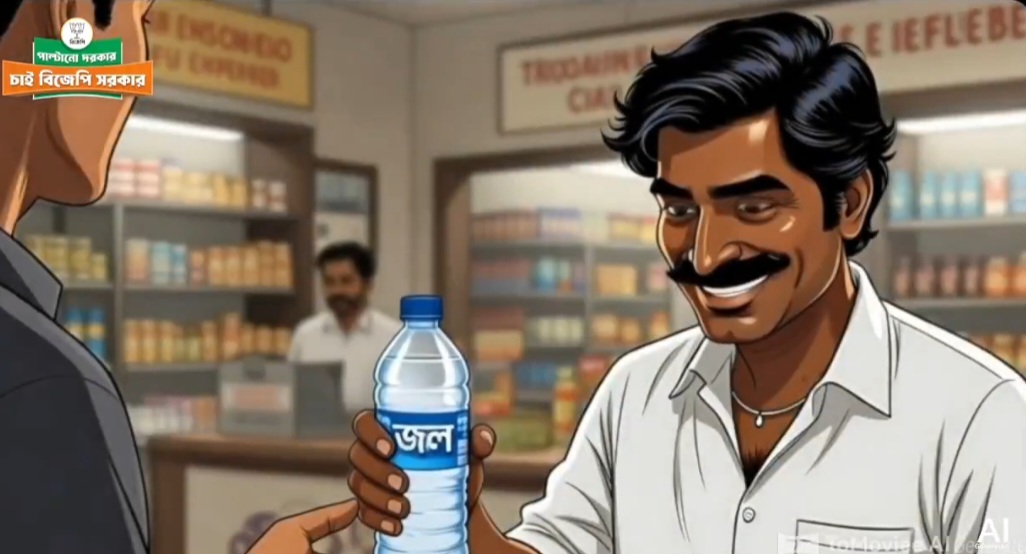

Top: “Jol”; Bottom: “Pani”, two stills from an AI- generated video that use visual storytelling to communicate communal and political messaging in West Bengal.
The symbolism was unmistakable: Muslim cultural practices were presented as alien to Bengal, while Bengali identity was implicitly equated with Hindu identity. The linguistic contrast was also misleading, relying on familiar linguistic and culinary differences to suggest an existential divide. The use of pani as the opposite of jol is ironic, even amusing, because pani derives from the Sanskrit word paniya—a language the BJP is trying to enforce as the sole carrier of India’s cultural history.
“A very tough time for Muslims”
“These videos have a singular purpose: dehumanization of Muslims, and once these stereotypes find a place in the psyche of ordinary people, it becomes easy to humiliate Muslims further,” said public policy researcher Sabir Ahmed of The Sabar Institute.
Ahmed, whose recent work focused on the Special Intensive Revision (SIR) rolled out by the Election Commission of India to “purify” voter lists, added, “The propaganda around Bangladeshi Muslims infiltrating Bengal and Assam is an exercise in manufacturing hatred against Indian Muslims, especially Bengali-speaking ones. It puts the question of equal citizenship under the scanner.”
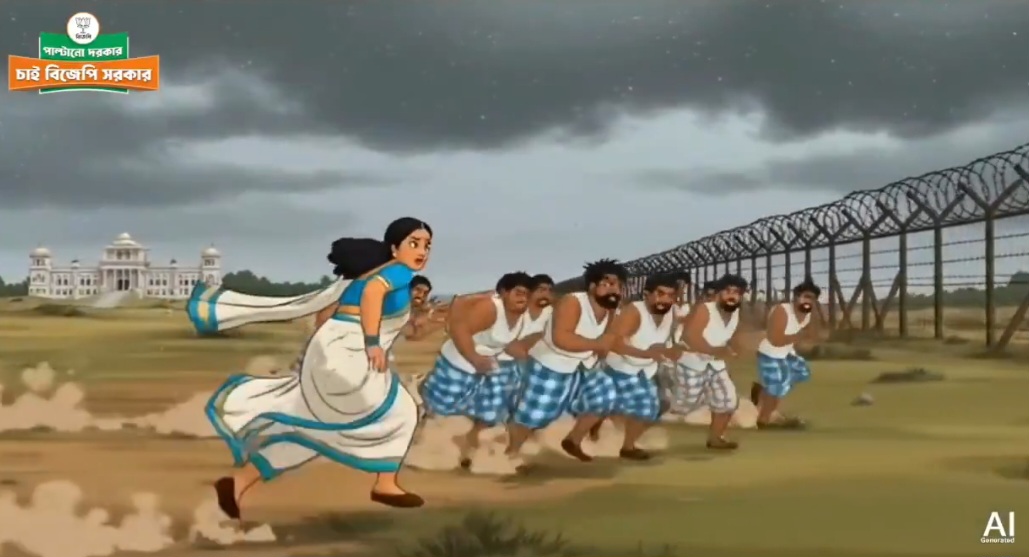
A still from an AI-generated video showing Mamata Banerjee feeling the state with her Muslim followers.
The SIR involved extensive verification of voter records. In West Bengal, officials initially excluded more than 12 million entries from the draft electoral roll or subjected them to verification. By polling day, around 2.7 million voters had been found ineligible and removed from the rolls, though they retained the right to appeal. An analysis by The Sabar Institute found that roughly 70% of those removed were Muslims.
The figures intensified concerns about the intersection of citizenship anxieties, religious identity, and electoral participation. The BJP subsequently won 207 of the 294 Assembly seats, forming the government in the state for the first time since Independence.
“The election has changed many things as expected. Many people have started to self-censor. It is really a very dark time for our democracy,” said Ahmed.
Assam BJP’s social media campaign of hate
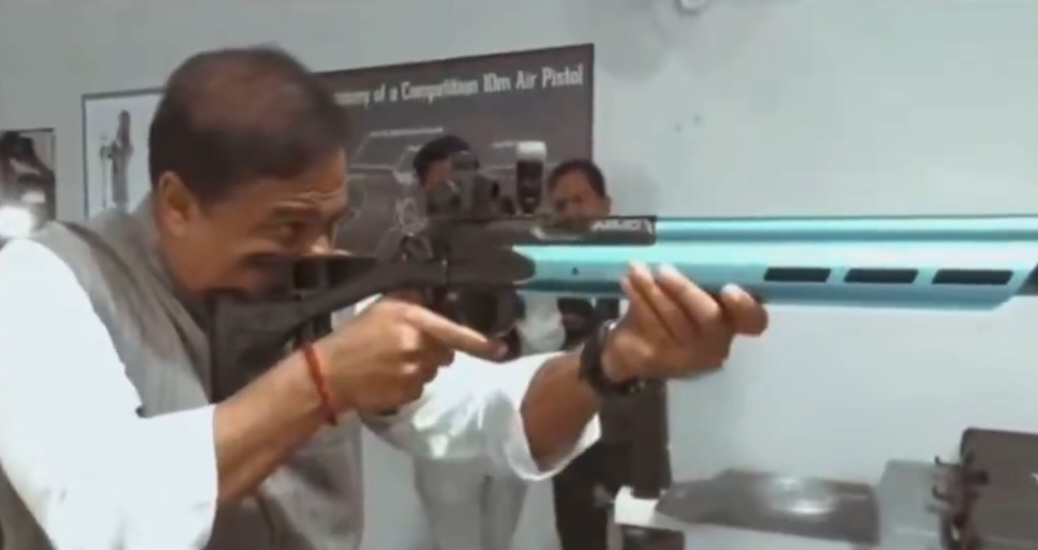
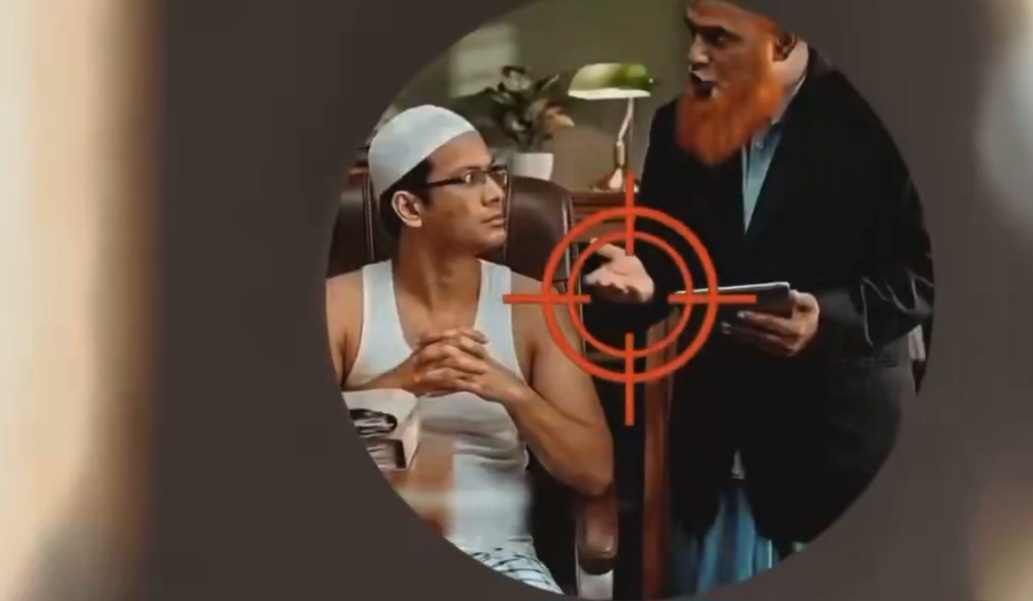
Top and bottom: Stills from a now-deleted AI-generated video showing Assam Chief Minister Himanta Biswa Sarma aiming an air rifle at a Muslim man, depicting the latter as a target.
On February 7, just months before the polls, Assam BJP posted an AI-generated video on X in which Himanta Biswa Sarma, the chief minister of Assam, can be seen wielding an air rifle. Titled “Point blank shot,” the 18-second video cuts to an image of two Muslim men, identifiable by their skullcaps and beards, at whom Sarma appears to be aiming. The video amassed around one million views before being deleted.
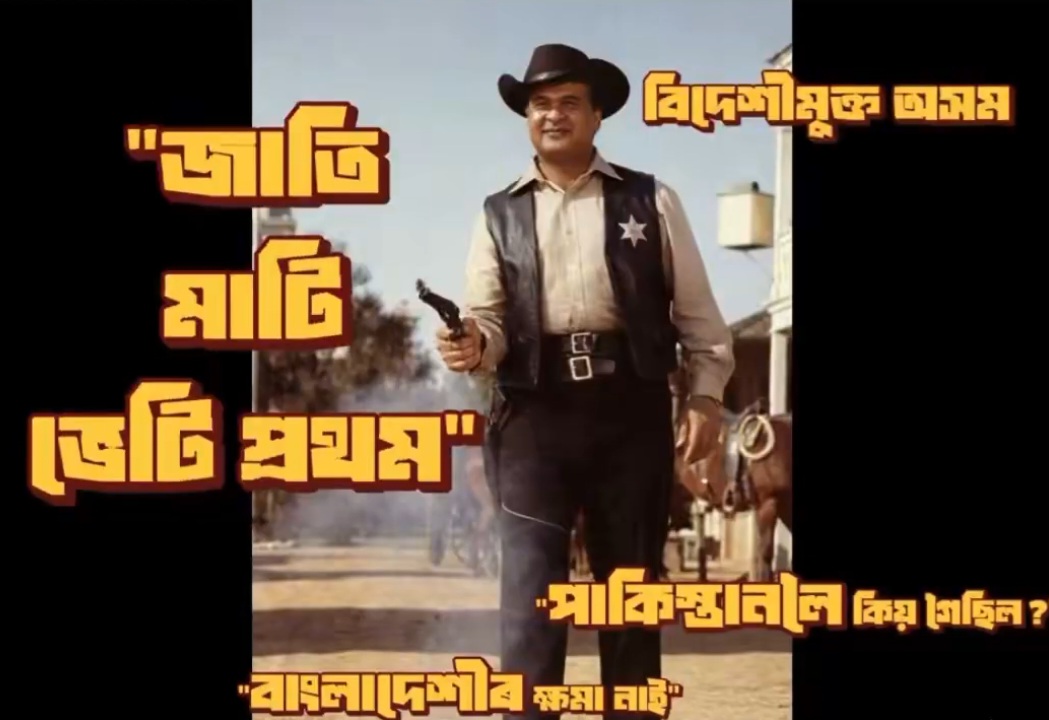
A still from the same AI-generated video depicting Assam Chief Minister Himanta Biswa Sarma aiming a revolver, accompanied by the slogans “No mercy for Bangladeshis” and “Infiltration-free Assam”.
It also featured an AI-generated image of Sarma aiming a revolver, accompanied by messages including “No mercy for Bangladeshis” and “Infiltration-free Assam.” Sarma later defended the video, saying it would be reuploaded with a correction specifying that the individuals were “Bangladeshis,” and adding, “Everything else was fine.”
The BJP has used the spectre of Bangladeshi infiltration to stoke fear for years. Political campaigns around protecting the indigenous Assamese population from alleged illegal immigration have frequently focused on Miya Muslims, referring to the descendants of migrants from Bangladesh. The rhetoric has material consequences. Assam’s D-voter category, introduced in 1997, subjected people whose citizenship was considered doubtful to scrutiny under the Foreigners Act, 1946. The National Register of Citizens (NRC) later excluded 1.9 million people, leaving their citizenship status unresolved.
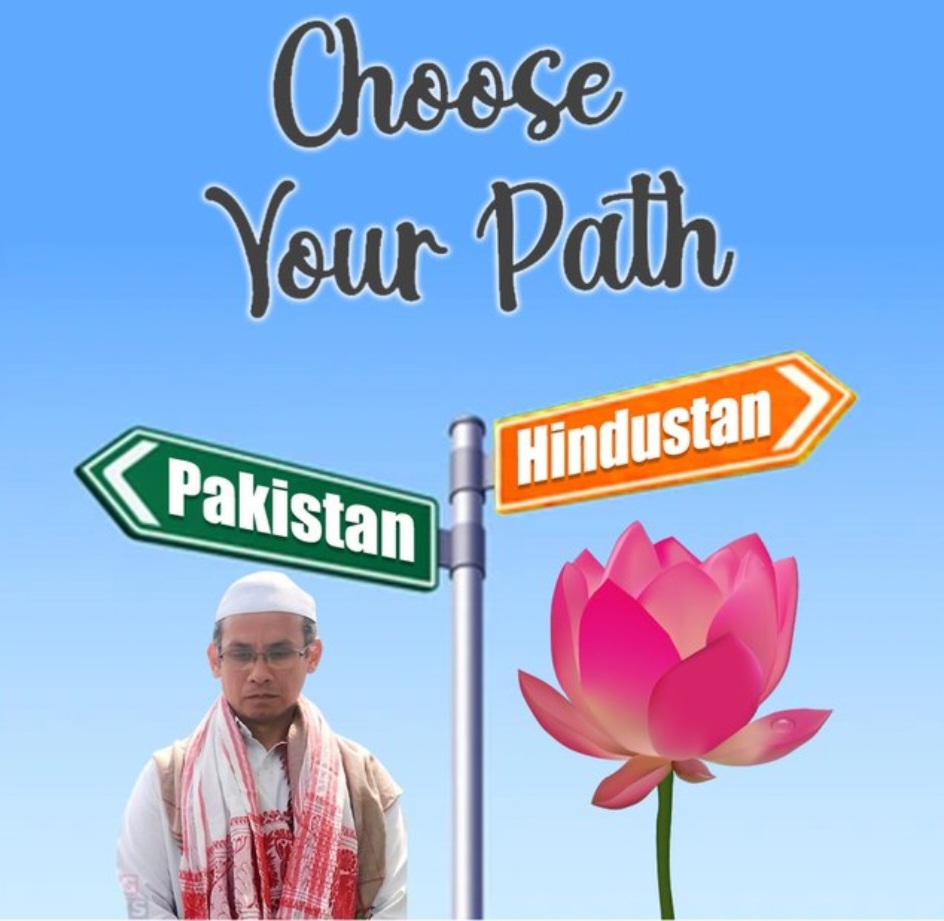
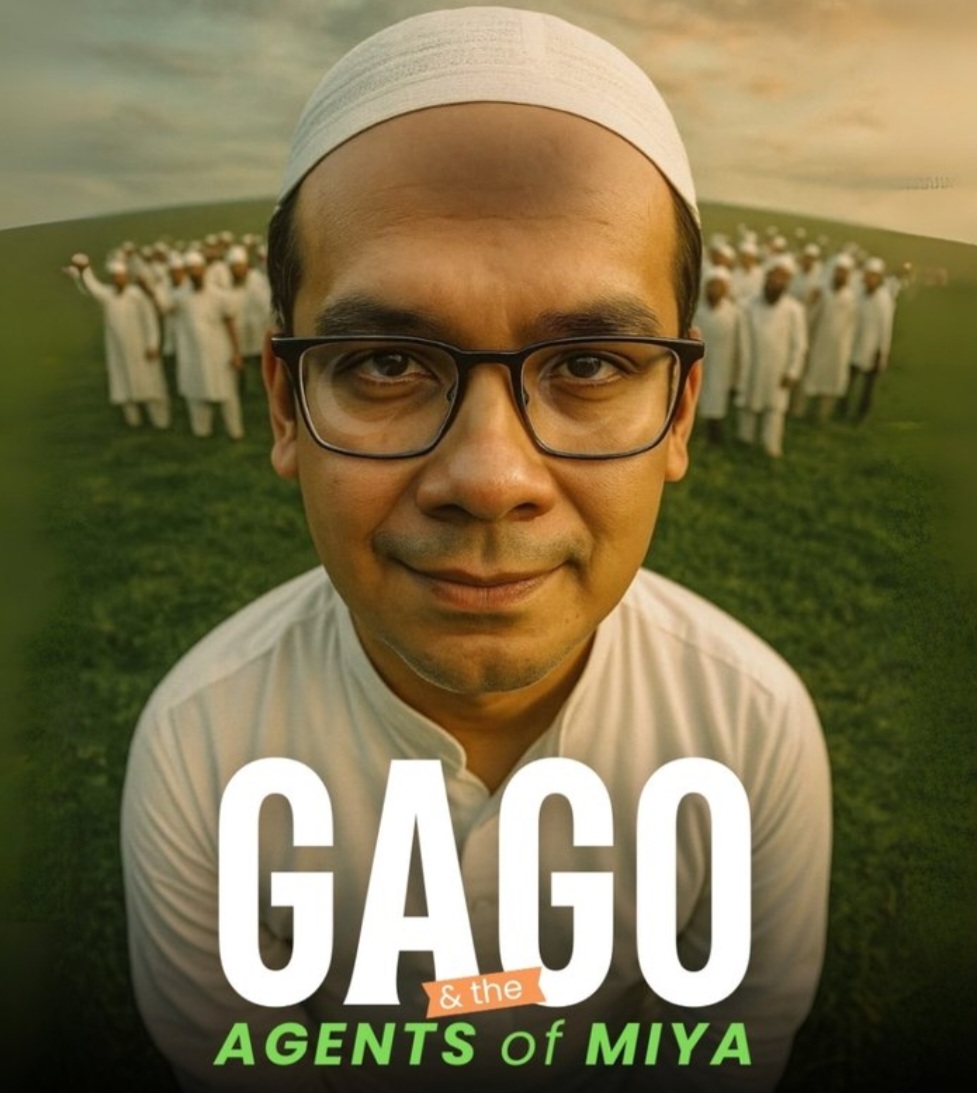
Two AI-generated images of Assam’s Congress leader Gaurav Gogoi wearing a skullcap, accompanied by messages portraying him as a “Miya agent” and questioning his allegiance by asking him to choose between Pakistan and Hindustan.
A second AI video circulated by Assam BJP imagined “Assam without BJP,” portraying Muslims as infiltrators occupying public spaces with opposition support and claiming their population would rise by 90%. It reinforced the same message: only the BJP could protect Assamese Hindus.
“It’s basically an exercise targeted to alter the principle of Universal Adult Franchise”
Lawyer and The Wire columnist Sarayu Pani sees these videos as part of a longer campaign to make Muslim exclusion politically acceptable.
“We are seeing the culmination of a long consent manufacturing process, and that consent manufacturing has been for a sort of bloodless genocide,” she said, describing a sustained effort to dehumanise Muslims, especially Bangla speakers.
Pani argued that anti-Bangladesh sentiment amplified by the propaganda has helped obscure problems with the SIR. By making alleged infiltration the focus of public debate, the campaign diverts attention from who is being excluded from the electoral process and why.
“The frenzied reaction that these videos have been able to provoke acts as a cover-up.”
Social media giants are complicit
Across the BJP’s AI-generated content, the recurring message is that Muslims are a threat to India, while opposition parties are complicit in enabling them through appeasement. Assam BJP’s videos use terms including “Kanglus,” “Miyas,” “Pakistanis,” “Momins,” and “Infiltrators” to cast Muslims as enemies of the nation.
The platforms hosting this content have policies prohibiting such material. X’s hateful conduct policy prohibits attacks against people based on characteristics including race, ethnicity, national origin, and religion, while Meta’s community standards restrict dehumanising speech that may contribute to offline violence. Yet BJP’s official accounts remain unsuspended, and the videos circulated widely. A 2024 investigation found that Meta approved 14 of 22 test political advertisements despite their containing hate speech, misinformation, and incitement targeting Muslims.
The consequences extend beyond online abuse. As Pani argued, sustained anti-Muslim propaganda combined with voter-roll exclusions risks creating a category of people who can be treated as non-citizens. “Once this group is created, the next step is to push a percentage of those people out. That is the two-step process that appears to be unfolding in India.”
Generative AI does not invent these prejudices; it gives them a new and more convincing form. Through fabricated political statements, imagined scenes of violence, and distorted cultural stories, these videos and images make the idea of a Muslim threat feel immediate and real. The danger lies in how these narratives reinforce exclusionary politics while diverting attention from governance, citizenship, and democratic rights.