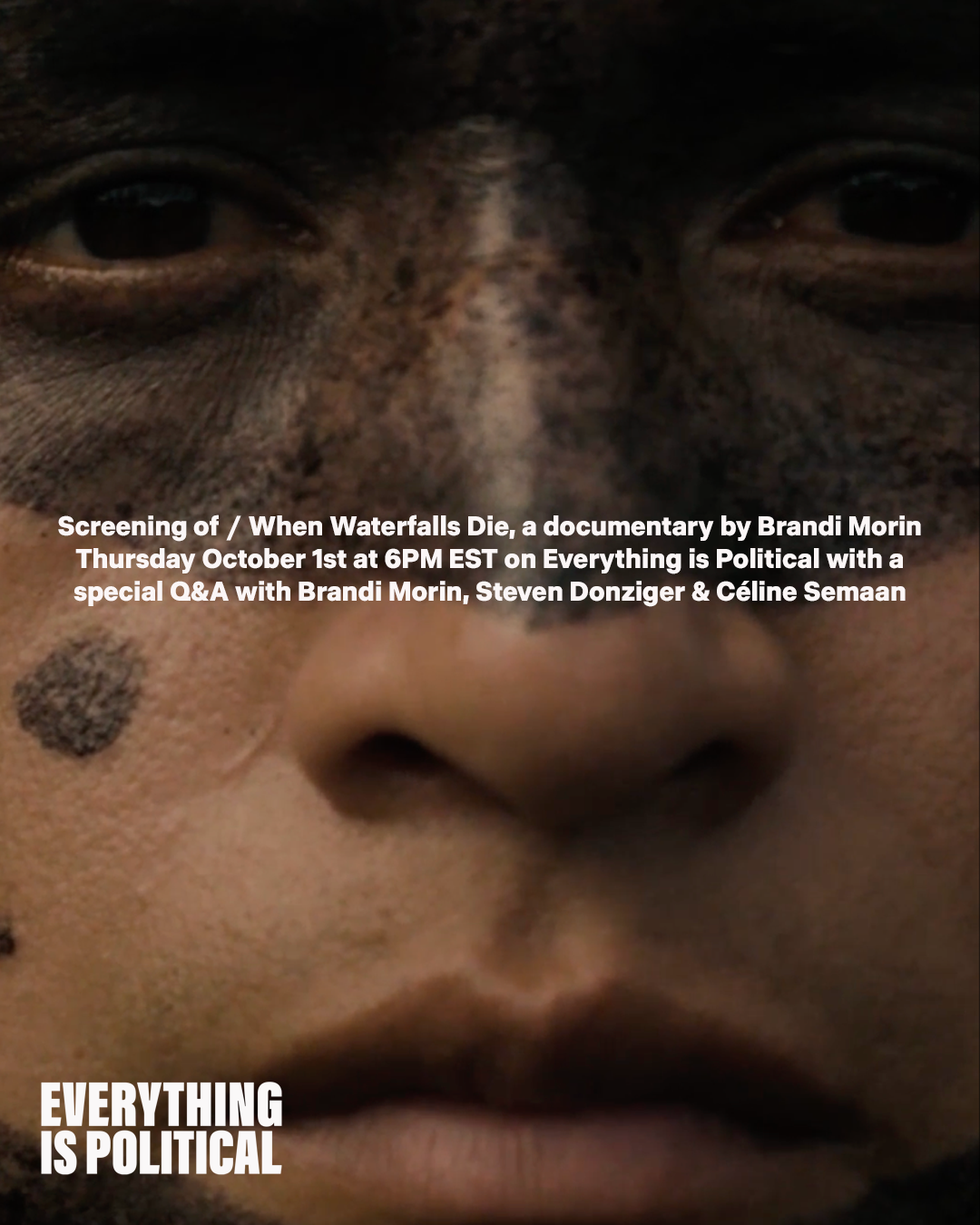

Almost two years, more than ten trips to the Amazon, and a community that became my family. Tonight, I give it to you.
Today is the day.
I have been carrying this day in my chest for almost two years. Through the jungle. Through more than ten trips to Ecuador, dozens of hours of footage, and more tears than I can count.
Tonight, my film When Waterfalls Die goes online for the whole world to see.
Join me at 6pm ET for a live conversation with my friend, human rights activist and environmental lawyer Steven Donziger, presented by The Slow Factory and Everything is Political. The screening follows right after.
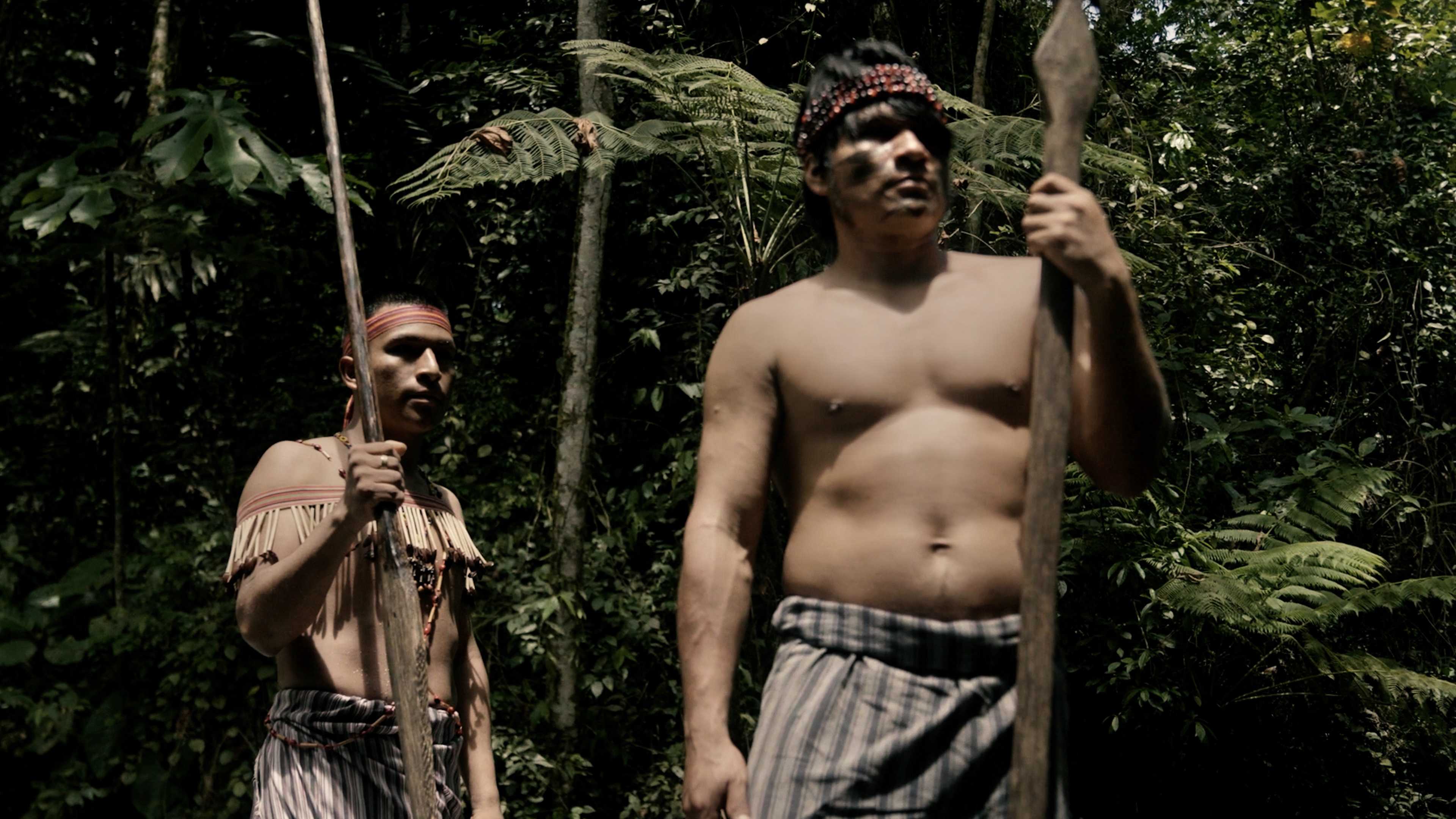
Cousins Jhystin (left) and Numii Antun stand guard in traditional Shuar clothing. Still: When Waterfalls Die.
Join the livestreaming here at 6PM EST
The spear
I remember the road in.
Long, winding dirt roads carved into jungle mountainsides, hours from the nearest town, the green so thick it swallowed the light. I knew I was walking into something serious. I didn’t know it would change my life.
When I arrived at the entrance to Maikiuants, their leader, Domingo, was waiting for me. In his hands was a long wooden spear.
He held it out to me.
This is for you. This is for your protection. To let you know you are safe here with us.
I wasn’t expecting that. I broke down. I cried and I thanked him, and in that moment something in me opened that has never closed.
I had come a long way to get there. I didn’t know I was coming home.
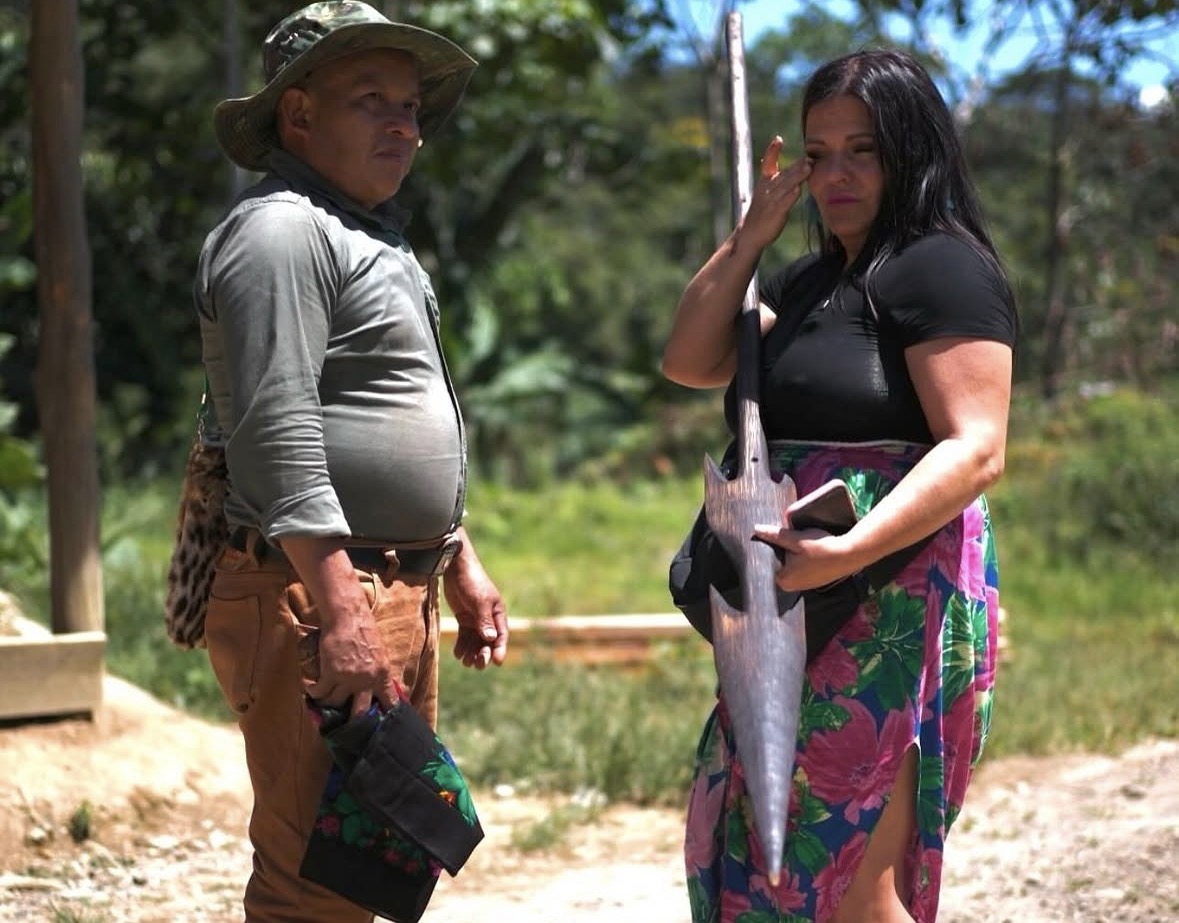 The first time I arrived in Maikiuants in December 2024, Domingo gave me a spear for my protection.
Half my heart
If I’m honest, half of my heart lives in Ecuador now. The other half is here on Turtle Island. That is the truth.
And that half has bled for them ever since I met them. Ever since they began sharing their pain with me, and their culture, their stories, their territories. I have carried their struggle with me every day since.
If you have never stood in the Amazon, I don’t know how to fully explain it to you. It is never-ending life. Everything is green and breathing and alive. The birds, the rivers rushing so loud at night you fall asleep inside their song. The waterfalls where the Shuar God, Arutam, dwells. Every single time I’m there, I am in awe.
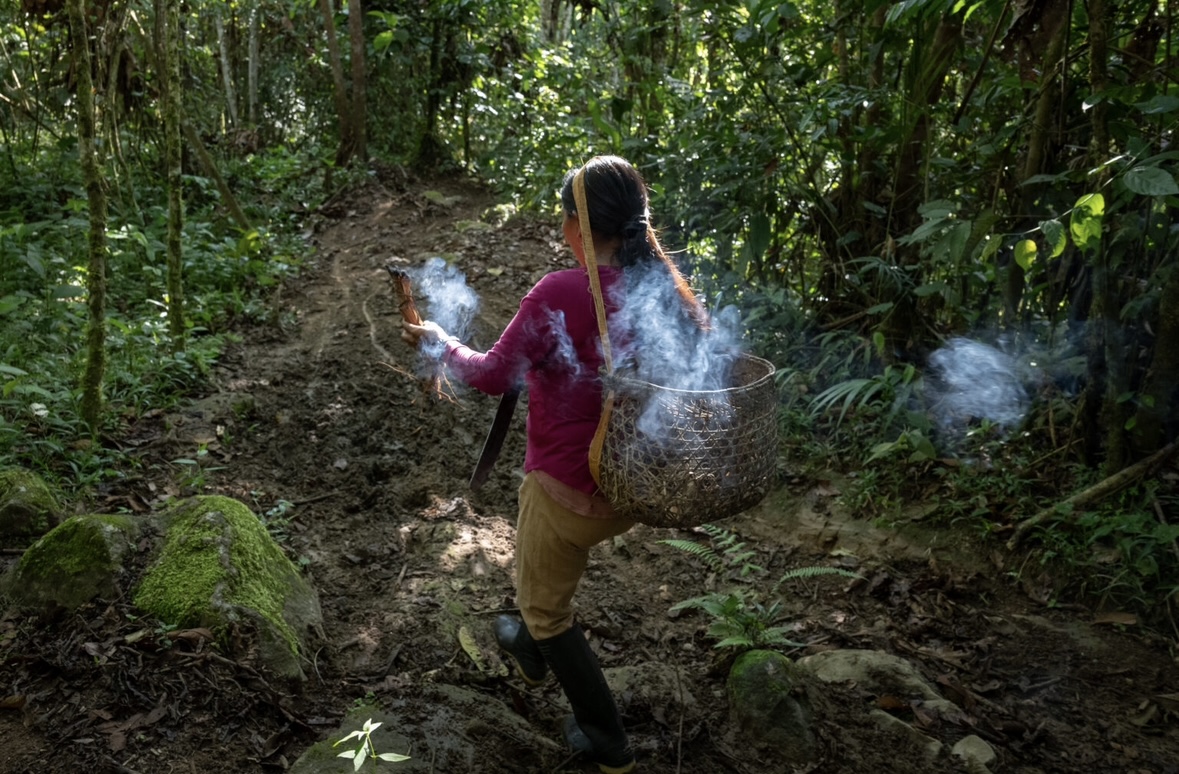 *Hilda Antun walks to her garden in the jungle.
*
*Hilda Antun walks to her garden in the jungle.
*
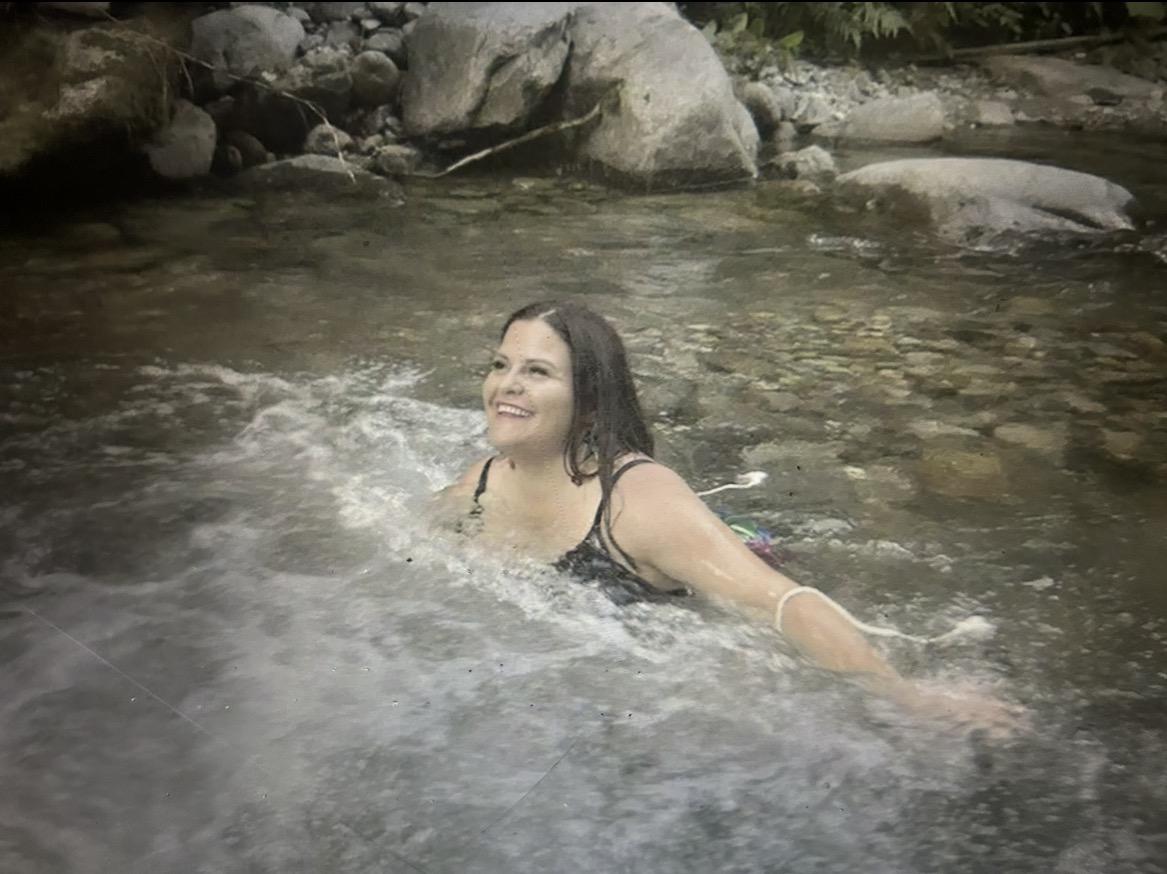 My first time swimming in a river in Maikiuants territory. My face says it all.
This jungle helps the world breathe.
The Cordillera del Cóndor is one of the last sacred places left on this Earth. And the Maikiuants Shuar have guarded it for millennia. They were never conquered. Not by the Spanish, not by anyone. They still hold their language, their ceremonies, their medicines, their songs, their ways.
They are just like you and me. They have babies and grandparents and dreams. They have become my family. I am godmother to a little girl there named Nazli.
And they are about to be plundered.
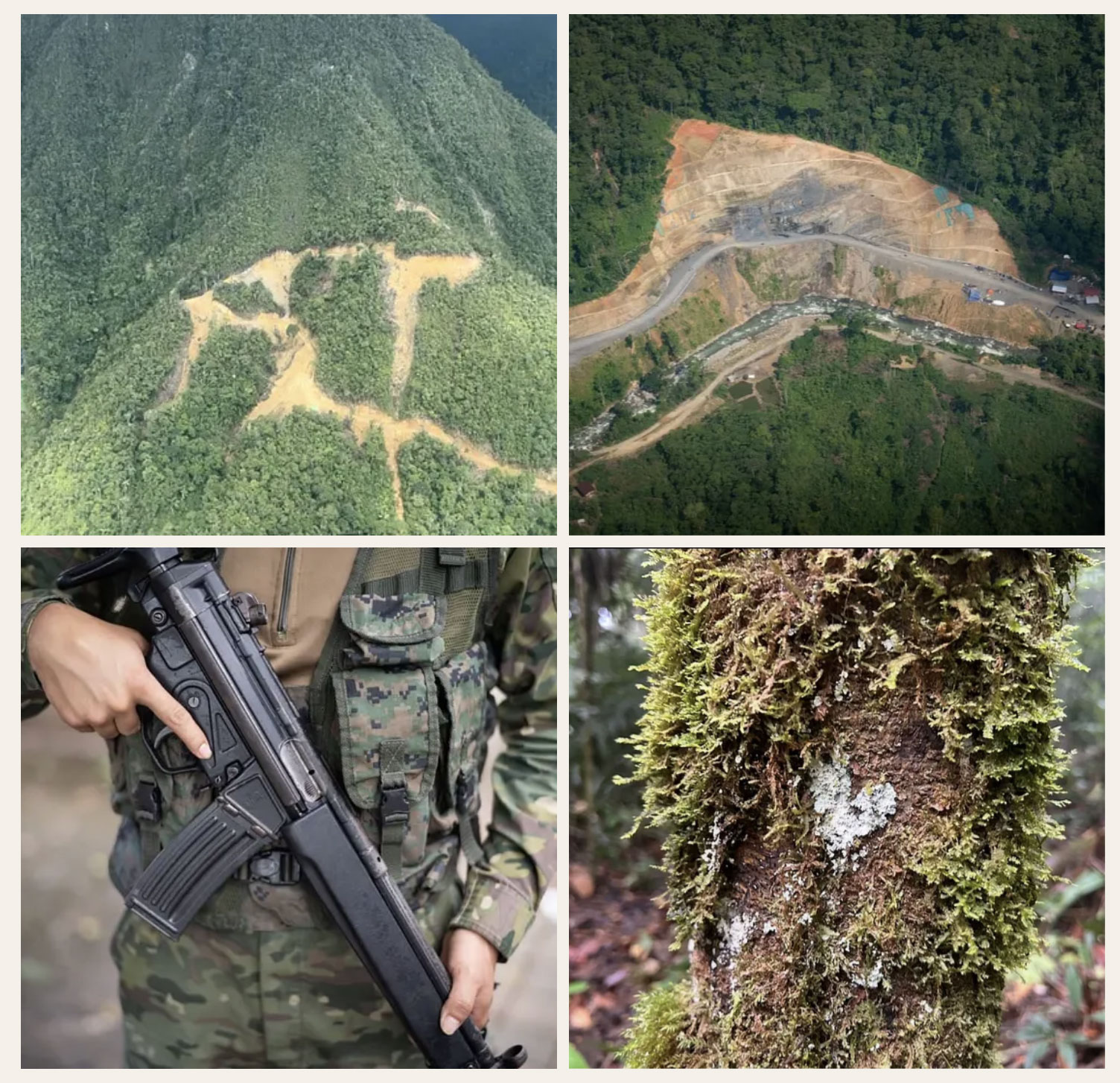 Scars on the Cordillera del Cóndor near Maikiuants territory reveal the exploratory phase of the Solaris copper mine project. An Ecuadorian soldier stands guard in a town nearby. I took the photo of the perfect heart on a tree we saw while walking in the jungle.
The beast at the door
This film is about the Warintza copper project, a $3.7 billion open-pit mine operated by Solaris Resources, a company that moved its headquarters from Canada to Quito but remains majority-controlled by Canadian billionaire Richard Warke.
For years it has been in the exploration phase. Extraction is coming. Soon.
When it does, the impacts on Maikiuants will be astronomical. Poisoned rivers. Poisoned land. A flood of workers, trucks and heavy machinery tearing through a community where, until ten years ago, the only way in was a two-day walk through the jungle.
The International Labour Organization confirmed in 2024 that the Shuar were never properly consulted. Their consent was never sought. It was never the point.
The point is the copper.
The community has already been told to leave. A businessman linked to the project’s new investors flew into the jungle on a private plane and told them they had until 2027 to get out. They chased him off. But the threat didn’t leave with him.
The playbook
What’s happening in Maikiuants is a playbook. I know it in my bones because my people lived it.
The company struck deals with neighbouring Shuar communities. Sister communities. Relatives. Then it let the money do the work: new trucks, new jobs, new divisions. Cousins against cousins. Brothers against brothers. A Solaris employee tried to run down one of the Indigenous guards at the community’s checkpoint. Threats now come from people who share their blood.
They could not conquer the Shuar with swords. So they are trying to conquer them with division.
And the government of Ecuador walks hand in hand with these companies. It hands out the permits. It signed an investment protection agreement shielding the mine. It passed a law that can dissolve the organizations that defend the land. And when communities resist, it sends in the military.
That is what I’m afraid of now. That is what I’m watching for.
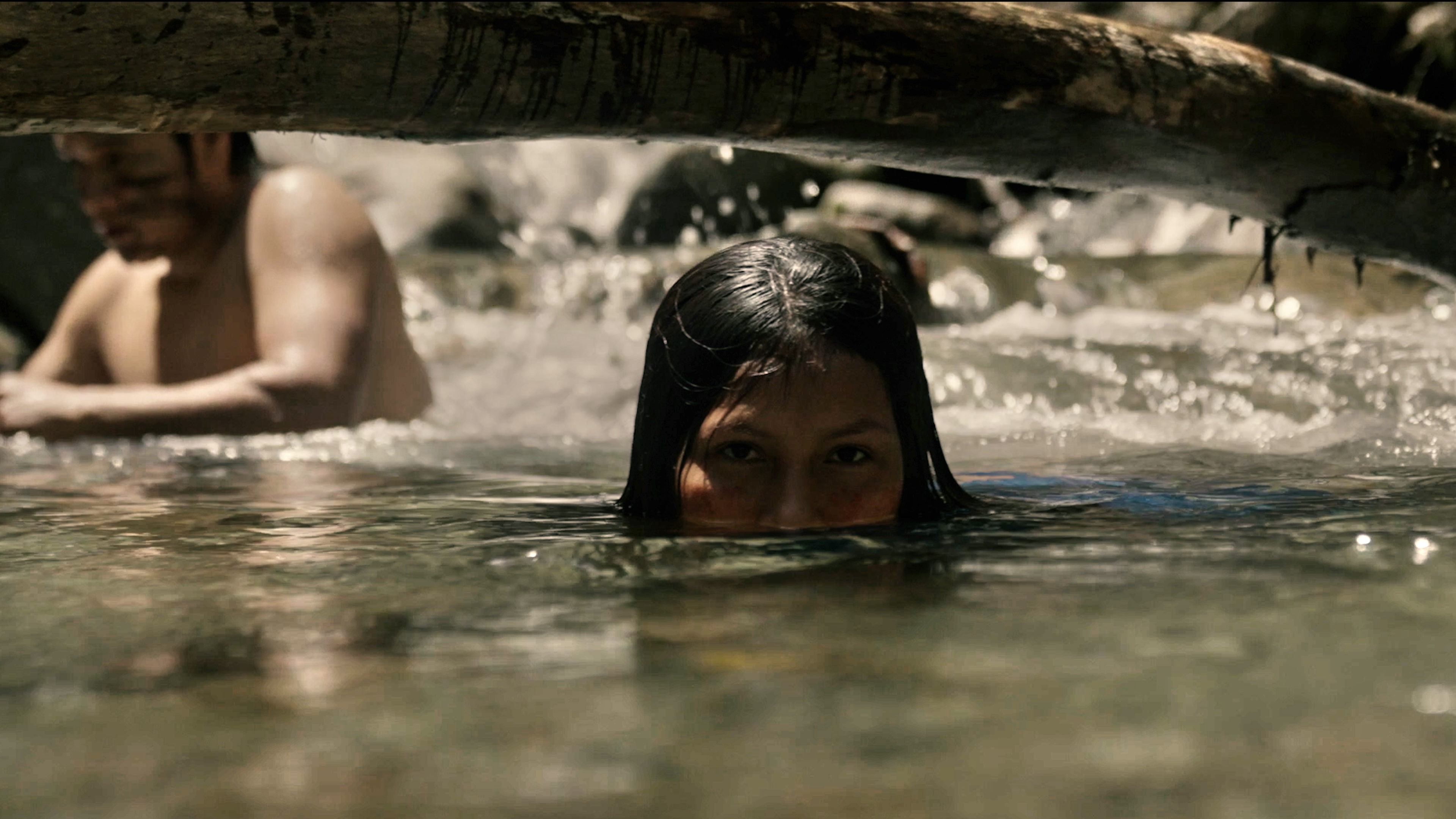 *Nuse Antun bathes in a river in her territory.
*
*Nuse Antun bathes in a river in her territory.
*
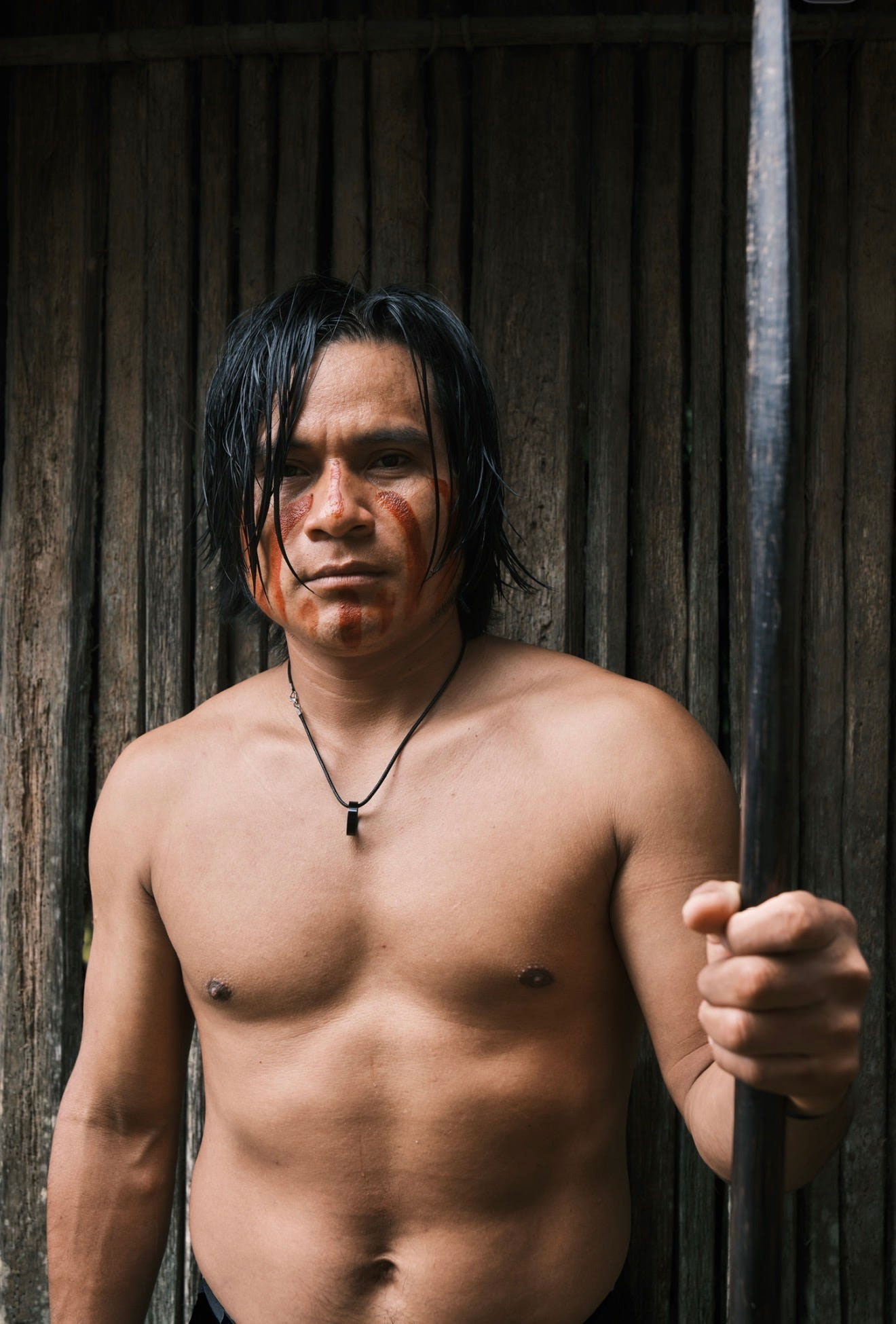 Numii Antun says they only want peace. But if all else fails, he will fight for his territory. Photo: Julien Defourny.
It never stopped
I am Cree and Iroquois. When I stand in Maikiuants, I am not watching history. I am watching the continuation of it.
The same thing that came for my ancestors here, the settlers, the industry, the extraction that ripped our people from our lands, our cultures, our livelihoods, is happening right now in the Amazon. In real time. In front of my camera.
And now they call it “critical minerals.” Copper for the green transition. Copper for your phone, your car, your so-called clean future.
But it’s the same story. Indigenous lands are always the first place they look. Always. Our lands are plundered again and again, and the world calls it progress.
These are human rights violations.
The Maikiuants are on guard. They stand in the road day and night. And they have told me they are willing to fight to the death, yes, to the death, to protect their home.
Because they have nowhere else to go.
This is them. This is their life. They harvest from this land. They drink from these rivers. Their ancestors are in this soil. As young defender Marcos Ankuash told me: their territory isn’t for sale. It is life. It is the heart of the earth.
What I’m asking of you When Waterfalls Die is a short film. It can’t hold everything. But I pray it holds enough to open your heart and introduce you to a people the world is trying to erase in silence.
So here’s what I’m asking:
🔥 Show up tonight. 6pm ET, live with Steven Donziger, then the screening.
🔥 Watch it. Take it in with your heart, not just your eyes.
🔥 Share it. Every share breaks the silence they’re counting on.
🔥 Get angry. Let it upset you. Injustice depends on our comfort.
🔥 Pray for them. And keep their names in your mouth: Maikiuants. Shuar. Warintza. Solaris.
🔥 Support this work. Indigenous Insider is independent. Your paid subscription is what got me into that jungle and is what will get me back.
This has been a long road, full of ups and downs, and I am so, so proud to finally put this story in your hands.
The Maikiuants will not be moved without the world knowing their names.
Tonight, you’ll know them.
Come into the fire with me. Hiy hiy.