


Gaza graduated its students in mid-November. In caps and gowns, students walked through the ruins, holding diplomas for an education they fought with their lives to keep alive. This is what resistance looks like when a society is being targeted for erasure.
What Israel’s assault sought to destroy, the more than 97 percent of schools damaged or destroyed and all twelve universities reduced to rubble—Palestinians are rebuilding with their hands, their voices, and their refusal to simply disappear. Human rights experts raised the alarm back in April 2024, warning that Israel’s pattern of attacks on schools, universities, teachers, and students constitutes the intentional obliteration of the Palestinian education system. The term for this deliberate destruction of educational infrastructure is scholasticide: the systematic annihilation of education, the targeting of knowledge itself, of the capacity for a people to transmit their history and culture, and hence, their future. But Gaza, with one of the highest literacy rates in the world (97.7%), is answering erasure with something Israel cannot destroy with bombs: knowledge.
The pursuit of knowledge has always been woven into the fabric of Palestinian identity, a form of resistance in itself, a way of asserting presence and possibility in the face of occupation and siege. Many Palestinians, including us in the diaspora, believe everything in life could be taken from us, all except for our education and knowledge.
Teaching Against Erasure
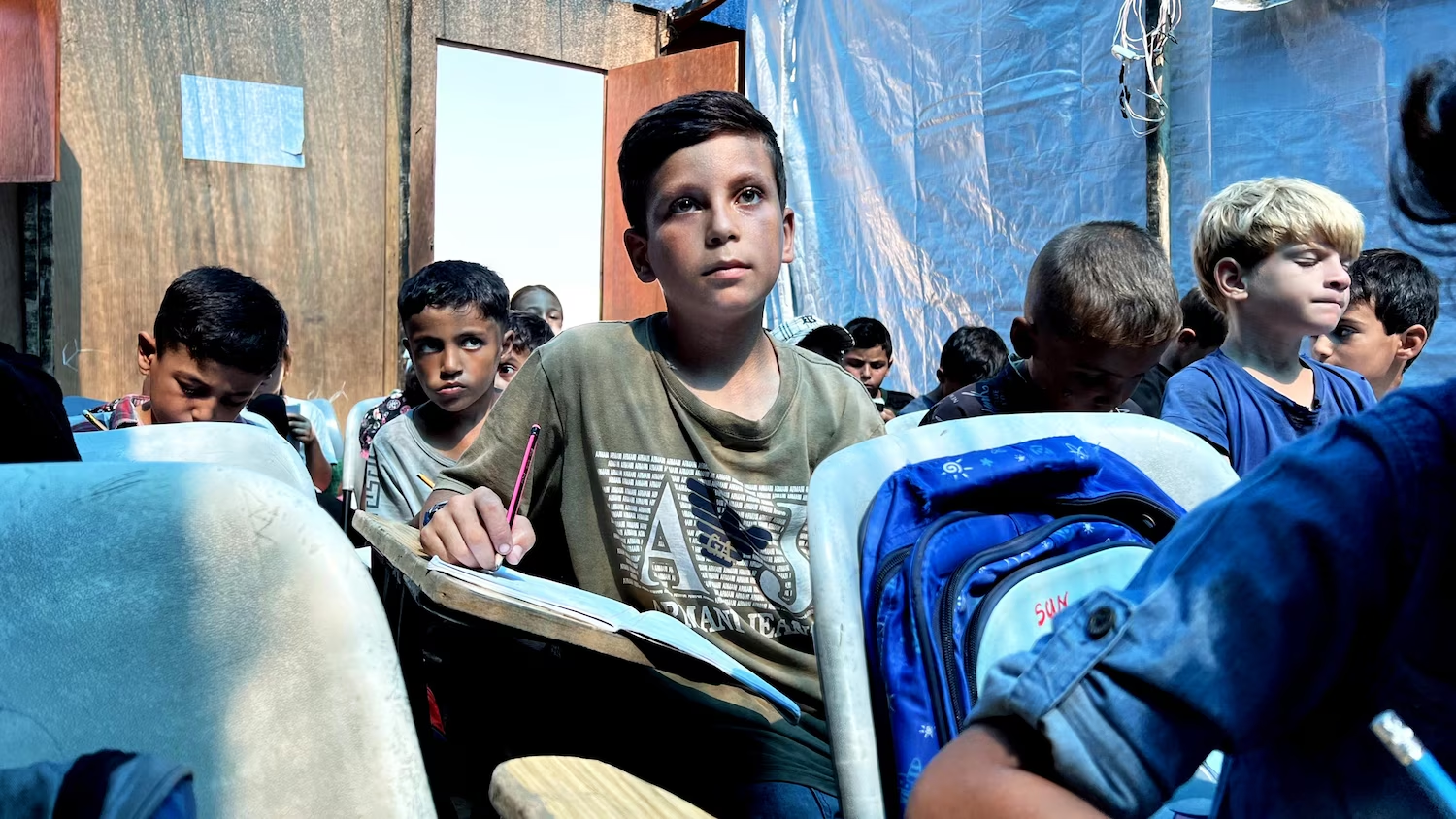
Eleven-year-old Warda Radwan, who like many children and young folks in Gaza has lost two years of schooling, said simply that she was looking forward to returning to her learning routine. But what is she returning to, and how long can an education system last among ruins? Well, she is not waiting for an answer. Neither are the teachers holding classes in tents, the students organizing study circles in displacement camps, or the educators broadcasting lessons through whatever signal survives. “We built these universities from tents,” Gaza-based academics wrote in a letter last year. “And from tents, with the support of our friends, we will rebuild them once again.” This is what teaching and learning against erasure looks like, and it is happening now.
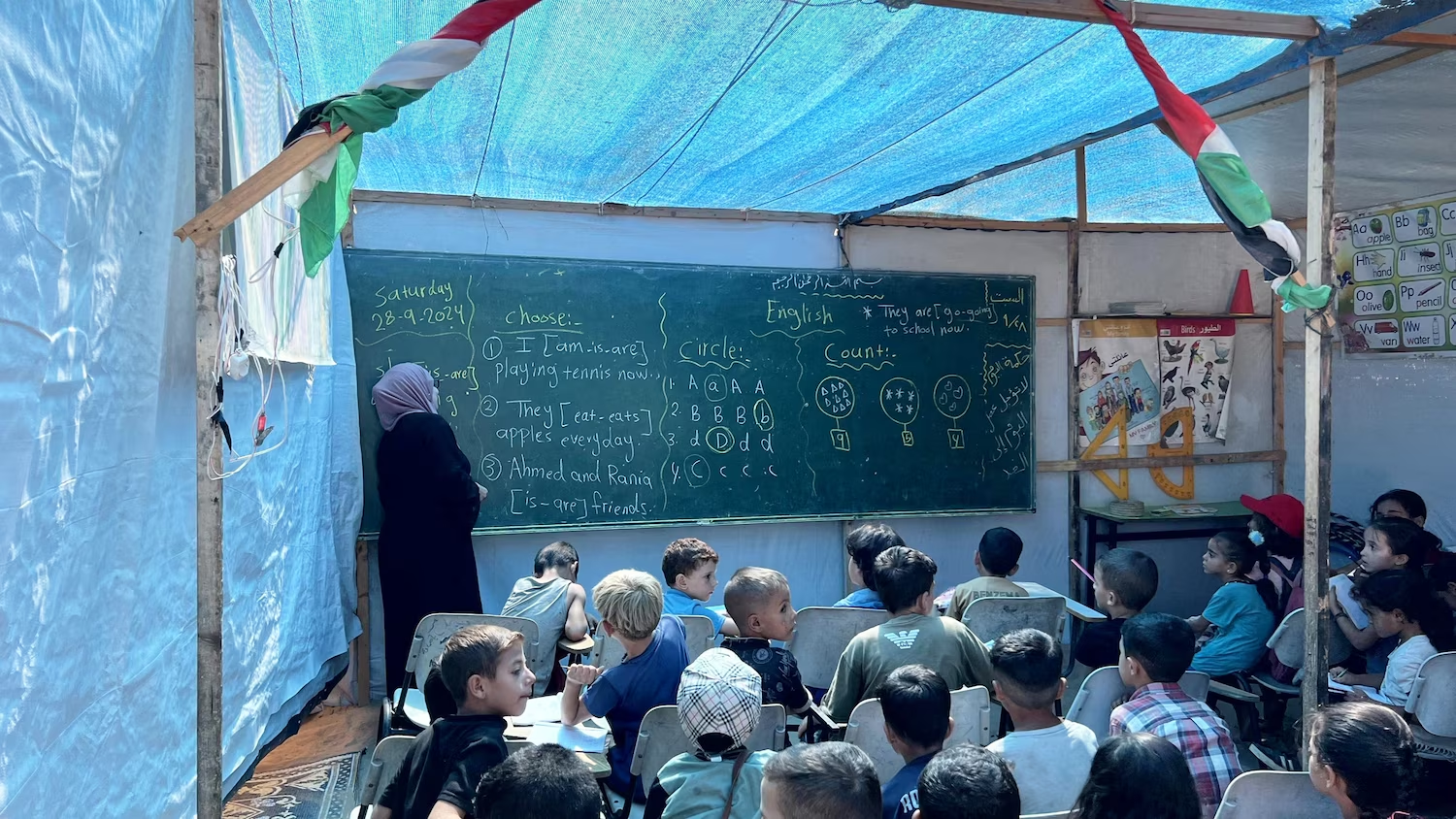
Teaching against erasure lives in the determined will of people to invent when everything familiar has been taken from them. It lives in Anwar, a university lecturer who goes tent to tent in displacement camps, gathering volunteer teachers, convincing families to offer their shelters on rotation so children have somewhere to learn. It looks like teachers showing up without salaries, printing worksheets at their own expense, because the alternative of doing nothing is unthinkable.
Resilience, in this landscape, becomes something almost elemental. It looks like Ikram Talaat Ahmed, the 29-year-old English teacher who lost everything when Israeli forces bombed Bureij camp—her home, her educational center and her job. Four of her colleagues were killed. Still, she turned her family’s displacement tent into a school for 200 children. “My resistance to the occupation is through education,” she says.
Community, under genocide, looks different. Displaced families vacating their shelter rooms three times a week so children can sit and learn. Teachers writing lessons on tent walls. One teacher described turning her tent into a space of healing—using drama, storytelling, weaving humanity into the wreckage. “These are acts of resistance,” she wrote. “But for how long?”
To learn under these conditions is an act of refusal. A refusal to be erased from both history and the future, a refusal to let the occupation define what is possible.

Colonialism Against Education
Colonizers have always understood that education is dangerous. And the colonized have always found ways to keep learning anyway.
When South Africa’s Bantu Education Act sought to limit Black children to menial labor, communities organized. Parents withdrew their children from government schools in the 1955 boycott, and activists formed “cultural clubs”—informal schools that operated illegally because unregistered education was banned. Buses collected children each morning and took them to learn in open fields, on the veld, taught by volunteers. The clubs were eventually crushed, but the resistance they seeded erupted again in 1976 when Soweto students rose against the system, and again in the 1980s when the People’s Education movement built hundreds of alternative educational organizations, smuggling banned copies of Paulo Freire’s pedagogy and training teachers for a post-apartheid future they insisted on creating.
Indigenous children in North America, forced into boarding schools designed to “kill the Indian and save the man,” resisted in quieter but no less stubborn ways. Students spoke their languages in secret, giving teachers derogatory nicknames in languages the authorities couldn’t understand, mocking the system while keeping alive the very thing it sought to eradicate. They ran away, repeatedly, even when forcibly returned. They used Plains Sign Talk, a shared sign language, to communicate across tribal lines when English was the only permitted tongue. What the schools meant to sever, students wove back together. The pan-Indian solidarity movements of the twentieth century trace their roots to the intertribal communities built in those very institutions meant to destroy them.
The educated Palestinian body has never been safe. To read, to teach, even the smallest act of passing a book from hand to hand has carried severe consequences under Israeli occupation. This has always been an act of defiance in the colonizer’s eyes. Israel has known this since 1948—libraries and archives looted during the Nakba, their pages scattered like the displaced, as if knowledge itself carried contagion.
Settler colonialism has always operated through elimination of not only the people, but also of the systems that allow a people to continue. Land and learning are taken together. This is why scholasticide cannot be dismissed as collateral damage. The Genocide Convention speaks of deliberately inflicting conditions calculated to destroy a group’s existence. Leveling every university, killing hundreds of educators, and burning archives and dissertations. Attacking them is a deliberate attack on the infrastructure of erasure.
Sumud Made Material
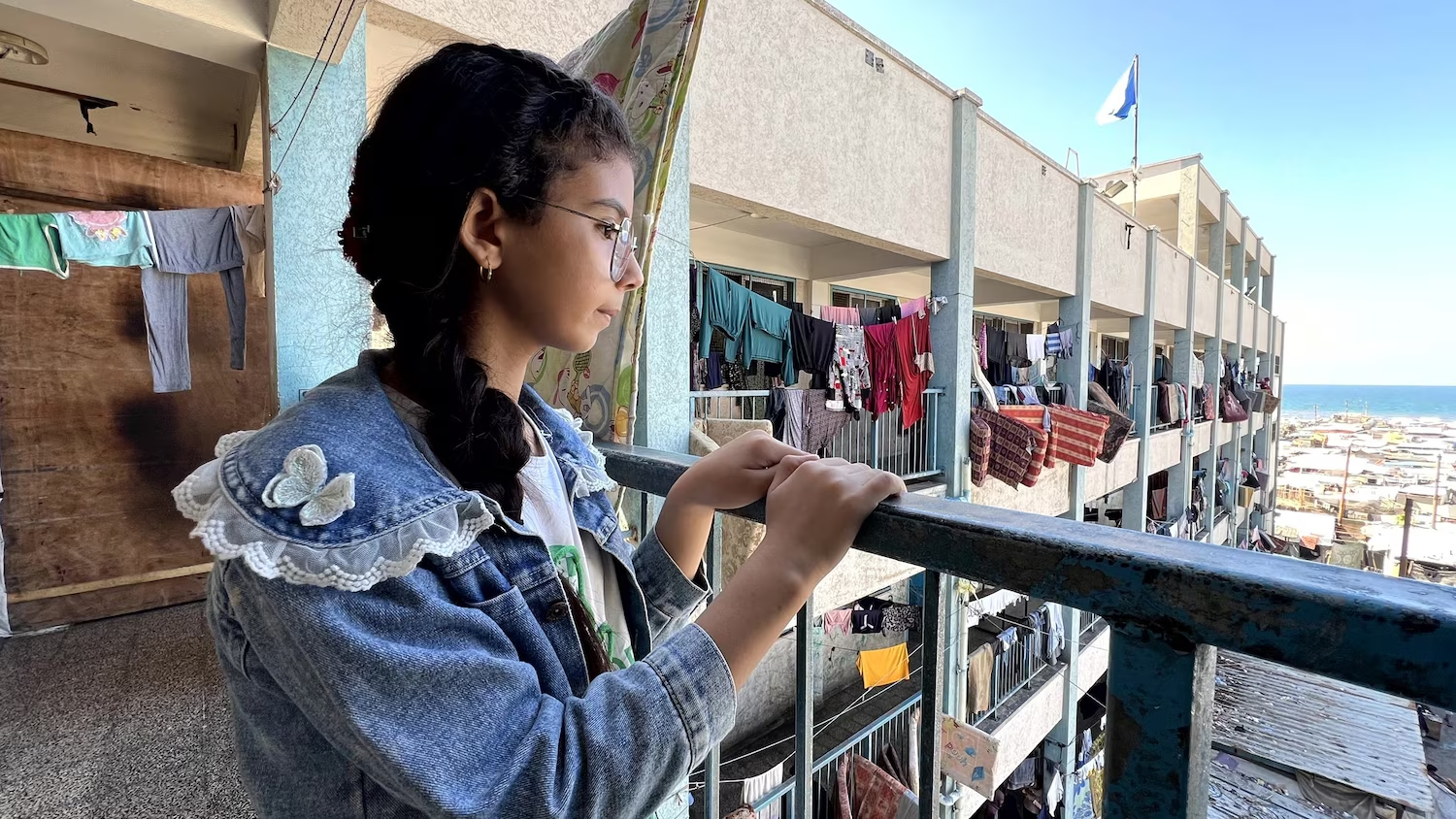
Sumud—steadfastness—has never wavered. In late November 2025, students walked back into the Islamic University of Gaza for the first time in two years. Medical students, nursing students filing into classrooms that only survived because they cleared the debris and said, we start here. Four thousand students graduated through remote learning during the war. Now the university is enrolling new students in person, coordinating a phased return with the Ministry of Education. “Today is a historic day,” the university president, Asaad Yousef Asaad, said. “We are returning to education despite the tragedy and cruelty left behind by the genocide.”
Just weeks later, in December 2025, another ceremony unfolded in front of the destroyed facade of al-Shifa Medical Complex. 168 Palestinian doctors, calling themselves the “Humanity Cohort,” graduated and received their Palestinian Board certifications amidst the rubble of what was once Gaza’s largest hospital. These healers were trained during and inside the genocide itself, becoming doctors by treating the very destruction that sought to ensure there would be no doctors left. Israel sought to destroy Palestine’s human capital throughout its attacks on healthcare facilities and means of medical education and training. Yet, the Humanity Cohort graduating even amongst ruins demonstrated what Palestinian Sumud looks like in practice: the active refusal to let genocide determine who gets to exist, learn, or heal.
The genocide after October 2023 was not the first attack on the pillars of what makes up Palestinian society, and Palestinians have resisted scholasticide before with schools built in refugee camps, to universities that held their first lectures in tents to literacy rates that defied the 18 years of blockade and siege. Palestinians have rebuilt their schools from nothing before, and will do so again with the stubborn insistence that a future exists because they are still there, because they themselves refuse to disappear.