
Digital & Print Membership
Yearly + Receive 8 free printed back issues
$420 Annually
Monthly + Receive 3 free printed back issues
$40 Monthly
Samira Mohyeddin on Iran
This interview took place on Jan 12, 2025, and responds to the evolving situation in Iran at that moment.
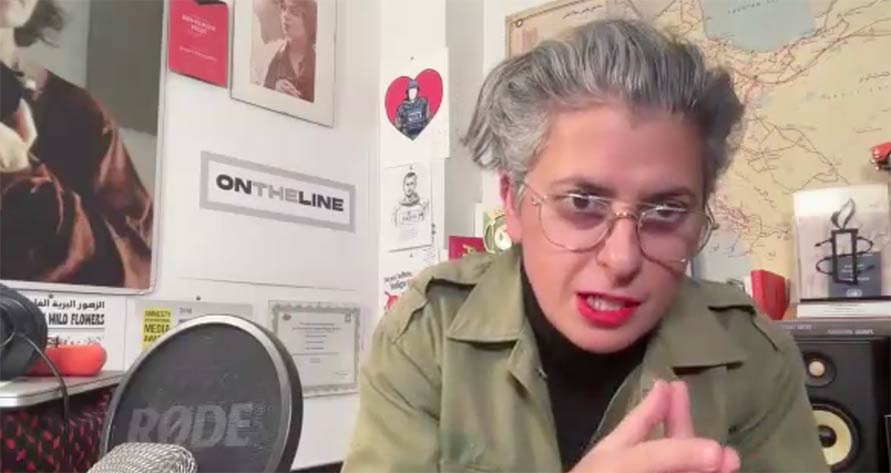
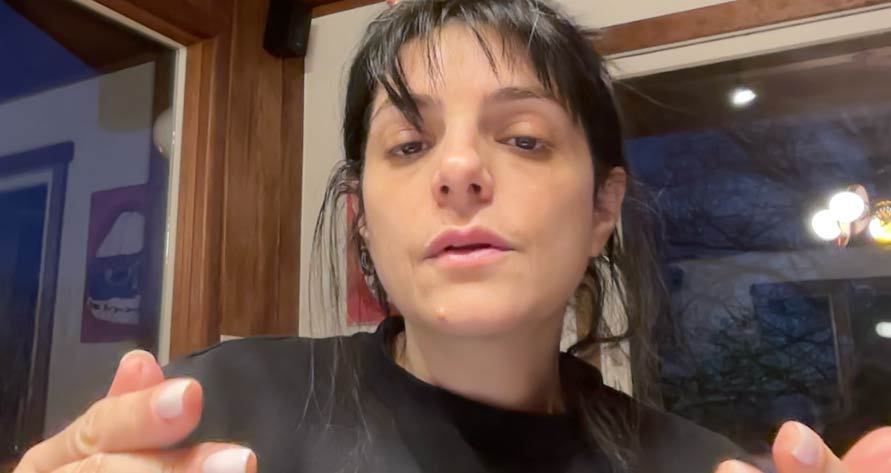
CÉLINE:
Thank you so much, Samira, for taking the time to speak to us about what’s going on in Iran right now. Not that it just started yesterday, but it has escalated to a place where international communities can no longer ignore what’s going on in Iran. Can you tell me what has changed in the past couple of weeks? What has accelerated? How it accelerated so quickly, and the dangers that the protesters are facing?
SAMIRA MOHYEDDIN:
First of all you hit the nail on the head when you said this didn’t start yesterday, and it’s not new. Iranians have been protesting for decades. But what happened was that on December 28 in Tehran’s Grand Bazaar dozens of merchants came out to protest because Iran’s currency had fallen to like 147,000 to one US dollar, which is wild, right? And from there, it just escalated to other towns, people came out into the streets. And it went from calling for some sort of economic reprieve, anti corruption, and these types of things became calls for the entire regime to come down. And again, that’s not new either.
What is new, though, is the level of violence that is being used by not only the protesters, but also the government. They clamped down hard. The internet has been shut off for 96 hours now. It’s very hard to verify the numbers, but we do know there have been hundreds of protesters killed, and at the same time, you have people like Mike Pompeo on New Year’s day coming out on X.com and writing “Happy New Year to the Iranian in the streets and the Mossad agents walking beside them.”
CÉLINE:
That’s great that you mentioned that. What’s happening right now with the coverage on on Iran, it’s being hijacked, and it’s being also manipulated in international media, which is fueling the left or progressives against one another. I don’t know what to use which word, but it’s fueling a sort of a schism in what we call the progressives or the Left, because ultimately, the way we are covering what’s going on in Iran is being hijacked by the right and also fueled by the left that is sort of attacking one another. Can you tell me what is actually happening — are the Mossad on the street? Is this fake?
SAMIRA MOHYEDDIN:
I don’t think it’s fake news that Israel has a hand in what is happening in Iran. You have the heritage minister of Israel coming out in one of the most read newspapers in Israel. This is Israel Hayom, saying our agents are on the ground. He actually says we have a hand in this. Okay, so it’s not that we’re making this up. It’s that officials, Israeli officials, are attesting to this. And so how does that impact people in Iran? Well, it impacts people in Iran, because then you have the Chief Justice of Iran, Gholam-Hossein Mohseni-Eje’i saying, “We know Israel has a hand in this. And unlike last time,” this is a direct quote from him, “unlike last time, we will not show any clemency, we will strike hard.”
And so when you have these bellicose statements being made by American and Israeli officials that directly impacts people on the streets of Iran who are risking their lives to come out now, in terms of this schism that you’re seeing, well, it’s a very difficult time to be a progressive Iranian. It’s a very difficult time. Now to be someone who cares about what is happening in Gaza and cares about what is happening in Iran, they want to split us apart. That’s the plan. If you go and watch right now, like I do, if you go and look at Israeli influencers, they will say things like, “where are all the encampments for the Iranians? The left doesn’t care about Iranians being killed.” These are very deliberate talking points. Don’t forget that Israel is conducting a genocide. There is nothing that Israel wants more than to avert attention away from Gaza and onto Iran, and Israeli influencers are doing that work for Israel now. You’ll also see Iranians. I’m not going to let Iranians off the hook here. You’ll also see Iranians saying, “Why don’t the Palestinians care about us? They never say anything about us.” And this churlish comparison between people who are going through a genocide and people who are rising up against their government, there is no comparison here. This is not the oppression Olympics. Let’s not do this. It’s so dangerous. We can hold two thoughts at once. And guess what?
I have enough hate in my heart for Israel and the Islamic Republic. I can do both.
CÉLINE:
When groups like Slow Factory, for example, or other progressives are supporting the Iranian protesters, they are faced with accusations of being Zionist. They’re faced with accusations of not being pro-Palestinian anymore. And what’s happening right now is the agenda to separate the movement has already happened and is in process. There is a position of the western “Left” that is denying the protesters in Iran legitimacy and agency to demand their rights. Because if you listen to Iranians that are living in Iran they have been enduring 45 years of oppression under a government that not only is pressuring them financially, but also from a religious point of view, from an ideological point of view.
SAMIRA MOHYEDDIN:
Living under a totalitarian theocracy, which is exactly what Iran is, is a very different than looking at Iran as just an anti-Imperial entity, which is what a lot of people on the Left want to do. You see, Iran acts as a bulwark against American hegemony in the region, and it positions itself this way, very decidedly, and has done so from inception — the call Death to America was happening from the inception of the Islamic Republic. It didn’t just, you know, evolve. It’s become the hallmark of this government. The Islamic Republic uses the Palestinian cause to promulgate itself as some sort of anti-Imperial, altruistic state.
And you know, one of the things I always say to people who tout this line of, why don’t the Palestinians care? Or some people say, if we get rid of the Iranian government, there will be no resistance to the occupation of Palestine. But why don’t you ever say, hey, if we got rid of the occupation, the Iranian government wouldn’t have a leg to stand on. Why isn’t it ever the inverse? Get rid of the occupation and get rid of the Islamic Republic’s excuse. That’s the route we should take.
CÉLINE:
Some may look at the end of the occupation as something that is a long term project, and that perhaps the Islamic Republic may fall before the end of the occupation of Palestine. Right? Because the American right is pushing for it, and mainstream media is also supporting it. At the same time, because the population in Iran is rising up, the masses that are on the streets that are relentless to topple their government, there is a fear that a power vacuum may occur, because this may happen before the end of the occupation. Therefore, there is fear that the occupation expands to Iran, or at least the United States takes over Iran, or some kind of other occupier that will be entering into Iran, occupying Iran. How do you see this?
SAMIRA MOHYEDDIN:
That’s exactly the fear. I mean, I asked people on Instagram to tell me what their biggest fear is. And three things came up. I had over 400 responses, but the three responses that came up the most were:
They don’t want Iran to become an Iraq or Syria or Libya. They’re worried about separatist movements, and they don’t want a civil war. As much as we see people on the streets of Iran protesting against their government, there’s 90 million people in Iran. Iran is a massive country. It’s the size of Western Europe, you can’t just come and take over Iran. Okay, it’s not Venezuela. That’s not going to happen. So they have about 20% of the population support right now. 20% of 90 million is a lot of people, and they also have all of the arms, and they have everything. So if people think that this government’s going to fall overnight, that’s not going to happen. Governments don’t go away because Elon Musk changes the emoji of the flag, okay, it doesn’t work this way. You have to see people inside the government break away from the government. You have to see that happening. You have to see a lot more numbers of people on the streets, it’s just not happening right now. And there is a vacuum inside the country, in civil society, there are no people who have built any sort of structures or groups like unions, that doesn’t exist. It’s not happening. The Islamic Republic has been very effective at doing away with these structures.
The Iranian people have tried many different ways to change the government. They’ve gone to the ballot box in 2009, when they thought voting them out would work. It didn’t. They went on the streets. In 1999 the students went on the streets. Again in 2009 during the Green Movement, 2017, 2018, 2019, every year, successively, there have been protests in Iran. The difference is that you now have a situation where Israel and America have come out and said, we have a hand in this. And the world is watching America behave in a way that shows their attitude is “We can bomb anywhere. We can steal any leader. We can do anything.”
So there is a real fear among Iranians that they could become another Syria. One of the things I really want to point out here is that when Syria fell, finally, after 14 years and Assad went off to Moscow, what happened? Israel bombed Syria for two days straight, making sure that it effectively has no military. It has no weapons. It has no way of guarding itself, and now Israel has come in. It has stolen Syria’s water. It has completely taken over the Golan Heights and other parts of Syria. So yeah, Iranians have very good reason to be afraid.
CÉLINE:
And the United States have put in charge someone who was in the ISIS as a ISIS commander that was on the most wanted list of the FBI as the leader of Syria, which is the irony,
SAMIRA MOHYEDDIN:
and who was Iran fighting Iran was on the front lines with fighting Daesh, of course. And there is a real fear. I just brought up the separatist movements, those areas along like Baluchestan, East Azerbaijan, all of those areas there have separatist movements. They want to separate from Iran. They’ve said this numerous times. They want to make an East Kurdistan, you know. So there is also this fear of splitting Iran up. And you had Israeli officials. Don’t forget, in June, when Israel conducted its 12 day war and killed over 1000 Iranians, they said Iran is too big to control, so they will separate it.
CÉLINE:
Absolutely. And again, this is good that you bring up the Kurds in Iran, who are a massive movement in this uprising, right? And also the Women Life Freedom movement there was also led by the Kurds.
SAMIRA MOHYEDDIN:
No, what is happening in Iran right now has nothing to do with that movement, unfortunately. What is happening is that we are seeing very fascistic right wing elements trying to take control of this movement, particularly in the diaspora, and people who yell out Woman Life Freedom are being drowned out. I’m very worried about what is to come if this government goes because we do not have the right systems in place. And as you said, there will be a vacuum. What I fear is Iran becoming a secular but very authoritarian, nationalistic, fascistic place. That is my fear. Like Assad on crack, is what I fear.
CÉLINE:
And my last question would be, Iran and Lebanon are deeply connected. What happens in Iran is going to impact what’s going to happen in Lebanon, and as Lebanese people, we are watching what’s going on very, very closely, and we are very worried as well. Because, you know, Iran funds a lot of militia, mainly Hezbollah for now. But what do you see as this relationship between Iran and Lebanon, is it going to turn into this big war with all of you know, Israel invading Lebanon. Israel invading Iran taking over?
SAMIRA MOHYEDDIN:
Israel has been bombing southern Lebanon, non stop. It has not stopped bombing and you can see right now they’ve started to build a wall for themselves, the Israelis. It’s massive, and they’ve encroached on Lebanese land. I don’t know what will happen to Hezbollah, though. I mean, Iran funds Hezbollah directly. Many people see Hezbollah as the resistance, the only resistance that really remains and that is the other thing is that people, anti-imperialists, see Iran as the only resistance that remains in the region. Don’t forget, the only country that bombed Israel is Iran. They’re the only ones that have bombed Israel. They bombed Tel Aviv. I mean, we never thought that we would see such a thing. And Iran really takes pride in that. The Iranian government takes pride in that. They take pride in the fact that, when it comes to the Palestinian cause, they are the only ones that have really pushed back on Israel, whereas other Arab neighbors, you know, Morocco, Dubai, I mean, they’ve just been laughing it up, right? Wanting to do deals with Israel. So there’s a lot going on. It’s very difficult to say what’s going to happen, or that’s going to happen.
CÉLINE:
Anything else you want to say regarding the international community’s reaction to Iran. What would you advise?
SAMIRA MOHYEDDIN:
Really, I want to tell people who give a shit about liberation to care about what is happening in Iran. I know that it’s difficult when you see the most right wing, disgusting extreme people like Lindsey Graham and Mike Pompeo being all of a sudden your bedfellow. But don’t negate the people of Iran. Just because these people are trying to hijack their voices, we can’t allow this to happen. And it shouldn’t mean that we uplift the Iranian government.
Topics:
Filed under:
Location:
{
"article":
{
"title" : "Samira Mohyeddin on Iran",
"author" : "Samira Mohyeddin, Céline Semaan",
"category" : "interviews",
"url" : "https://everythingispolitical.com/readings/samira-mohyeddin-on-iran",
"date" : "2026-01-18 16:53:00 -0500",
"img" : "https://everythingispolitical.com/uploads/2026_01_12_Samira_Celine_EIP_Cover-0aba50.jpg",
"excerpt" : "This interview took place on Jan 12, 2025, and responds to the evolving situation in Iran at that moment.",
"content" : "This interview took place on Jan 12, 2025, and responds to the evolving situation in Iran at that moment.CÉLINE:Thank you so much, Samira, for taking the time to speak to us about what’s going on in Iran right now. Not that it just started yesterday, but it has escalated to a place where international communities can no longer ignore what’s going on in Iran. Can you tell me what has changed in the past couple of weeks? What has accelerated? How it accelerated so quickly, and the dangers that the protesters are facing?SAMIRA MOHYEDDIN:First of all you hit the nail on the head when you said this didn’t start yesterday, and it’s not new. Iranians have been protesting for decades. But what happened was that on December 28 in Tehran’s Grand Bazaar dozens of merchants came out to protest because Iran’s currency had fallen to like 147,000 to one US dollar, which is wild, right? And from there, it just escalated to other towns, people came out into the streets. And it went from calling for some sort of economic reprieve, anti corruption, and these types of things became calls for the entire regime to come down. And again, that’s not new either.What is new, though, is the level of violence that is being used by not only the protesters, but also the government. They clamped down hard. The internet has been shut off for 96 hours now. It’s very hard to verify the numbers, but we do know there have been hundreds of protesters killed, and at the same time, you have people like Mike Pompeo on New Year’s day coming out on X.com and writing “Happy New Year to the Iranian in the streets and the Mossad agents walking beside them.”CÉLINE:That’s great that you mentioned that. What’s happening right now with the coverage on on Iran, it’s being hijacked, and it’s being also manipulated in international media, which is fueling the left or progressives against one another. I don’t know what to use which word, but it’s fueling a sort of a schism in what we call the progressives or the Left, because ultimately, the way we are covering what’s going on in Iran is being hijacked by the right and also fueled by the left that is sort of attacking one another. Can you tell me what is actually happening — are the Mossad on the street? Is this fake?SAMIRA MOHYEDDIN:I don’t think it’s fake news that Israel has a hand in what is happening in Iran. You have the heritage minister of Israel coming out in one of the most read newspapers in Israel. This is Israel Hayom, saying our agents are on the ground. He actually says we have a hand in this. Okay, so it’s not that we’re making this up. It’s that officials, Israeli officials, are attesting to this. And so how does that impact people in Iran? Well, it impacts people in Iran, because then you have the Chief Justice of Iran, Gholam-Hossein Mohseni-Eje’i saying, “We know Israel has a hand in this. And unlike last time,” this is a direct quote from him, “unlike last time, we will not show any clemency, we will strike hard.”And so when you have these bellicose statements being made by American and Israeli officials that directly impacts people on the streets of Iran who are risking their lives to come out now, in terms of this schism that you’re seeing, well, it’s a very difficult time to be a progressive Iranian. It’s a very difficult time. Now to be someone who cares about what is happening in Gaza and cares about what is happening in Iran, they want to split us apart. That’s the plan. If you go and watch right now, like I do, if you go and look at Israeli influencers, they will say things like, “where are all the encampments for the Iranians? The left doesn’t care about Iranians being killed.” These are very deliberate talking points. Don’t forget that Israel is conducting a genocide. There is nothing that Israel wants more than to avert attention away from Gaza and onto Iran, and Israeli influencers are doing that work for Israel now. You’ll also see Iranians. I’m not going to let Iranians off the hook here. You’ll also see Iranians saying, “Why don’t the Palestinians care about us? They never say anything about us.” And this churlish comparison between people who are going through a genocide and people who are rising up against their government, there is no comparison here. This is not the oppression Olympics. Let’s not do this. It’s so dangerous. We can hold two thoughts at once. And guess what? I have enough hate in my heart for Israel and the Islamic Republic. I can do both.CÉLINE:When groups like Slow Factory, for example, or other progressives are supporting the Iranian protesters, they are faced with accusations of being Zionist. They’re faced with accusations of not being pro-Palestinian anymore. And what’s happening right now is the agenda to separate the movement has already happened and is in process. There is a position of the western “Left” that is denying the protesters in Iran legitimacy and agency to demand their rights. Because if you listen to Iranians that are living in Iran they have been enduring 45 years of oppression under a government that not only is pressuring them financially, but also from a religious point of view, from an ideological point of view.SAMIRA MOHYEDDIN:Living under a totalitarian theocracy, which is exactly what Iran is, is a very different than looking at Iran as just an anti-Imperial entity, which is what a lot of people on the Left want to do. You see, Iran acts as a bulwark against American hegemony in the region, and it positions itself this way, very decidedly, and has done so from inception — the call Death to America was happening from the inception of the Islamic Republic. It didn’t just, you know, evolve. It’s become the hallmark of this government. The Islamic Republic uses the Palestinian cause to promulgate itself as some sort of anti-Imperial, altruistic state.And you know, one of the things I always say to people who tout this line of, why don’t the Palestinians care? Or some people say, if we get rid of the Iranian government, there will be no resistance to the occupation of Palestine. But why don’t you ever say, hey, if we got rid of the occupation, the Iranian government wouldn’t have a leg to stand on. Why isn’t it ever the inverse? Get rid of the occupation and get rid of the Islamic Republic’s excuse. That’s the route we should take.CÉLINE:Some may look at the end of the occupation as something that is a long term project, and that perhaps the Islamic Republic may fall before the end of the occupation of Palestine. Right? Because the American right is pushing for it, and mainstream media is also supporting it. At the same time, because the population in Iran is rising up, the masses that are on the streets that are relentless to topple their government, there is a fear that a power vacuum may occur, because this may happen before the end of the occupation. Therefore, there is fear that the occupation expands to Iran, or at least the United States takes over Iran, or some kind of other occupier that will be entering into Iran, occupying Iran. How do you see this?SAMIRA MOHYEDDIN:That’s exactly the fear. I mean, I asked people on Instagram to tell me what their biggest fear is. And three things came up. I had over 400 responses, but the three responses that came up the most were:They don’t want Iran to become an Iraq or Syria or Libya. They’re worried about separatist movements, and they don’t want a civil war. As much as we see people on the streets of Iran protesting against their government, there’s 90 million people in Iran. Iran is a massive country. It’s the size of Western Europe, you can’t just come and take over Iran. Okay, it’s not Venezuela. That’s not going to happen. So they have about 20% of the population support right now. 20% of 90 million is a lot of people, and they also have all of the arms, and they have everything. So if people think that this government’s going to fall overnight, that’s not going to happen. Governments don’t go away because Elon Musk changes the emoji of the flag, okay, it doesn’t work this way. You have to see people inside the government break away from the government. You have to see that happening. You have to see a lot more numbers of people on the streets, it’s just not happening right now. And there is a vacuum inside the country, in civil society, there are no people who have built any sort of structures or groups like unions, that doesn’t exist. It’s not happening. The Islamic Republic has been very effective at doing away with these structures.The Iranian people have tried many different ways to change the government. They’ve gone to the ballot box in 2009, when they thought voting them out would work. It didn’t. They went on the streets. In 1999 the students went on the streets. Again in 2009 during the Green Movement, 2017, 2018, 2019, every year, successively, there have been protests in Iran. The difference is that you now have a situation where Israel and America have come out and said, we have a hand in this. And the world is watching America behave in a way that shows their attitude is “We can bomb anywhere. We can steal any leader. We can do anything.”So there is a real fear among Iranians that they could become another Syria. One of the things I really want to point out here is that when Syria fell, finally, after 14 years and Assad went off to Moscow, what happened? Israel bombed Syria for two days straight, making sure that it effectively has no military. It has no weapons. It has no way of guarding itself, and now Israel has come in. It has stolen Syria’s water. It has completely taken over the Golan Heights and other parts of Syria. So yeah, Iranians have very good reason to be afraid.CÉLINE:And the United States have put in charge someone who was in the ISIS as a ISIS commander that was on the most wanted list of the FBI as the leader of Syria, which is the irony,SAMIRA MOHYEDDIN:and who was Iran fighting Iran was on the front lines with fighting Daesh, of course. And there is a real fear. I just brought up the separatist movements, those areas along like Baluchestan, East Azerbaijan, all of those areas there have separatist movements. They want to separate from Iran. They’ve said this numerous times. They want to make an East Kurdistan, you know. So there is also this fear of splitting Iran up. And you had Israeli officials. Don’t forget, in June, when Israel conducted its 12 day war and killed over 1000 Iranians, they said Iran is too big to control, so they will separate it.CÉLINE:Absolutely. And again, this is good that you bring up the Kurds in Iran, who are a massive movement in this uprising, right? And also the Women Life Freedom movement there was also led by the Kurds.SAMIRA MOHYEDDIN:No, what is happening in Iran right now has nothing to do with that movement, unfortunately. What is happening is that we are seeing very fascistic right wing elements trying to take control of this movement, particularly in the diaspora, and people who yell out Woman Life Freedom are being drowned out. I’m very worried about what is to come if this government goes because we do not have the right systems in place. And as you said, there will be a vacuum. What I fear is Iran becoming a secular but very authoritarian, nationalistic, fascistic place. That is my fear. Like Assad on crack, is what I fear.CÉLINE:And my last question would be, Iran and Lebanon are deeply connected. What happens in Iran is going to impact what’s going to happen in Lebanon, and as Lebanese people, we are watching what’s going on very, very closely, and we are very worried as well. Because, you know, Iran funds a lot of militia, mainly Hezbollah for now. But what do you see as this relationship between Iran and Lebanon, is it going to turn into this big war with all of you know, Israel invading Lebanon. Israel invading Iran taking over?SAMIRA MOHYEDDIN:Israel has been bombing southern Lebanon, non stop. It has not stopped bombing and you can see right now they’ve started to build a wall for themselves, the Israelis. It’s massive, and they’ve encroached on Lebanese land. I don’t know what will happen to Hezbollah, though. I mean, Iran funds Hezbollah directly. Many people see Hezbollah as the resistance, the only resistance that really remains and that is the other thing is that people, anti-imperialists, see Iran as the only resistance that remains in the region. Don’t forget, the only country that bombed Israel is Iran. They’re the only ones that have bombed Israel. They bombed Tel Aviv. I mean, we never thought that we would see such a thing. And Iran really takes pride in that. The Iranian government takes pride in that. They take pride in the fact that, when it comes to the Palestinian cause, they are the only ones that have really pushed back on Israel, whereas other Arab neighbors, you know, Morocco, Dubai, I mean, they’ve just been laughing it up, right? Wanting to do deals with Israel. So there’s a lot going on. It’s very difficult to say what’s going to happen, or that’s going to happen.CÉLINE:Anything else you want to say regarding the international community’s reaction to Iran. What would you advise?SAMIRA MOHYEDDIN:Really, I want to tell people who give a shit about liberation to care about what is happening in Iran. I know that it’s difficult when you see the most right wing, disgusting extreme people like Lindsey Graham and Mike Pompeo being all of a sudden your bedfellow. But don’t negate the people of Iran. Just because these people are trying to hijack their voices, we can’t allow this to happen. And it shouldn’t mean that we uplift the Iranian government."
}
,
"relatedposts": [
{
"title" : "Nothing Is ”Apolitical”:: Why I Refused to Exhibit at the Venice Biennale",
"author" : "Céline Semaan",
"category" : "",
"url" : "https://everythingispolitical.com/readings/nothing-is-apolitical",
"date" : "2026-02-24 15:51:00 -0500",
"img" : "https://everythingispolitical.com/uploads/Cover_EIP_Apolitical_Venice_Biennale-19ed6f.jpg",
"excerpt" : "After October 2023, the art world felt comfortable discriminating against Arab artists and dehumanizing us when Israel began carpet bombing Gaza leading to a genocide . For a few years since that moment, many Arab artists saw their work rejected, refused, or cancelled from shows, publications, and galleries. But in 2025, the propaganda against Arabs began to be debunked and the world recognized that Israel was in fact a colonial military occupation decimating Indigenous people, and curiously, we started receiving invitations to participate in the art world again.",
"content" : "After October 2023, the art world felt comfortable discriminating against Arab artists and dehumanizing us when Israel began carpet bombing Gaza leading to a genocide . For a few years since that moment, many Arab artists saw their work rejected, refused, or cancelled from shows, publications, and galleries. But in 2025, the propaganda against Arabs began to be debunked and the world recognized that Israel was in fact a colonial military occupation decimating Indigenous people, and curiously, we started receiving invitations to participate in the art world again.In the middle of last year, I was invited to exhibit my work at the Venice Biennale as part of their Personal Structures art exhibition. But unfortunately, I found myself needing to decline the invitation due to their separation between artistic practice and political reality: An expectation, stated and implied, that the work remain “apolitical.”For many artists, this is understood as an important recognition in one’s art career, a symbolic entrance into contemporary art history. Venice confers legitimacy, visibility, and, for many of us, validation from a historically extractive, colonial arts system. It also functions, like all major biennials, as an instrument of cultural diplomacy, soft power, and geopolitical storytelling. So a representation at the Venice Biennale as a Lebanese artist means a lot on a political scale.The word “apolitical” was used as part of a response that the Venice Biennale curator sent to justify their position regarding centering Israeli artists. It was an attempt to make explicit that engaging with the ongoing violence shaping the present moment, including the mass killing and destruction in Gaza, is a personal choice. That art exists without consequence, an elevated ideal that has the privilege of existing outside reality.I couldn’t tolerate pretending art was separated from politics, when Israel continues to bomb Lebanon daily, erase and sell Gaza, and murders Palestinians almost on a daily basis. Not when, just this February, Israel proposed to install a death penalty for the abducted Palestinians in Israeli jails with complete immunity. We are living through a time in which bombardment, starvation, displacement, and civilian death are documented in real time. Images circulate instantly; testimony is archived before bodies are buried. The evidence is not obscured by distance or ambiguity, but rather, is immediate, relentless, and impossible to ignore. Yet cultural institutions claim ignorance or worse, voluntary exclusion. In such a context, neutrality is not a passive stance but an alignment with injustice.Moral clarity is non-negotiable for me. It is my anchor in a time where global forces are unveiling their corruption for the world to see. In shock and despair, overwhelmed by the intensity of the crimes, many remain silent. Motionless. Like deers in the headlights. Hence, the safe label of remaining apolitical.But the myth of the apolitical artist has always depended on their proximity to power. It is a luxury position historically afforded to those whose bodies are not directly threatened by the carceral order. For many artists—particularly those shaped by colonization, occupation, exile, or racial violence—the political is not a thematic choice. It is the ground of existence itself.Arab women artists have shown me the path to moral clarity, integrity, and honor. The Palestinian American painter Samia Halaby has long argued that all art is political in its relation to society, whether acknowledged or not. For instance, Mona Hatoum’s sculptural language, often read through the lens of minimalism, is inseparable from histories of displacement and surveillance. The body remains present even when absent, reminding viewers that aesthetics do not transcend geopolitics.The Egyptian feminist writer Nawal El Saadawi warned with unmistakable clarity: “Neutrality in situations of injustice is siding with the oppressor.” Her words emerged from lived confrontation with imprisonment, censorship, and patriarchal state violence. Neutrality was never theoretical to her, it was lethal.Black feminist artists and thinkers have articulated the same truth. Audre Lorde’s assertion—“Your silence will not protect you”—dismantles the illusion that withholding speech preserves safety. Silence is participation in the maintenance of power. Lorraine O’Grady’s performances exposed how cultural institutions erase entire populations while claiming universality, revealing that visibility itself can be a political rupture. These perspectives converge on a single recognition: Art does not exist outside power structures. It either interrogates them or reinforces them.We remember artists who refused neutrality because their work altered the moral imagination of their time. Artists like Ai Weiwei, whose work centers politics and identity, go as far as putting their own bodies in danger. We remember the cultural boycott of apartheid South Africa, when artists refused lucrative opportunities rather than legitimize a racist regime. We remember Nina Simone transforming grief and rage into sonic resistance. We remember the Black Arts Movement insisting that aesthetics could not be detached from liberation.We also remember the artists who accommodated power. History is rarely generous toward them. The contemporary art world often performs political engagement while it structurally protects capital, donors, and institutional relationships behind closed doors. Calls for “complexity” or “nuance” frequently operate as ways to avoid taking positions that might threaten funding streams or geopolitical alliances. Requests for artists to remain apolitical are risk-management strategies that prioritize donors’ comfort.The insistence that artists claim they “do not know enough” to speak while mass civilian death unfolds is abdication. It mirrors political rhetoric that justifies violence through ideology, nationalism, or divine authority. Both rely on belief systems that absolve responsibility. The role of the artist is not to decorate power. It is to feel reality—to alchemize collective experiences into forms that expand perception rather than sterilize it.Art is essential precisely because we are living through rupture. But essential art is not decorative. It is not institutional ornamentation detached from consequence. It does not require erasing humanity in exchange for belonging to elite cultural circuits. Refusing the Biennale was not a heroic gesture. In fact, I had no desire to write this piece to begin with. It was just a form of moral clarity. Moral clarity some can live without, but unlike them, I refuse to become numb. I want to exist with a deep connection to my own humanity, and to feel it all.Including this moment that forces us to reckon with our own privileges and position. No exhibition, no platform, no symbolic prestige outweighs the responsibility of responding honestly to the conditions shaping our world. Participation under forced neutrality in accepting the presence of genocidal entities such as Israel would have required fragmentation — an agreement to pretend that art exists outside the systems producing suffering, including settler colonial violence and military occupation.It does not. And I cannot fake it."
}
,
{
"title" : "ICE Interference Is a Food Sovereignty Issue",
"author" : "Jill Damatac",
"category" : "essay",
"url" : "https://everythingispolitical.com/readings/ice-interference-is-a-food-sovereignty-issue",
"date" : "2026-02-24 11:26:00 -0500",
"img" : "https://everythingispolitical.com/uploads/ice_food_soveriegnty.jpg",
"excerpt" : "Food inequality, like the carceral state, is not a bug, but a feature.",
"content" : "Food inequality, like the carceral state, is not a bug, but a feature.California National Guard troops face off with protestors during a federal immigration raid on Glass House Farms in Camarillo, Calif. on July 10, 2025. Photo Credit: Blake Fagan via AFPIn June 2025, ICE agents walked into Glenn Valley Foods, a meat plant in Omaha, Neb. and detained roughly half the workforce. Production sagged to a fraction of normal: Producers were already strained by drought, thinned herds, and high cattle prices. On paper and in headlines, the Trump administration claimed an enforcement success; on the plant floor, workers stayed home, choosing to lose wages rather than risk returning. Beef processors warned that if raids became routine, they would buy fewer animals, and bottlenecks would pinch slaughterhouses and feedlots. The systemic shock emerged in the price of ground beef, which edged, at one point, towards seven dollars a pound. Still, raids were sold to voters as proof of control, even as they paid more for food and meals.ICE actions against food workers, already exhausted and criminally underpaid, have a demonstrable effect on sky-high food prices and our tax dollars: Raids further strain an already fragile, extractive food production and service system by not only further funding violent carceral systems, but also our fiscal ability to put food on the table. And while it’s clear that much needs to be changed when it comes to how we treat food workers–from livable wages and health insurance to legal protections and affordable housing –one thing has not been properly acknowledged. ICE interference shapes how we eat and our ability to have food sovereignty.By definition, food sovereignty is, first and foremost, a claim to power. It is the right of communities, including immigrant food workers, to decide how food is grown, who profits from it, and what it costs. True self-determination means the land and our labor serve everyone, rather than corporations or government agencies. It means the price of food stays low and steady enough that working-class households eat well, that profits are shared so that small farmers, migrant workers, and food workers can live with dignity and comfort. But this is far from the reality we face today: with grocery and restaurant bills rising and food workers one threat away from deportation, what we are left with is a food system benefiting corporate interests, flanked by a carceral force wearing a false claim to justice as a mask.Immigrant food workers carry the nation’s appetite on their shoulders: According to a 2020 study by the American Immigrant Council, over 20% of food industry workers are immigrants. Within agriculture, 40-50% of workers are undocumented on any given year, while in the restaurant industry, undocumented immigrants are 10-15% of the workforce. Their work is in our carts, fridges, and pantries, on our restaurant tables, takeout counters, and drive-throughs. Workers are keenly aware that ICE knows exactly where to detainthem to hit their arrest quota: in fruit orchards and vegetable farms, meat processing plants, egg barns, dairy plants, grocery stores, restaurant kitchens, and even the parking lots where they gather at dawn, hoping to find work for the day. With agents detaining and deporting workers regardless of immigration status or criminal record, workers are scared into staying home, giving up precious income just to live another day. Meanwhile, fields go unpicked, stores scramble to cover shifts, and kitchens stall. Crews thin out rather than risk being taken, or, as in the case of Jaime Alanís García, are killed while fleeing an ICE farm raid.These calculations between fear and courage in the face of aggression are not abstract to me; they’re personal. My father was an undocumented immigrant who worked nights stocking a cereal aisle. He was given thirty-two hours a week, just shy of full-time, so the grocery store could avoid providing health insurance. When a new manager began to ask employees for identification, my dad and other undocumented co-workers quit, leaving the store scrambling to find people willing to work for minimum wage, nearly full-time, with no healthcare. These violent acts move through the food chain under the guise of “rising prices,” a surcharge in our grocery carts and restaurant bills.The U.S. government has played with the lives of immigrant food workers many times before. Under President Herbert Hoover during the Great Depression, “Mexican repatriation” campaigns deported hundreds of thousands of Mexicans and Mexican Americans, many of them farmworkers recruited in boom years, as officials caved to white workers, who were both unwilling to cede the work to immigrants or to take on the low-paying farm jobs themselves. Filipino farmworkers, known as the Manongs, were treated similarly: in the 1920s and 30s, Filipino workers slept in crowded bunkhouses, were paid low wages, worked through illnesses such as tuberculosis, and were given no path to citizenship, even though the Philippines was then a U.S. territory. In January 1930, white mobs in Watsonville, Calif. hunted Filipino men, beat them, threw them off bridges, and shot and lynched them. Soon after, California banned marriage between Filipinos and white people, and Congress slashed Filipino immigration to a token quota. The food industry has long built itself on brown people’s labor while the law denied them basic human rights. At the root of it all is a sinister plantation logic: a nation’s wealth and abundance built on enslaved Black people’s labor and deprivation. It’s just new bodies in the fields, now.Today’s arrests and deportations are a continuation of this very logic: exploited migrant workers are still denied basic rights and protections while the food industry that employs them grows, year on year. Many lack legal status; many more live in mixed-status families. Using the excuse of “border security,” ICE and DHS agents press on that vulnerability by design. As a result, fear of ICE enforcement becomes a cost itself, narrowing what people can afford and where they can eat. These enforcements, carried out without input the food industry or local communities, and often against their will, directly impact our food sovereignty—how people determine the way food is grown, distributed, made, and served, as well as how workers within the food industry are paid and treated.Take summer 2025 as an example: ICE raids swept through produce fields around Oxnard in California’s Ventura County, arriving in unmarked vehicles (and sometimes helicopters) at the height of harvest. The raids spread, so crews went into hiding: one Ventura County grower estimated that roughly 70% of workers vanished from the rows almost overnight, leaving farms heavy with rotting produce and no one to pick it. Economists modeling removals of migrant farmworkers from California estimate that growers could lose up to 40% of their workforce, wiping out billions of dollars in crop value and raising produce prices by as much as 10%.These losses are passed on to communities and households, obfuscating why and how the increases happened in the first place. The American consumer is consequently exploited, too, absorbing the real labor cost of detentions and deportations. In Los Angeles, immigration sweeps in June 2025 hit downtown produce markets and surrounding eateries; vendors called business “worse than COVID” as customers vanished and supplies wasted away in storage. In January 2026, along Lake Street in south Minneapolis, immigrant-run spots like Lito’s Burritos and stalls at Midtown Global Market, a popular food hall in downtown Minneapolis, saw revenue plunge due to ICE enforcement, forcing them to cut hours, or close altogether. In nearby St. Paul, Minn., El Burrito Mercado shut down after its owner watched agents circle the building “like a hunting ground.” Meanwhile, four ICE agents ate at El Tapatio, a restaurant in Willmar, Mn. Hours later, they returned after closing time to arrest the owners and a dishwasher. Hmong restaurants and Mexican groceries across the Twin Cities have gone dark for days or weeks at a time, suffocating the local economy, leaving consumers with shrinking access to food, and small business owners with no revenue while their employees go unpaid.If food sovereignty means real control over how food is grown, distributed, and accessed, it must begin with the safety of the workers holding the system up. Workers’ wellbeing is not ornamental: it is the precondition for steady harvests, stable prices, and an affordable Main Street. Federal and state legislation must build strict firewalls between labor and immigration enforcement so that workers can file complaints, call inspectors, or take a sick day without fear. Laws can enforce and extend safety protections, wage standards, and the right to unionize. This can only happen with comprehensive immigration reform: A durable legal status and a path to citizenship for food and farmworkers would help immigrant families break the old pattern of being extracted for labor while being denied the basic right to stability.There are also infrastructures that must be abolished to truly achieve food sovereignty: specifically, the burgeoning immigration detention industrial complex. The Big Beautiful Bill allocated $75 billion dollars, spread over four years, to ICE, funding the expansion of private prison facilities. Alongside the nation’s existing prison industrial complex, the immigration detention industrial complex has become a key economic driver, albeit one that benefits only a few, such as shareholders in CoreCivic and Geo Group, two of the nation’s biggest private prison companies.Food inequality and lack of food sovereignty, like the carceral state, are not bugs, but features: soaring food, housing, and healthcare costs, voter discontent, and public unrest form a feedback loop, reinforcing the manufactured narrative scapegoating immigrant and migrant workers. If enough Americans believe that immigrants are to blame for the high prices in grocery stores and restaurants, no one will pause long enough to scrutinize the corporations (and owners) who stand to profit.Should legislators have the courage to change the infrastructure that allows these inequities to occur, the hands that harvest, pack, cook, serve, and wash would be fairly recognized as part of the nation they feed. Because fear and imprisonment should never be priced into the dinner table. Everyone can—and should be able to—eat."
}
,
{
"title" : "To Grieve Together Is to Heal Together: Rituals of Care In Minneapolis",
"author" : "Joi Lee",
"category" : "essays",
"url" : "https://everythingispolitical.com/readings/healing-rituals-minneapolis",
"date" : "2026-02-20 08:48:00 -0500",
"img" : "https://everythingispolitical.com/uploads/Lee_Minn_Image1.jpeg",
"excerpt" : "",
"content" : "Signs of resistance and community solidarity are found on every block, in every neighborhood. This is a sign a few houses down from Renee Good’s memorial. Photo Credit: Joi LeeOver the last three months, the Twin Cities of Minneapolis and St. Paul, Minn. have lived under siege. On December 4, 2025, the Department of Homeland Security announced the start of Operation Metro Surge as part of Trump’s crackdown on immigration. Around 3,000 immigration agents flooded into the region, turning Minneapolis into the epicenter for what would become the largest immigration enforcement operation in United States history.Neighbors watched other neighbors being abducted. The shrill sound of whistles—the warning sign that ICE was nearby—became the all-too-familiar soundtrack to the city. Streets, and the businesses that lined them, once bustling, became quiet, threatening the many diverse communities that form the cultural backbone of the Twin Cities: Somali, Hmong, Latine, among others.And then, on January 7, Renee Good, an everyday Minnesotan who was watching out for her neighbors, a legal observer, was shot and killed. Seventeen days later, Alex Pretti, an ICU Nurse, met the same fate at the hands of ICE officers.What followed made international headlines: civilians clashing with federal agents as flash bangs, tear gas, and rubber bullets filled the streets of Minneapolis. Images of confrontation traveled far beyond the city, flattening a much more complicated reality unfolding on the ground—as the news cycle has done repeatedly to Minneapolis over the years with the murders of Jamar Clarke in 2014, Philando Castile in 2016, and George Floyd in 2020 at the hands of police brutality.As tensions threatened to spiral further, the Trump administration announced a series of changes: replacing ICE commander Greg Bovino with so-called “border czar” Tom Homan, and on February 12, announcing that the operation in Minneapolis would come to an end. But in Minneapolis, many residents say the shift has been more cosmetic than substantive. Raids continue, surveillance lingers, and entire communities remain on edge.The fear has not lifted. It has settled.In this fragile uncertainty of what happens next, the Minneapolis community has turned to care. Across the city, people are gathering not just to strategize or protest, but to also grieve together: to light candles, pray, sing, and move their bodies in unison. Memorials for Good and Pretti have become meeting grounds. Healing circles, ceremonies, and music-filled vigils have emerged as lifelines for a community nowhere near recovered, yet refusing to unravel.Posters of Renee Good and Alex Pretti adorn the city, plastered on empty walls, hung up on store windows. Photo Credit: Joi LeeA legacy of trauma—and healingIn Minneapolis, trauma does not arrive without memory. Neither does healing.I met Leslie Redmond, an organizer and former president of Minneapolis NAACP, at a healing circle she convened the day after Pretti’s murder. Nestled in a small community cafe, tables were pushed aside and chairs brought into the circle. Wafts of warm home-made chili floated in from the vegan kitchen, and cups of piping hot lemon ginger tea—nourishing for the soul, we were assured—were handed out.As folks trickled into their seats, nervous chatter gave way to quiet realization that everyone was holding a pain that needed to be shared. Looking around the faces in the room, many etched with stress and exhaustion, Redmond reminded us, “Before we can build, we must heal.”Redmond is no stranger to collective trauma inflicted by the hands of law enforcement. She had lived through the police killings of Jamar Clarke, Philando Castile, and George Floyd, as well as the uprisings that followed.“Back then, I wasn’t actively healing. My back went out. My hair was falling out. We were in the fight phase. And then I realized, we need to move to the healing phase.”By the end of 2020, Redmond decided to create a community healing team for collective mourning. When Good was killed, that infrastructure, built slowly and deliberately, was ready to spring into action.“Healing is fundamental,” Redmond said, before quoting Audre Lorde’s seminal words from A Burst of Light: “Self-care is not self-indulgence. Self-care is self-preservation, which is an act of political warfare.”These days, Remond facilitates weekly healing circles. For many, the healing circles have become a place to reset. To find solace in knowing that what Minnesotans are going through is real, and not imagined. To find validation in their pain, yet also resolution in how to move forward. At one of the meetings, a 13-year-old quietly confessed to the group, “I feel like I’ve lost my peace.” At another, a Somali elder shared, “We’ve been living in fear. But looking around, how beautiful to remember why I decided to call this place my home.”Different cultures, shared medicine in memorialThe memorials of Pretti and Good, built at the sites where they were killed, have become living spaces of ceremony and connection. The rituals of healing are as diverse as the communities that Pretti and Good gave their lives to protect. At a vigil for Pretti organized by his fellow nurses, I met members of the Hmong community, an ethnic group that originates from Southeast Asia and largely came over as refugees to Minneapolis in the mid-1970’s. The Twin Cities are home to the largest concentration of Hmong people in the U.S.One person held a sign reading, “A Hmong shaman for healers & humanity!” Another read, “A Hmong Christian for healers & humanity!”A woman who asked me to call her Yaya explained why she was there. “As a healer from the Hmong community, as a shaman, I came to support them, healer to healer,” she said. “Because we do so much healing, but we forget to heal ourselves. Today is about healing the healers.”The group offered both prayers and blessed strings. People approached quietly, asking for care. Some requested Christian prayer, others a shamanic blessing. Kiki, the Christian, clasped their hands tightly, offering a prayer and a hug. Yaya took each person’s right hand, looping a thin string around the wrist and tying it gently in place, murmuring a prayer so soft it barely rose above the street noise.Many accepted both.Ceremony as resistanceIndigenous communities also organized ceremonies honoring Good and Pretti.Among them was a Jingle Dress Dance ceremony, rooted in Ojibwe healing traditions, meant to restore health and balance to those who need it. Over 30 members of the Minneapolis Native community came together at both memorials to perform their sacred dance, adorned in vibrant dresses. Metal cones are woven in intricate patterns around the dress, such that a slight movement creates a rhythmic sound.“The dress came to our people when there was a time of sickness. And so that’s what we do. We show up when there’s people suffering,” Downwind said, one of the organizers of the ceremony.Jingle Dress Dancers gather at Renee Good memorial’s site to perform a healing ceremony. Photo Credit: Joi LeeThe sound of metal cones sewn onto the dresses echoed through the cold air—each step a prayer, each movement an offering—was met with quiet attentiveness by the audience.When the dance finished at Good’s memorial, the crowd moved to Pretti’s, a journey that in itself felt like a pilgrimage, connecting the deaths of two Minnesotans with the lives of all those who remained, continuing their legacy.For many in attendance, the presence of Native dancers felt both sacred and a reminder that this land holds older traditions of survival. That healing did not begin, nor will it end, with this moment.**Music and the permission to feel **Music has also become a vessel for collective healing. Groups like Brass Solidarity,a band that was founded in response to the murder of George Floyd, have organized performances at the memorials, bringing instruments into spaces thick with grief.In the cold, unforgiving nights of Minneapolis, hundreds gather by Alex Pretti’s memorial site to listen to the musical tribute given by Brass Solidarity. Photo Credit: Joi LeeOne evening at Pretti’s memorial, hundreds of people stood shoulder to shoulder, bodies seeking warmth and rhythm. Brass instruments rang out, fingers braving subzero temperatures to play. Anthony Afful, a musician with Brass Solidarity, described the role of music in these spaces. “Part of what we’re doing,” he said, “is helping people remember that they’re human.”Music, he explained, creates room for the full range of emotion. “This is a dark time. There has to be space for grief, for rage, and also for joy—to exist together.”I spoke to another musician, Tufawon, who is Native-Boricua. For him, it is not just experiencing music but also its creative expression that helps unlock emotional processing. He’s currently holding a music workshop for Native youth, many of whom have been deeply impacted by ICE raids despite being the Indigenous peoples of this land.“As colonized people, we’re impacted by historical trauma,” Tufawon explained. “We carry it through our genes. And now there’s a collective trauma that the entire city, the entire state, really, is holding. We don’t take the time to process what we experience. Music is a mindfulness practice. So I use music to bring healing into the moment, so they can find some level of balance and not crash so hard when it’s all over.”Tufawon is a local Minneapolis artist, both Native and Puerto Rican, who uses music as an educational and community tool to heal and lift up the Native youth community. Photo Credit: Joi LeeHealing circles, ceremonies, music, and prayer: many of these are rituals with a rich, long history. They have navigated many cultures in the past and will continue to do so in the future.They have passed through countless cultures and generations, carrying meaning far beyond any single moment.But in a time where Minneapolis is being ripped apart—when the very definition of who belongs, of what it means to be an “American,” is under violent scrutiny—these rituals of care have reaffirmed something that cannot be detained, erased, or deported. That the very fabric of this place has been woven together by so many cultures, by so many peoples. And that it will be healed by them, together.Minneapolis is no stranger to rebuilding. It is a city, a sacred land, that is practiced in rising from devastation, again and again."
}
]
}