
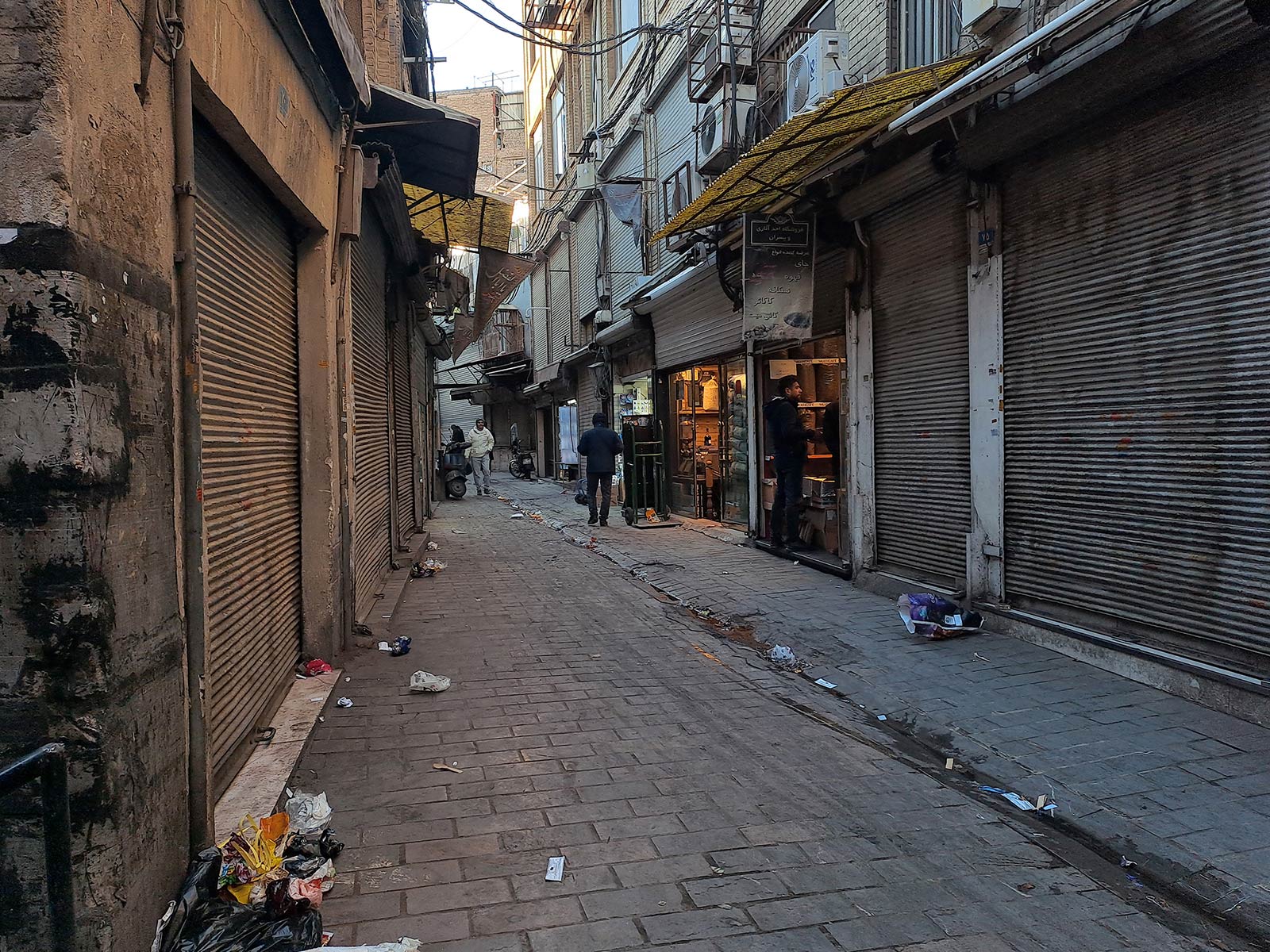
Closed shops at the Grand Bazaar of Tehran on December 30th
On New Year’s Eve I held a small gathering with a group of close pals in Tehran. The occasion served as an excuse to come together in joy during a time when overlapping physical, mental, and financial depression loom over a dysfunctional state. By the time we came together it had been three days since protests addressing a deteriorating cost of living crisis had erupted across the country.
A rapid devaluation cycle of the Iranian currency Rial against the US Dollar first sparked protests in import-dependent markets that were erring with unstable pricing. Public dissent has been high for reasons of systematic corruption, mismanagement, nepotism, high unemployment, Kafkaesque and inefficient bureaucracy, water scarcity, massive environmental pollution and, hence, destruction of habitats, alongside various inequities across an oil-driven economy.
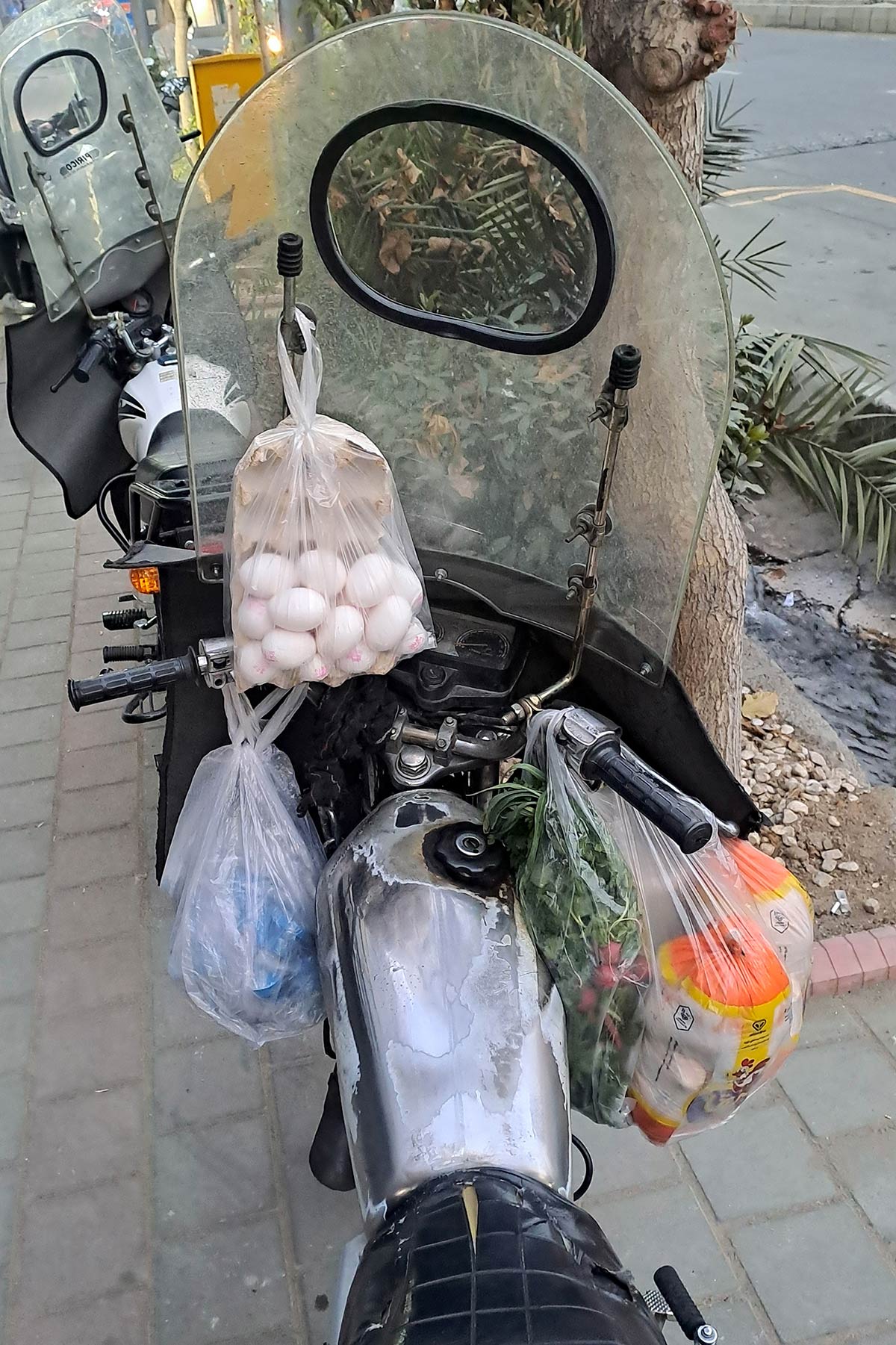
Tehran, Iran.
Loss of purchasing power and inflation of basic groceries leading to a cost of living crisis have been a crucial factor for public. dissent.
Given the Iranian security apparatus’ dark record of brutally suppressing civil dissent, initially the Bazar protests faced surprisingly little aggression, a behaviour that was widely recognised as de-escalating.
Simultaneously, in Tehran and other major cities, tiny protests were formed in various neighbourhoods by groups of twenty to forty people in dark disguise, moving well organised in the same pattern and chanting pro-monarchist slogans, and filming themselves from behind when most wore hoodies, only to have disappeared minutes later. Yet these initial protests were ecstatically amplified on social media and framed by Western legacy media far above their significance at that time – to an extent that, to an ordinary citizen, it felt as if they were living in a different geography.
Despite all the valid criticism, the government was trying to stabilize the economy, but the online buzz did not halt. It was driven by a fissured opposition abroad; the hawkish “who’s who” of U.S. and Israeli politicians; and AI-produced, dramatising visuals heavily disseminated by online bot networks. Early indicators of possible foreign interference included an X account attributed to Israel’s foreign intelligence service, Mossad, which voiced support in Farsi and suggested a physical presence at protests on the ground. Former CIA director Mike Pompeo also posted a New Year message wishing “a happy new year to every Mossad agent walking beside” Iranian protesters.
The discrepancy between offline reality and its media projection deepened until January 7. By then, Tehran’s soundscape would shift at around 8 p.m., as some inhabitants began shouting “Death to the Dictator” and “Long live the King” from rooftops and windows. Others pushed back, shouting insults in response. Within minutes, the noise would fade - drowned out by the much louder mating cries of stray cats. Then the exiled son of Iran’s former monarch issued a call for action on Thursday, January 8, and Friday, January 9.
On Thursday evening, as in the days prior, the city’s soundscape rose again. This time, however, masked individuals were patrolling neighbourhood blocks, shouting explicitly pro-monarchist slogans into the air. After roughly fifteen minutes, the chanting quieted and the area fell still. Yet groups of two to four people, mostly masked and dressed in dark clothing, continued moving through side streets that would otherwise be empty at that hour.
Just past 9 p.m., the silence broke with loud cries of “Long live the King!” Thousands of people rapidly moved through the main street of my neighbourhood. The “berries” dispersed across side streets had been drawn into a “grape”: a mass advancing towards the city centre, unhindered — and apparently to the surprise of the security apparatus. Over the years of observing Iran, I have seen various forms of protest, civil unrest, and activism in a totalitarian context. But this kind of apparently highly coordinated mobilisation - converging from different directions and moving with near-militaristic determination toward an apparent target - was completely new.
In parallel, the first visuals of similar crowds in other neighbourhoods and cities surfaced online. An hour later, Iran’s internet access was cut entirely. Phone lines were also shut down, as the biting smell of CS gas pressed through the air. A tragedy was reaching its climax.
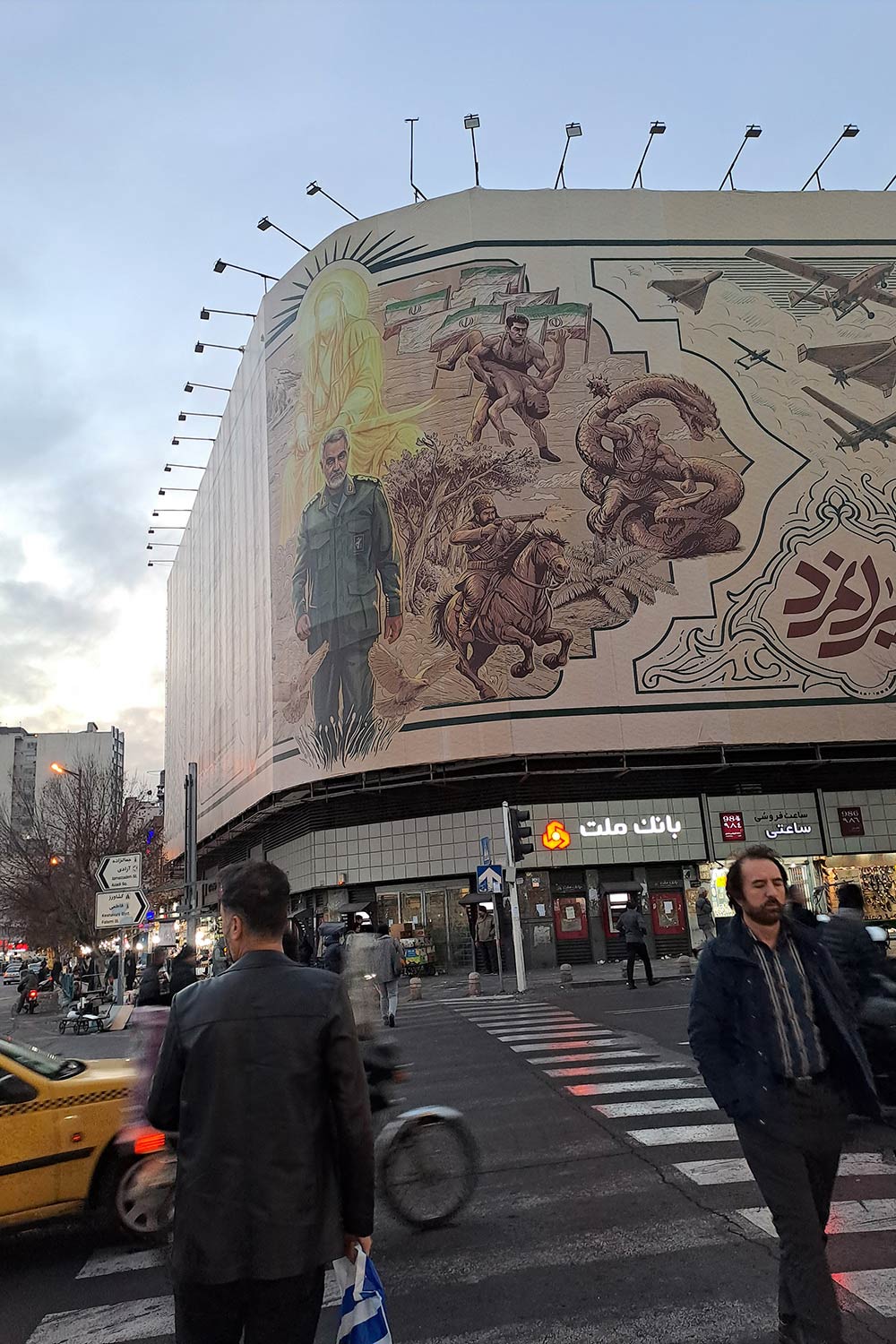
Tehran, Iran.
Street scene at Tehran’s central “Revolution Square”.
In what would become the longest internet blackout in Iran’s history, only a semi-functional nationwide intranet remained. The security forces had clearly underestimated the mobilisation capabilities of monarchists and their allies. Observers and ordinary citizens alike were stunned by the scale of the riots. By Saturday, January 10, the nation would wake up soaked in blood.
It might be easy to solely accuse the regime of a massacre of thousands, as many activists quickly did, though the reality seems to be more complex. Whilst there is a high number of deaths apparently as a result of a firm crackdown and the use of live ammunition, among the corpses there are also scores who have died due to wounds from knives, carpet cutters, and other improvised sharp blades. Then there are others who have endured gunshots at close range. Still others have succumbed to burns. And this is not an isolated issue limited to Tehran or a certain area, but all over the country there are also numerous corpses that have succumbed to wounds none of which correspond with a crowd and riot control perspective.
It doesn’t make any sense for security forces to risk physical engagement and injury when their units have a de facto carte blanche to use lethal ammunition from a safe distance.
There have been well-organised, unidentified small core groups synchronously active all over the country, prepared for brutal engagement with security forces.
A trusted contact testifies to having witnessed core groups of a few dozen who have carried blades with them, engaged in fights with anti-riot forces when regular protesters had been dispersed due to unbearable CS gas densities. Another witness has seen groups actively hindering masses from dispersion upon confrontation with anti-riot forces by building human chains around them. Fact is, the brutal events have shed the blood of thousands. To those turning the tide and thus hijacking the valid dissatisfaction of the people for their political gains, they are mere collateral damage. Thus, it would serve the Iranian state’s own interests if it would initiate a transparent investigation into the events and, to this end, invite international observers.
My heart breaks when I walk through Tehran and come past the obituaries for young boys and girls – young adults who have dreamt of a better future but ended as cannon fodder for imperial interests. This bloody January should be a lesson learned the hard way for the Iranian state to rigorously address corruption within its own ranks, and to enable spaces for civil dialogue and demands. Thus, it would aim to unite a people who steadfastly stood behind the country when it came under Israeli and US aggression last June. Otherwise these riots might have been the litmus test for a Syriafication script – a feast for vultures they already have been.
Tehran, Iran.
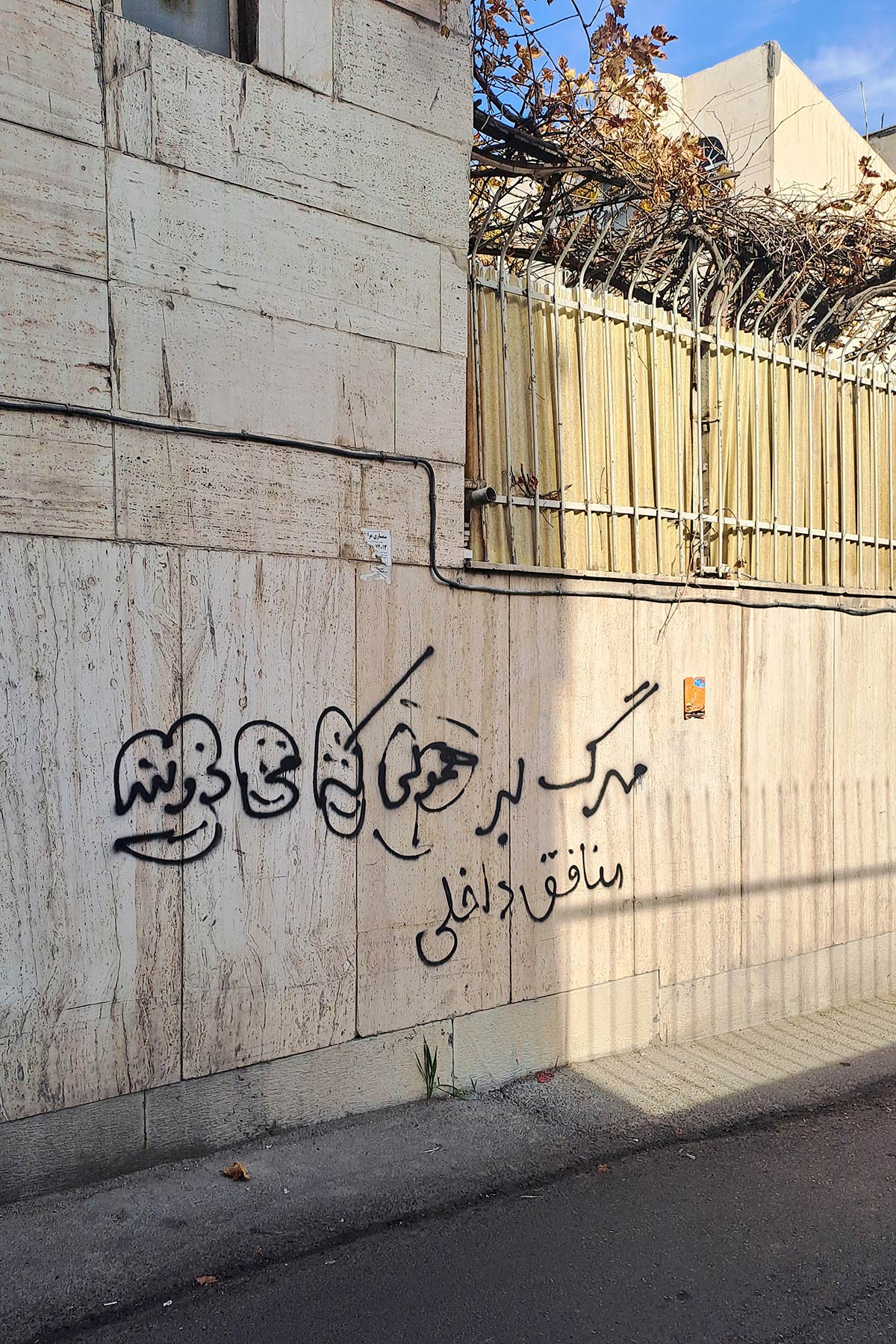
A mural graffito initially read “Death to whom we all know” has been striked through and replaced with “Death to internal traitor”.
Kaveh Rostamkhani is an essayist and documentary photographer. Over the past few years his focus has been on Iran and Afghanistan. This text was originally published as a dispatch on the author’s Instagram page @kavehjan. This version has been edited and condensed by Everything is Political for brevity.