

Digital & Print Membership
Yearly + Receive 8 free printed back issues
$420 Annually
Monthly + Receive 3 free printed back issues
$40 Monthly
How to Resist “Organized Loneliness”
resisting isolation in the age of digital authoritarianism
Over the past year, many of us have encountered, navigated, and processed violence alone on our phones. We watched videos of Renee Nicole Good and Alex Pretti being fatally shot and Liam Conejo Ramos being detained by ICE agents. These photos and videos triggered anger, sadness, and desperation for many (along with frustration that these deaths were the inciting blow against ICE agents that have killed many more people of color this year and last).
While the institutions and people committing these crimes do not want them recorded, the Department of Homeland Security and the wider Trump administration is using “organized loneliness,” a totalitarian tool that seeks to distort peoples’ perception of reality. Although seemingly a symptom of COVID-19 pandemic isolation and living in a more social media focused world, “organized loneliness” is being weaponized to change the way people not only engage with violence but respond to it online, simultaneously desensitizing us to bodily trauma and escalating radicalization and recruitment online.
Back in 2022, philosopher Samantha Rose Hill argued that the loneliness epidemic sparked by the COVID-19 pandemic could and would have dangerous consequences. She specifically cites Hannah Arendt’s 1951 book The Origins of Totalitarianism, which argued that authoritarian leaders like Hitler and Stalin weaponized people’s loneliness to exert control over them. Arendt was a Jewish woman who barely escaped Nazi Germany.

As Hill told Steve Paulson for “To The Best Of Our Knowledge,” “the organized loneliness that underlies totalitarian movements destroys people’s relationship to reality. Their political propaganda makes it difficult for people to trust their own opinions and perceptions of reality.” Because as Arendt wrote, “the ideal subject of totalitarian rule is not the convinced Nazi or the convinced Communist, but people for whom the distinction between fact and fiction and the distinction between true and false no longer exist.”
But there are ways in which we can resist the threat that “organized loneliness” represents, especially in the age of social media. They include acknowledging this campaign of loneliness, taking proactive steps when engaging with others online, and fostering relationships with friends and our communities to stand in solidarity amidst the rise of fascism.
1. The first step is accepting that loneliness affects everyone and can be exploited by authoritarian movements.
Many of us know this intimately. Back in 2023, the U.S. Surgeon General flagged an already dire loneliness epidemic, that in combination with a transition of most interaction onto social media, changes the way in which we engage with violence and tragedy online. But it can be hard to admit that loneliness affects us, especially when we are constantly connected through social media. It’s important to admit that even for the most digitally literate and active among us, “organized loneliness” not only can occur but especially occurs on social media.
Being susceptible to or affected by “organized loneliness” is not a moral shortcoming or a personal failure but acknowledging it and taking steps to connect with one another is the one way we resist totalitarian regimes.
Even before the advent of social media or online news outlets, Arendt was warning about how loneliness can become a breeding ground for downward spirals. She explains that the constant consumption of tragic, violent, and deeply upsetting news–and watching it unfold in front of us can not only be overstimulating but can desensitize us and disconnect us from reality.
While it can be difficult when most of our social lives exist on social media (this will be unpacked later), experts recommend that people limit using social media to less than two hours per day and avoid using it during the first hour after waking up and the last hour before going to sleep. People can use apps that limit overall screen time or restrict access to social media at set times–the best being Opal, One Sec, Forest, and StayFree. People can also use these apps to limit access to specific websites that might include triggering news.
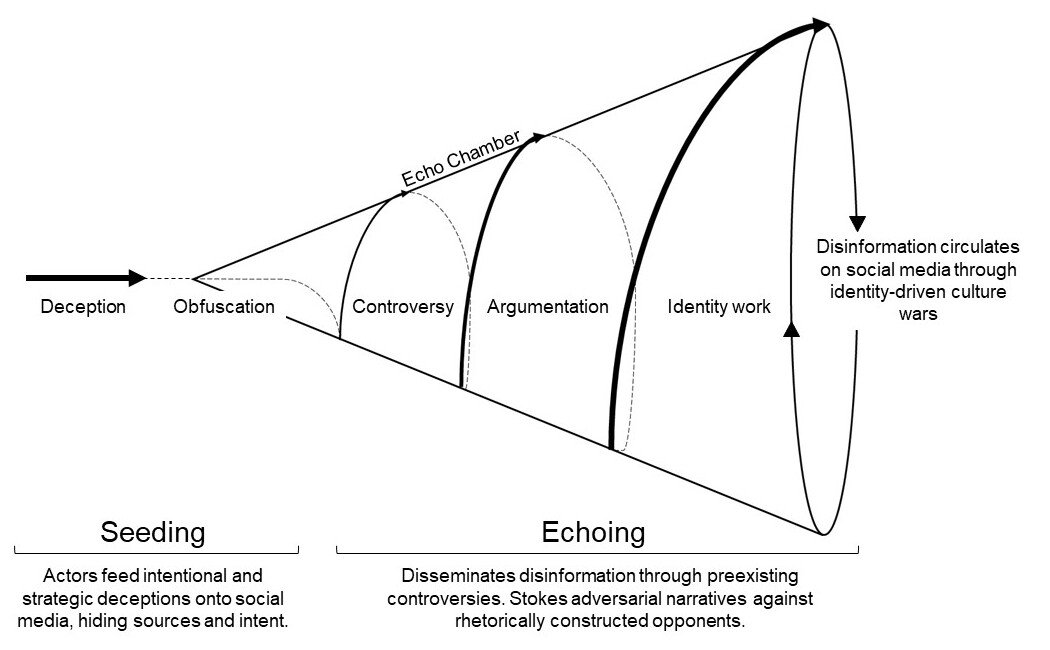
But it’s important to recognize that avoiding doomscrooling does not give people license not to stay informed or to look away from atrocities that are not affecting their communities.
When you are on social media, however, it’s important to recognize that AI-based algorithms track what we engage with and show us similar content. People can use a VPN to search without creating a record that AI can track and thus offer us like offerings, but while the most pronounced (and reported on) examples focus on White, cis straight men and the Manoverse, echochambers can affect all of us and shift our perception of publicly shared beliefs.
People can resist echo-chambers by seeking out new sources and accounts that offer different, fact-based perspectives but also acknowledge their commitment to resisting fascism, such as Ground News, ProPublica, and Truthout. Another idea is to follow anti-fascist online educators like Saffana Monajed who promote and share lessons for media literacy. People can also do this by cultivating their intellectual humility, or the recognition that your awareness has limits based largely on your own experiences and privileges and your beliefs could be wrong. Fearless Culture Design has some great tips.
While encountering and engaging different perspectives is vital to resisting echochambers and social algorithms, this is not an invitation to follow or platform any news outlet, content creator, or commentator that denies your or other people’s personhood.
4. Cultivate your friendships and make new ones.
In a time when many of us only stay in contact with friends through social media, friendships are more important than ever. Try, if you can, to engage friends outside of social media–whether it’s through in-person meet ups (dinners, parties, game nights) or on digital platforms that are not social media-based, for example coordinating meet-ups over Zoom or Skype. This can be a virtual D&D campaign, craft circle, or a virtual book club. While these may seem like silly events throughout the week, they help build real connection.
It’s important to connect with people outside of a space that uses an algorithm to design content and to reinforce that people are three-dimensional (not just a two-dimensional representation of a social media profile). There are even some apps that assist with this goal, such as Connect, a web app designed by MIT graduate students Mohammad Ghassemi and Tuka Al Hanai to bring students from diverse backgrounds together for lunch conversations.
Arendt writes that totalitarian domination destroys not only political life but also private life as well. Cultivating friendships–and relationships of solidarity with your neighbors and fellow community members–are the ways in which we not only resist the destruction of private relationships but also reinforce that we and others belong in our communities–and that we can achieve great things when we stand together!
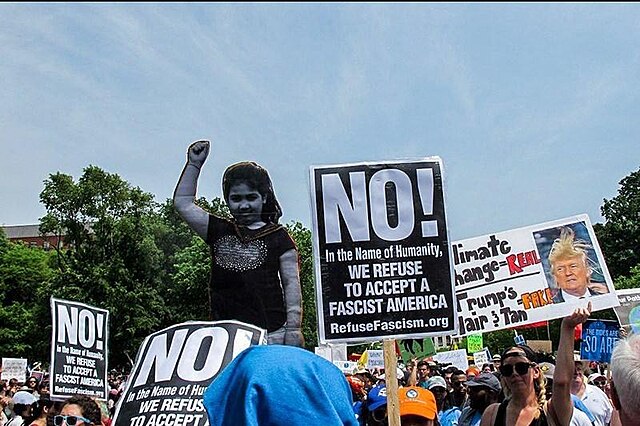
5. With this in mind, practice intentional solidarity with one another.
While it’s likely no surprise, fascism functions to both establish a nationalist identity that breeds extremism and destroy unification and rebellion against authority. The best way to resist the isolation that totalitarian governments breed is to practice intentional acts of solidarity with marginalized communities, especially communities facing systemic violence at the hands of an authoritarian power.
Writer and advocate Deepa Iyer discusses the importance of action-based solidarity in her program Solidarity Is, part of the Building Movement Project, and Solidarity Is This Podcast (co-hosted with Adaku Utah) discusses and models a solidarity journey that foregrounds marginalized communities. I highly recommend reading her Solidarity Is Practice Guide and the Solidarity Syllabus, a blog series that Iyer just started this month to highlight lessons, resources, and ideas of how to cultivate solidarity within your own communities.
6. Consume locally and ethically, and reject capitalist productivity.
And one way that people can stand in solidarity with their communities is to support local small businesses that invest back into the communities. When totalitarianism strips people of many platforms to voice concern, one of the last remaining power people have is how and where they spend their money. Often, this is what draws the most attention and impact, so it’s important to buy (and sell) based on Iyer’s Solidarity Stances and to also resist the ways in which productivity culture not only disempowers community but devalues human labor.
At the heart of Arendt’s criticism of totalitarian domination is the ways in which capitalism, a “tyranny over ‘laborers,’” contributes to loneliness itself (pg. 476). Whether intentional or not, this connects to modern campaigns not only of malicious compliance but also purposeful obstinance in which people refuse to labor for a fascist regime but to mobilize their ability to labor as a form of resistance–thinking about the recent walkouts and boycotts that resist by weaponizing our labor and our spending power.
Not only should people resist the conflation of a person’s value to their productivity, but they should use their labor–and the economic products of it–as tools of resistance in capitalism.
Thankfully as Arendy writes, “totalitarian domination, like tyranny, bears the germs of its own destruction,” so totalitarianism by definition cannot succeed just as humans cannot thrive under the pressure of “organized loneliness.” For this reason, it’s a challenge to hold on and resist the administration using disconnection to garner support for the dehumanization of and violence against human beings. But as long as we do, we have the most powerful tools of resistance–awareness, friendship, community, and solidarity–at our disposal to undo totalitarianism just as it was undone back in the 1940s.
{
"article":
{
"title" : "How to Resist “Organized Loneliness”: resisting isolation in the age of digital authoritarianism ",
"author" : "Emma Cieslik",
"category" : "essays",
"url" : "https://everythingispolitical.com/readings/how-to-resist-organized-loneliness",
"date" : "2026-02-13 15:11:00 -0500",
"img" : "https://everythingispolitical.com/uploads/American_protesters_in_front_of_White_House-11.jpg",
"excerpt" : "Over the past year, many of us have encountered, navigated, and processed violence alone on our phones. We watched videos of Renee Nicole Good and Alex Pretti being fatally shot and Liam Conejo Ramos being detained by ICE agents. These photos and videos triggered anger, sadness, and desperation for many (along with frustration that these deaths were the inciting blow against ICE agents that have killed many more people of color this year and last).",
"content" : "Over the past year, many of us have encountered, navigated, and processed violence alone on our phones. We watched videos of Renee Nicole Good and Alex Pretti being fatally shot and Liam Conejo Ramos being detained by ICE agents. These photos and videos triggered anger, sadness, and desperation for many (along with frustration that these deaths were the inciting blow against ICE agents that have killed many more people of color this year and last).While the institutions and people committing these crimes do not want them recorded, the Department of Homeland Security and the wider Trump administration is using “organized loneliness,” a totalitarian tool that seeks to distort peoples’ perception of reality. Although seemingly a symptom of COVID-19 pandemic isolation and living in a more social media focused world, “organized loneliness” is being weaponized to change the way people not only engage with violence but respond to it online, simultaneously desensitizing us to bodily trauma and escalating radicalization and recruitment online.Back in 2022, philosopher Samantha Rose Hill argued that the loneliness epidemic sparked by the COVID-19 pandemic could and would have dangerous consequences. She specifically cites Hannah Arendt’s 1951 book The Origins of Totalitarianism, which argued that authoritarian leaders like Hitler and Stalin weaponized people’s loneliness to exert control over them. Arendt was a Jewish woman who barely escaped Nazi Germany.As Hill told Steve Paulson for “To The Best Of Our Knowledge,” “the organized loneliness that underlies totalitarian movements destroys people’s relationship to reality. Their political propaganda makes it difficult for people to trust their own opinions and perceptions of reality.” Because as Arendt wrote, “the ideal subject of totalitarian rule is not the convinced Nazi or the convinced Communist, but people for whom the distinction between fact and fiction and the distinction between true and false no longer exist.”But there are ways in which we can resist the threat that “organized loneliness” represents, especially in the age of social media. They include acknowledging this campaign of loneliness, taking proactive steps when engaging with others online, and fostering relationships with friends and our communities to stand in solidarity amidst the rise of fascism.1. The first step is accepting that loneliness affects everyone and can be exploited by authoritarian movements.Many of us know this intimately. Back in 2023, the U.S. Surgeon General flagged an already dire loneliness epidemic, that in combination with a transition of most interaction onto social media, changes the way in which we engage with violence and tragedy online. But it can be hard to admit that loneliness affects us, especially when we are constantly connected through social media. It’s important to admit that even for the most digitally literate and active among us, “organized loneliness” not only can occur but especially occurs on social media.Being susceptible to or affected by “organized loneliness” is not a moral shortcoming or a personal failure but acknowledging it and taking steps to connect with one another is the one way we resist totalitarian regimes.2. Next, take social media breaks–and avoid doomscrooling.Even before the advent of social media or online news outlets, Arendt was warning about how loneliness can become a breeding ground for downward spirals. She explains that the constant consumption of tragic, violent, and deeply upsetting news–and watching it unfold in front of us can not only be overstimulating but can desensitize us and disconnect us from reality.While it can be difficult when most of our social lives exist on social media (this will be unpacked later), experts recommend that people limit using social media to less than two hours per day and avoid using it during the first hour after waking up and the last hour before going to sleep. People can use apps that limit overall screen time or restrict access to social media at set times–the best being Opal, One Sec, Forest, and StayFree. People can also use these apps to limit access to specific websites that might include triggering news.But it’s important to recognize that avoiding doomscrooling does not give people license not to stay informed or to look away from atrocities that are not affecting their communities.3. Resist social media echo-chambers by diversifying your algorithm.When you are on social media, however, it’s important to recognize that AI-based algorithms track what we engage with and show us similar content. People can use a VPN to search without creating a record that AI can track and thus offer us like offerings, but while the most pronounced (and reported on) examples focus on White, cis straight men and the Manoverse, echochambers can affect all of us and shift our perception of publicly shared beliefs.People can resist echo-chambers by seeking out new sources and accounts that offer different, fact-based perspectives but also acknowledge their commitment to resisting fascism, such as Ground News, ProPublica, and Truthout. Another idea is to follow anti-fascist online educators like Saffana Monajed who promote and share lessons for media literacy. People can also do this by cultivating their intellectual humility, or the recognition that your awareness has limits based largely on your own experiences and privileges and your beliefs could be wrong. Fearless Culture Design has some great tips.While encountering and engaging different perspectives is vital to resisting echochambers and social algorithms, this is not an invitation to follow or platform any news outlet, content creator, or commentator that denies your or other people’s personhood.4. Cultivate your friendships and make new ones.In a time when many of us only stay in contact with friends through social media, friendships are more important than ever. Try, if you can, to engage friends outside of social media–whether it’s through in-person meet ups (dinners, parties, game nights) or on digital platforms that are not social media-based, for example coordinating meet-ups over Zoom or Skype. This can be a virtual D&D campaign, craft circle, or a virtual book club. While these may seem like silly events throughout the week, they help build real connection.It’s important to connect with people outside of a space that uses an algorithm to design content and to reinforce that people are three-dimensional (not just a two-dimensional representation of a social media profile). There are even some apps that assist with this goal, such as Connect, a web app designed by MIT graduate students Mohammad Ghassemi and Tuka Al Hanai to bring students from diverse backgrounds together for lunch conversations.Arendt writes that totalitarian domination destroys not only political life but also private life as well. Cultivating friendships–and relationships of solidarity with your neighbors and fellow community members–are the ways in which we not only resist the destruction of private relationships but also reinforce that we and others belong in our communities–and that we can achieve great things when we stand together!5. With this in mind, practice intentional solidarity with one another.While it’s likely no surprise, fascism functions to both establish a nationalist identity that breeds extremism and destroy unification and rebellion against authority. The best way to resist the isolation that totalitarian governments breed is to practice intentional acts of solidarity with marginalized communities, especially communities facing systemic violence at the hands of an authoritarian power.Writer and advocate Deepa Iyer discusses the importance of action-based solidarity in her program Solidarity Is, part of the Building Movement Project, and Solidarity Is This Podcast (co-hosted with Adaku Utah) discusses and models a solidarity journey that foregrounds marginalized communities. I highly recommend reading her Solidarity Is Practice Guide and the Solidarity Syllabus, a blog series that Iyer just started this month to highlight lessons, resources, and ideas of how to cultivate solidarity within your own communities.6. Consume locally and ethically, and reject capitalist productivity.And one way that people can stand in solidarity with their communities is to support local small businesses that invest back into the communities. When totalitarianism strips people of many platforms to voice concern, one of the last remaining power people have is how and where they spend their money. Often, this is what draws the most attention and impact, so it’s important to buy (and sell) based on Iyer’s Solidarity Stances and to also resist the ways in which productivity culture not only disempowers community but devalues human labor.At the heart of Arendt’s criticism of totalitarian domination is the ways in which capitalism, a “tyranny over ‘laborers,’” contributes to loneliness itself (pg. 476). Whether intentional or not, this connects to modern campaigns not only of malicious compliance but also purposeful obstinance in which people refuse to labor for a fascist regime but to mobilize their ability to labor as a form of resistance–thinking about the recent walkouts and boycotts that resist by weaponizing our labor and our spending power.Not only should people resist the conflation of a person’s value to their productivity, but they should use their labor–and the economic products of it–as tools of resistance in capitalism.Thankfully as Arendy writes, “totalitarian domination, like tyranny, bears the germs of its own destruction,” so totalitarianism by definition cannot succeed just as humans cannot thrive under the pressure of “organized loneliness.” For this reason, it’s a challenge to hold on and resist the administration using disconnection to garner support for the dehumanization of and violence against human beings. But as long as we do, we have the most powerful tools of resistance–awareness, friendship, community, and solidarity–at our disposal to undo totalitarianism just as it was undone back in the 1940s."
}
,
"relatedposts": [
{
"title" : "A Trail of Soap",
"author" : "susan abulhawa, Diana Islayih",
"category" : "excerpts",
"url" : "https://everythingispolitical.com/readings/a-trail-of-soap",
"date" : "2026-02-13 08:40:00 -0500",
"img" : "https://everythingispolitical.com/uploads/Trail_of_Soap.png",
"excerpt" : "From EVERY MOMENT IS A LIFE compiled by susan abulhawa. Copyright © 2026 by Palestine Writes. Reprinted by permission of One Signal Publishers/Atria Books, an Imprint of Simon Schuster, LLC.",
"content" : "From EVERY MOMENT IS A LIFE compiled by susan abulhawa. Copyright © 2026 by Palestine Writes. Reprinted by permission of One Signal Publishers/Atria Books, an Imprint of Simon Schuster, LLC.Illustration Credit: Rama DuwajiI met Diana Islayih at a series of writing workshops I conducted in Gaza between February and May 2024. She was one of a couple dozen young people who traveled for hours on foot, by donkey cart, or in cars forced to crawl through the crush of displacement. They were all trying to survive an ongoing genocide. Still, they risked Israeli drones and bombs to be there, just to feel human for a few hours, like they belong in this world, to touch the lives they believed they might still have.Soft-spoken and slight, Diana was the only one who recognized me, asking quietly if I was “the real susan abulhawa.” Each writer progressed their piece at their own pace, and would read their work aloud in the workshops to receive group feedback. Diana’s was the only story that emerged almost fully formed, as if it had been waiting for language. She teared up the first time she read it aloud, and again, the second.By the third reading, the tears were gone. “I got used to the indignities,” she told me. “Now I’m used to reading them out loud.” She confessed that she struggled living “a life that doesn’t resemble me.” On our last day together, I reminded her of what she’d said. She smiled ironically. “Now I don’t know if I resemble life,” she said.What follows is Diana’s story, written from inside that unrecognizable life, bearing witness not through spectacle, but through one intimate moment in the unbearable weight of the everyday. — susan abulhawa, editor of Every Moment Is a Life, of which this essay is part.Courtesy of Simon & SchusterI poured yellow liquid dish soap into my left palm, which instinctively cupped into a deep hollow, like a well yearning to be a well once more. I would need to wash my hands after using the toilet near our tent, though the faucet was usually empty. Water had been annihilated alongside people in this genocide, becoming a ghost that graciously deigns to appear to us when it wishes to—one we chase after rather than flee.The miserable toilet was made of four wooden posts, wrapped in a makeshift curtain made from an old scrap of fabric—so sheer you could see silhouettes behind it. A blanket full of holes and splinters served as a “door.”Inside, a concrete slab with a hole in the middle. You need time to convince yourself to enter such a place. The stench alone seizes your eyelids and turns your stomach the moment it creeps into your nose.I thought about going to the damned, distant women’s public toilet. I hated it during the first weeks of our displacement, but it was the only one in the area where you could both relieve yourself and scrub off the dust of misery that clung to every air molecule.It infuriated me that it was wretched and run-down, and the crowding only made it worse—full of sand, soiled toilet paper, and sanitary pads scattered in every corner.“Should I go?” I asked myself, aloud.I decided to go, taking one step forward and two steps back. I’d ask anyone returning from the toilet, “Is there water in the tap today?” and await the answer with the eagerness of a child hoping for candy.“You have to hurry before it runs out!”Or, more often, “There isn’t any.”So we’d all—men, women, and children—arm ourselves with a plastic water bottle, which was a kind of public declaration: “We’re off to the toilet.” We’d also carry a bar of soap in a box, although most people didn’t bother using it since it didn’t lather and was like washing your hands with a rock.I looked up and exhaled, staring into the vast gray nothingness that stared right back at me. Then I stepped out onto the sand across from our ramshackle displacement camp—Karama, “Camp Dignity”—though dignity itself cries out in this filthy, exhausted place, choked with chaos and a desperate scramble to moisten our veins with a drop of life.The road was empty, as it was early morning, and even the clamor of camp life lay dormant at that hour. Still, I couldn’t relax my shoulders—to signal my senses that we were alone, that we were safe. My fingers remained clenched over the yellow dish soap, my hand hanging at my side to keep it from spilling.I crossed the distance to the toilet—step by step, meter by meter, tent by tent. The souls who dwelled in them, just as they were, unchanged, their curious eyes fixed on me. I passed a garbage heap, shaped like a crescent moon, overflowing with all kinds of empty food cans—food that had ruined the linings of our intestines and united us in the agonies of digestion and bowel movements.Something trickled from my palm—a thread of liquid that felt like blood dripping between my fingers, down my wrist in thickening droplets. My hand trembled, and my eyes blurred. I convinced myself—without looking—that it was all in my head, not in my hand, quickened my pace, my heartbeat thudding in my ears.At last, I reached the only two public toilets in the area, one for men and the other for women, both encased in white plastic printed with the blue UNICEF logo.Inside, I was met with the “toilet chronicles”—no less squalid than the toilet itself—unparalleled chatter among women who’d waited long hours in the line together.The old women bemoaned the soft nature of our generation, insisting our condition was a “moral consequence” of our being spoiled.Other women pleaded to be let into the toilet quickly because they were diabetic. They banged on the door with urgency and physical pain, like they would break in and grab the person behind it by the throat, shouting, “When will you come out?!”The woman inside yelled back, “I’m squeezing my guts out! Should I vomit them up too? Have patience! Damn whoever called this a ‘rest room’!”I looked around. A pale-faced woman smiled at me. I returned her smile, but my face quickly stiffened again, as if the muscles scolded me for stretching them into a smile. A voice inside me whispered meanly, What are you both even smiling about?A furious cry rang from the other stall, “Oh my God! Someone is plucking her body hair! What are you doing, you bitch? It’s a toilet! A toilet!”Another voice shot back, “Lower your voice, woman, and hurry up! The child’s crying!”Two little girls stood nearby, with tousled hair, drool marking their cheeks, their eyes half shut. They were crying to use the toilet, clutching their crotches, shifting restlessly in the sandy corridor where we stood.I was trying to push through to the water tap at the end of the hall, attempting to escape this tiresome, tragic theater. As my luck would have it, there was no water. I opened my palm. It too was empty. The yellow dish soap my mother bought yesterday was gone. All that remained was a sticky smear across my left hand and a long thread trailing behind me in the sand. Had it been dripping from my hand all along the way?I twisted the faucet handle back and forth—a futile hope for even a thin thread of water. Not a single drop came.My body sagged under the weight of rage, disappointment, fury, and a storm of unanswerable questions. I rushed through the crowded corridor of angry women, out into the street. I couldn’t hold back tears.I wept, cursing myself and the occupation and Gaza and her sea— the sea I love with a weary, lonely love, just as I’ve always loved everything in this patch of earth.I sobbed the entire way back. Without shame. I didn’t care who saw—not the passersby, not the homes or tents, not the ground I walked on. My grief rained tears on this land on my way there and back.But the land’s thirst is never quenched—neither with our tears, nor with our blood.My eyes were wrung dry from crying by the time I reached our tent. I collapsed on the ground, questions clamoring in my head.Can a homeland also be exile?Can another exile exist within exile?What is home?Is home the homeland itself, the soil of a nation?Or is it the other way around—the homeland is only so if it’s truly home?If the homeland is the home, why do I feel like a stranger in Rafah—a place just ten minutes from my city, Khan Younis?And why did I fear the feeling I had when I imagined myself in our kitchen, where my mother cooked mulukhiya and maqluba for the first time in six months, even though I wasn’t at home—in our house?That day, I said aloud, “Is this what the occupation wants? For me to feel ‘at home’ merely in the memory of home?”How can I feel at home without being there?How can I be outside of my homeland when I’m in it?I looked down at my hand—dry and cracked with January’s chill. The yellow soap liquid had turned into frozen white powder between my fingers."
}
,
{
"title" : "Venezuela should be neither dictatorship nor colony: An interview with union leader Eduardo Sánchez",
"author" : "Simón Rodriguez",
"category" : "essays",
"url" : "https://everythingispolitical.com/readings/venezuela-should-be-neither-dictatorship-nor-colony",
"date" : "2026-02-12 10:51:00 -0500",
"img" : "https://everythingispolitical.com/uploads/Eduardo%20Sa%CC%81nchez%20rueda%20de%20prensa%20diciembre%202024.jpeg",
"excerpt" : "Eduardo Sánchez is an important Venezuelan labor leader with decades of political and union work. He is the president of the National Union of Workers of the Central University of Venezuela (SINATRAUCV) and the Federation of Higher Education Workers of Venezuela (FETRAESUV). He is also a member of Comunes, an organization founded in 2024 that, in its founding documents, aims for the recovery of the legacy of the Bolivarian Revolution, which they believe the Maduro government has broken with, to the point of considering it a neoliberal and “anti-Chavista government.”",
"content" : "Eduardo Sánchez is an important Venezuelan labor leader with decades of political and union work. He is the president of the National Union of Workers of the Central University of Venezuela (SINATRAUCV) and the Federation of Higher Education Workers of Venezuela (FETRAESUV). He is also a member of Comunes, an organization founded in 2024 that, in its founding documents, aims for the recovery of the legacy of the Bolivarian Revolution, which they believe the Maduro government has broken with, to the point of considering it a neoliberal and “anti-Chavista government.”Sánchez describes Comunes as “a grouping of left-wing sectors that propose an alternative to the polarization between the so-called reactionary left that rules the country, led by President Nicolás Maduro, and the fascist and right-wing sectors represented by the current headed by María Corina Machado. In other words, we are a third option, seeking to establish a political and social solution for the popular and workers’ movement, with the concept of the homeland as a fundamental element.” The following interview took place January 13.How would you characterize the events of the last few days in Venezuela, starting with the US attack?Since the early hours of January 3, the US aggression against Bolívar’s homeland, against Venezuelan soil, materialized. According to statements by US spokespeople themselves, more than 150 aircraft invaded Venezuelan territory to bomb specific areas of Caracas, Miranda, Aragua, and La Guaira. This is an unprecedented event in Venezuelan politics, which has caused outrage because Venezuelan soil has been sullied by the insolence of an imperialist power that, abusing its military might, has taken it upon itself to intervene in our country and remove the president. Not that we defend the president as such, but we do not believe that anyone has given the US president carte blanche to be the world’s policeman and come and control our country. This is a problem for Venezuelans that we Venezuelans must resolve ourselves. Therefore, we condemn this aggression as a disgraceful act that we hope will not happen again in any of our countries on the continent.President Maduro has led an authoritarian government that arose from an unfortunate event, which leaves doubts about its legitimacy, given that he lost the July 28 elections and arrogated them to himself, generating a process of repression, imprisoning anyone who protested, and acquiring a dictatorial character, which today bears responsibility for what is happening with the current crisis. The gringos have intervened, taking advantage of the crisis and with the support of an anti-national sector of the country that called for intervention and is now very poorly regarded by Venezuelan society.What is the current situation on the streets?The situation on the streets of Venezuela is one of astonishing calm, as a result of the fact that more than 70% of Venezuelans did not sympathize with Maduro’s regime, in addition to its repression, imprisonments, and deaths, as well as the economic and social deterioration that has engulfed the Venezuelan working class, which has paid a high price for a crisis it did not create, which has impoverished its wages and plunged it into a state of critical poverty. Today, when the government sought the support of the working class and the people, the response was negligible, with only a small percentage mobilizing due to the general discontent that existed.This does not mean support for the intervention; everyone laments that more than 100 Venezuelans have died as a result of treacherous bombings against Bolívar’s homeland, and that the concept of homeland has been sidelined and the country’s sovereignty violated.How do you interpret Trump’s announcements that he will allegedly run the country and take over Venezuelan oil?For us, there is now a dilemma: republic or colony. Facing it, we are putting forward our proposals to unify the country, to unify the working people around the concept of the Republic. We cannot be a colony of anyone, much less of the gringos, who have been the most reactionary and recalcitrant imperialist power on the continent, responsible for interventions that have taken place since the beginning of the last century, and who now seek to arrogate to themselves rights they do not have in order to turn us into a protectorate.The call we are making to Venezuelan society and the workers’ movement is for unity and action, and to the interim government, which also lacks legitimacy, despite being the element with which they intend to make a transition, is that any solution that is proposed must be framed within the Constitution and the democratic process. Relations with the US from a commercial point of view must be within the framework of respect for the Venezuelan Constitution and laws, and not under the guise of a kind of protectorate where they are giving orders on the premise that if they are not obeyed, they will bomb again.We believe that the country has sufficient political reserves to achieve an independent, autonomous, democratic, and patriotic state that can lead this country and put an end to the attempt to impose a dictatorship by a government that claimed to be revolutionary but ended up being neoliberal and capitalist, and prevent us from becoming a protectorate of a foreign power. We consider it important for the country to move towards democracy, allowing us to elect our president in accordance with the Constitution and laws of the Bolivarian Republic of Venezuela.What message would you give to workers in other countries who are closely following the situation in Venezuela?This situation is very unfortunate for the entire continent. It represents a wake-up call to the different peoples of the world, in the understanding that the gringos now consider that they are once again managing the region as their backyard, and from that point of view they simply intend to take our oil, our gold, our rare earths, turn Venezuela into a kind of protectorate or colony, and take over the wealth of our country.It is important that the peoples of the world see themselves in the mirror of the Venezuelan situation, which today stands at a crossroads between becoming a US colony or continuing on the path of the Republic. We call on the working classes of Latin America and the world to unite to avoid ending up in a situation like the one we are now experiencing. We call on them to fight the authoritarian regimes that have brought so much pain to the different countries of the American continent. The call is for unity as a class, with a perspective of struggle, not only for labor rights but also for the homeland, a fundamental and unifying concept of each of the countries that make up the Latin American homeland, which continue in the struggle for self-determination, to expand and develop democracy to place it at the service of the majority."
}
,
{
"title" : "Against Kurdish Erasure: From the editor of Sleeping in the Courtyard",
"author" : "Holly Mason Badra",
"category" : "essays",
"url" : "https://everythingispolitical.com/readings/against-kurdish-erasure",
"date" : "2026-02-11 09:17:00 -0500",
"img" : "https://everythingispolitical.com/uploads/img_0230%20copy.png",
"excerpt" : "With Kurds in Rojava (Western Kurdistan) and Rojhelat (Eastern Kurdistan) facing insurmountable violence and displacement at the hands of the Iranian, Syrian, and Turkish forces, we in diaspora mobilize in anger and strength. Rojava offers an example of Kurdish liberation so rooted in feminist, ecological, and participatory practices that it must be protected. The threat of erasure follows us from Rojava to Rojhelat where the martyrs that spark revolution and move us to action across the globe are Kurdish women like Jina Amini and Rubina Aminian. It’s imperative to acknowledge their Kurdish identity as we remember and point to them as conduits.",
"content" : "With Kurds in Rojava (Western Kurdistan) and Rojhelat (Eastern Kurdistan) facing insurmountable violence and displacement at the hands of the Iranian, Syrian, and Turkish forces, we in diaspora mobilize in anger and strength. Rojava offers an example of Kurdish liberation so rooted in feminist, ecological, and participatory practices that it must be protected. The threat of erasure follows us from Rojava to Rojhelat where the martyrs that spark revolution and move us to action across the globe are Kurdish women like Jina Amini and Rubina Aminian. It’s imperative to acknowledge their Kurdish identity as we remember and point to them as conduits.A group of Kurdish college students posing with their musical instruments by Pirdí Delal. Zaxo, Kurdistan, 1970’s. Photo credit: Raz Xaidan/The Jiyan Archives“I open my ponytail in class and the horses shriek.”This line is from Nahid Arjouni’s poem “My Roots Were Somewhere With You” and constantly plays in my mind. I’ve been so moved by the circulating imagery of Kurdish fathers braiding their daughter’s hair. This tenderness is balm and antidote. This tenderness falls against a backdrop of continued state violence while Kurds in Rojava and Rojhelat are fighting for their existence and rights against the Syrian, Turkish, and Iranian regimes. Erasure continues in multiple forms and in dangerous misrepresentations.This emergence of braiding as protest is in response to a video of a Syrian soldier claiming he cut off a Kurdish female fighter’s braid in Raqqa. The Kurdish braid is a loud symbol. It’s a representation of cultural continuity and protection.Power and Politics in Kurdish Women’s BraidsI want to tell you a story about my mother braiding her little sister’s hair in Baghdad. She braided her sister’s hair while their father napped. While braiding her sister’s hair, they practiced the Arabic they were learning in school. Only Arabic in public; only Kurdish at home. These were the rules and a slip up in either space was punishable. Their father woke. Small hands braiding, sisters talking and laughing, and he physically reprimanded them for the linguistic transgression. Such anger and violence. And it comes from a deep well of oppression and linguicide. Still, the daughters bear the weight of it all.I see the man who held the female peshmerga’s braid walking back his claims, saying it wasn’t real, it was a joke. Regardless of the truth—the “joke” holds hefty reverberations. The “joke” is offensive, it’s harmful, it’s violent. It speaks to perceptions of Kurdish dispensability.The same aunt—whose hair my mom was braiding—brushed and braided my hair when I was 5 days postpartum. I felt comfort return to my body. When my sister-cousin braids my hair, I feel loved and protected. The tradition lives on. This display of braiding spreading among our communities all over the world is a refusal. A refusal to be erased.Possibly a double exposure or composite, this 1977 image shows a woman pictured twice - confident, braided, and in sunglasses, Qamişlo, Kurdistan. Photo credit: Hedîya Xan/The Jiyan Archives.It is within this spirit of anti-erasure that I initially put together Sleeping in the Courtyard, a multi-genre collection of writing by contemporary Kurdish women and nonbinary writers living all over the world. One of the contributors, Choman Hardi, fiercely proclaims, “As a poet, I believe it is my duty to ruin the façade of normality and fairness that prevails.” It is within this current landscape that I invite you to spend time with some poems from the collection and excerpts from the book’s introduction as our communities resist erasure.\Sleeping in the Courtyard cover image artist attribution, Shayan NuradeenThe first offering is a poem by Nahid Arjouni who is a Kurdish poet known for her exploration of femininity and war.She lives in Sanandaj in Eastern Kurdistan (touching Iran). This poem was translated from the Persian by Shohreh Laici who is a US-based Iranian journalist, writer, and translator. Her documentary My Room in Tehran Is Called America is currently in production by Pirooz Kalayeh and explores her fight for freedom of expression.My Roots Were Somewhere with YouSuch a small worldyou spend your days with the broken pieces of me,fallen to earth.I delete the borders from the books, from my hairs, too;Father said, “Cut it off.”He added, “Fuck the horses’ whinnies, we don’t belong to this country!Don’t you understand?”I disturb the earth and spread some of my ancestors’ soil nearthe geraniums,and throw more on the broken and ugly asphalt of the streets.I throw it on the face of the child who calls Grandma “foreigner,” laughing.Father said, “It happens a lot when your roots are somewhere else,”and then he stopped talking.My roots were somewhere with you,and only the strange horses loved my whinny, those who belong to no land.I think of my roots at school, in my headscarf, while the smell of bloodin the national anthemmade me deeply sad!I think it’s the earth’s stupidity which lets us break it into pieces, borders.I think it’s the politicians’ stupidity that never lets soldiers in love feardeath in war.Sometimes I think my teachers are dumb, those who believe war is holyand that not wearing the hijab helps the enemy.I open my ponytail in class and the horses shriek.Father said, “Your roots were somewhere else,” and I was thinking of youwho are somewhere else.You hate the blood,the politicians, too, those who never let soldiers in love fear war.In her essay “Poetry’s power to speak the unspeakable: the Kurdish story,” Choman Hardi writes, “It may be difficult for others to understand what it feels like to be forcibly deported, to see your homes given to ‘settlers,’ to witness the renaming of your neighbourhoods and towns. It may be difficult to imagine what it is like not to be allowed to speak your mother tongue, to witness public assassination of your people, to grow up with images of mass graves, gassed victims, hanged leaders. It is even more difficult to describe what it is like to see history repeat itself when you witness your defeat again.”\Sleeping in the Courtyard commission image 1 artist attribution, Shayan NuradeenI turn us now to another poem in Sleeping in the Courtyard—by exiled writer Meral Şimşek.Meral is a poet, novelist, and editor born in Amed (Diyarbakir) in Northern Kurdistan. Her publications and accolades are many. Due to the content of her books and the awards she received, the Turkish government accused her of making propaganda. The prosecutor’s office requested a prison sentence of up to thirty years. After a lengthy and tumultuous escape from Turkey to Greece and back to Turkey, PEN Berlin managed to bring her safely to Germany in 2022. This poem is translated from the Turkish by Öykü Tekten who is a poet, translator, archivist, and editor splitting her time between Granada and New York. She is the general editor of the Kurdish Poetry Series at Pinsapo Press.Dream and Realityclean tables were setwhen the sun was scorchedbread was a stranger to our countryjust as othering ourselves,we burned and scattered our dreamsand sterilized all hopesour refugee hearts turned to the loop of nightwhile the gods bore bastard seedsin crimson gardens of paradisewe were banned from life, from falling in loveit was the time of laughter in thymeeach of us shouldered, one by one,uncontainable weary dreamswe fell silent in orphaned solitudessurrendered ourselves so that the worldwould be a better placein fact, we massacred ourselvesfor a worthy life through slimy consolationshistory of our consciousness filled with delusionsnothing more than a chain of silenced paradoxesunanswered questions resided with our stagnationblaming each sin on the darknessas they became our biggest unanswered questionwas it our dream that was the realityor our reality, the dream?\Sleeping in the Courtyard commission image 2 artist attribution, Shayan NuradeenSleeping in the Courtyard is dedicated to all writers in exile.Many of the women in this book are writers in exile. They are exiled writers simply for being women and being writers (the two coexisting at once poses a threat). The fact that the intersecting identity as a Kurdish woman daring to write often means risking one’s safety—simply for writing creatively—also proves that there must inherently be power in writing, if these women are seen as a threat just for doing it.Excerpt from Introduction to Sleeping in the Courtyard:Exile and erasure are tools of the oppressor. This collection is the antithesis of erasure. In 2022, when the phrase “Women Life Freedom” rang out in protests transnationally and across digital spaces in response to the death of Jîna Mahsa Amini, many in the Kurdish community felt a twinge of pain and frustration at the lack of recognition for where this outcry originates. “Women Life Freedom” comes from the Kurdish “Jin-Jiyan-Azadî,” which is a verbalization from Kurdish women’s liberation movements. More than that, though, there was pain for the erasure of Jîna’s name and identity as a Kurdish woman. Arrested by the Iranian state for improperly wearing her hijab, the protests in response that spread worldwide were not anti-hijab campaigns but more about the right to choose. The martyr who sparked the revolution that famous writers such as Marjane Satrapi have written about was a Kurdish woman. Why is it important to recognize her as Kurdish? Why is it important to note the origins of “Women Life Freedom” as Kurdish? Because of the way that Kurdish women are erased from the narrative and Kurdish cultural production is co-opted. More than that, it was the Iranian state that forced Jîna to go by her “official” government name, so it perpetuates further violence when she is not referred to by her Kurdish name in death. It perpetuates further violence when a phrase from Kurdish women’s freedom movements is used in spaces where Kurdish culture and existence is suppressed and criminalized. To gain a deeper understanding of these contexts and implications, turn to “Why ‘Jîna’: Erasure of Kurdish Women and Their Politics from the Uprisings in Iran” by Farangis Ghaderi and Ozlem Goner. The goal here is not to defame the power and necessity of this movement for Iranian women (and Kurdish women alike). The point here is that within feminist solidarities, there must be a recognition of Kurdish women’s roles and contributions in order for true liberation and justice to take place. This book uplifts and spotlights the role that Kurdish women (past and present) play in social, political, and cultural progress.It is in this spirit that I want to finish this offering, to leave you with one of my own poems in the collection– a love poem– because it has been powerful to see the queer Kurdish iconography within the current global protests for Rojava. The Kurdish flag next to the progress pride flag. The Kurdish flag’s sun inserted into the progress pride flag. I am healing.WaitingWinter branchessilhouettethe darkening sky.In trying to be tender,I slice a pearand add cinnamon.The gate swings on a hinge.Imaginea crescent moon:the beloved’s ear.And in hereyea silhouetteof winter branches.We are all waiting, not passively, but actively. While we wait for an end to the oppression, subjugation, and state violence against our people, we care for each other, for our communities, for our families, for our land.Publication notes:“My Roots Were Somewhere With You” by Nahid Arjouni (translated by Shohreh Laici) was first published in Two Lines Press, no.29 (2018)“Dream and Reality” by Meral Şimşek (translated by Öykü Tekten) was first published in The Markaz Review (2022)“Waiting” by Holly Mason Badra was first published in Bethesda Magazine (2018)"
}
]
}