
There are not enough words to explain what is going on in Venezuela.
It’s years and years of history that go far beyond the current government. You cannot understand what is happening today without looking at centuries of colonization, extraction, foreign intervention, and internal power structures that existed long before Chávez and certainly before Maduro.
At the same time, I do not want to see anyone suddenly engaging with the current news while completely ignoring what has been happening in Venezuela for the last 26 years. There is a reason why millions of people have been forced to leave the country. This collapse did not appear overnight, and pretending it did is incredibly dishonest and deeply disrespectful to those who have lived through it.
Venezuela has experienced different forms of authoritarianism, corruption, and elite control for decades. What we are witnessing now is not “anti-imperialist resistance,” nor is it a simple story of democracy versus dictatorship. It is the result of a country that has been systematically drained from the inside and the outside for its resources and strategic value.
Understanding Venezuela does require going further back than Chávez. But it also absolutely requires understanding what Chávez and Maduro actually did. Not the romanticized version consumed from Europe or academic spaces, not what sounds good on paper. If you never lived in Venezuela, you will never fully understand what that period meant in real life. U.S. sanctions do exist, and while I do not support them, their role is often used as a convenient explanation for Venezuela’s collapse. At the same time, sanctions did not prevent the government from extracting resources, diverting public funds, consolidating power, or carrying out systematic repression. These dynamics were produced from within. That being said, I am not opposed to non-Venezuelans speaking about the country. What happens in Venezuela affects the entire region, and it does not exist in isolation. The problem is not who speaks, but how — and whether Venezuelan lived experience is actually listened to.
The regime has caused enormous harm. To deny that, excuse it, or aestheticize it from afar is another form of violence. You cannot claim solidarity while dismissing the lived reality of those who endured the consequences of those policies every single day.
There is also a history of state violence that is rarely acknowledged in international discussions, particularly the so-called “limpieza social” operations carried out in marginalized neighborhoods. Framed as security measures against gangs, these operations resulted in the killing of many innocent people, disproportionately affecting poor and racialized communities. These lives, too, deserve recognition. Their absence from many external analyses reveals how selective global concern for Venezuelans can be.
Let’s also be very clear: the so-called opposition is absolutely not the answer.
Accepting and actively promoting the privatization of all Venezuelan resources oil, water, minerals, land is an open invitation to recolonization. Wrapping it in the language of “freedom,” “democracy,” or “recovery” does not change the reality: it is the same extractive logic that has always treated Venezuela as a commodity, not a country. And let’s not forget that this very same extractive logic has also been carried out by the Chávez and Maduro governments. The problem is not new; it just constantly changes masks.
And this is where figures like María Corina Machado become especially dangerous. Her discourse is not neutral, and it is not centered on the people. It is openly aligned with right-wing, white-zionist elite interests and foreign powers that have historically profited from Venezuela’s destruction.
The fear-based colonizer narrative she promotes is one that erases history, minimizes colonial violence, and frames foreign intervention as salvation should deeply alarm anyone who actually cares about Venezuelans. But so many people really don’t want to see that either.
When international institutions reward or legitimize this kind of leadership, they are not supporting democracy. They are endorsing a project that normalizes genocide, reinforces colonial power structures, and makes the full privatization and extraction of Venezuela not only acceptable, but desirable.
I grew up in Venezuela. When I was a child, I lived in Margarita, in Maracay, Las Acacias, La California, and one of my second homes was in a little town called Cua with my favorite auntie. We moved a lot. I learned my history from empty shelves, from days without water, from hours without electricity, from a city where violence was so normalized that fear became routine. I learned it watching my country slowly stop functioning while being told everything was under control.
Under Maduro’s rule, Venezuela became a place where repression was systematic. Many people were detained not only for political reasons but just because, tortured, and executed extrajudicially, and hundreds were killed during protests simply for opposing the government. These are not exaggerations; they are documented realities that Venezuelans have been screaming about for years while the world looked away.
These patterns of arbitrary detention, torture, and enforced disappearances have been documented by international human rights organizations.
More than eight million Venezuelans have been forced to leave the country. Not because migration was fun, but because staying meant hunger, fear, and the slow erosion of dignity. Entire families separated for years. Grandparents growing old without seeing their grandchildren. Children growing up away from home because home stopped being livable.
Media was silenced. Hundreds of outlets were censored or shut down. Speaking freely became dangerous. And when people protested, the response was not dialogue, it was force.
People tried. Voted. We protested. We organized again and again. What we were met with was repression disguised as order and silence from the world.
I was in Venezuela on July 28, 2024. What happened then was not foreign intervention. It was our own government turning against its people. Homes were entered. People were taken, ordinary citizens whose only “crime” was to protest. Fear was enforced quietly. Around 2,000 people were forcibly disappeared, some of them killed, between July 28 and August 4, 2024.
Meanwhile, daily life continued to collapse in ways that had already become familiar long before this moment. Cities went without electricity for hours, sometimes days. Water was unreliable. Hospitals barely functioned. A minimum wage amounted to just a few dollars a month. Over half the population lived in poverty, many in extreme poverty. This was the Venezuela we lived in long before the world suddenly remembered we existed.
And as a Venezuelan who grew up there, what also shocks me is how suddenly everyone is talking about the country, after years and years of dictatorship, suffering, and silence. If this renewed concern is about ego or validation, then we need to pause and check ourselves. Ask yourself honestly: did you really think about Venezuela this strongly before?
I am completely against the Maduro government. That is not up for debate. The damage done under his rule is immense, measurable, and irreversible for many families. But two truths can exist at the same time: the current government is oppressive, corrupt, and destructive, and the alternative being aggressively pushed by the opposition and foreign interests is dangerous.
My opposition to Maduro does not translate into support for MCM. Her political project is openly Zionist and pro-imperialist, structured around far-right, authoritarian logics that have consistently harmed the Global South. Replacing one form of violence with another is not liberation.
Forcing Venezuela into a false choice between dictatorship and external recolonization is not justice.
There is nothing liberating about waking up to bombs. Watching people celebrate, calling this “freedom,” “democracy,” or a necessary step forward, while civilians are caught in the middle, is devastating.
Rejecting Maduro does not mean endorsing bombs or the United States. Opposing foreign violence does not mean defending a regime. What I refuse is the false choice we are constantly pushed into: picking which form of destruction feels more acceptable.
Donald Trump is a killer. And anyone cheering for him while bombs fall on Venezuela should be deeply ashamed. Celebrating a man with blood on his hands, cheering imperial violence because it aligns with your politics, is not strength, courage, or clarity. It is cruelty. And I say this while fully understanding that the current government of Venezuela also has a lot of blood on its hands.
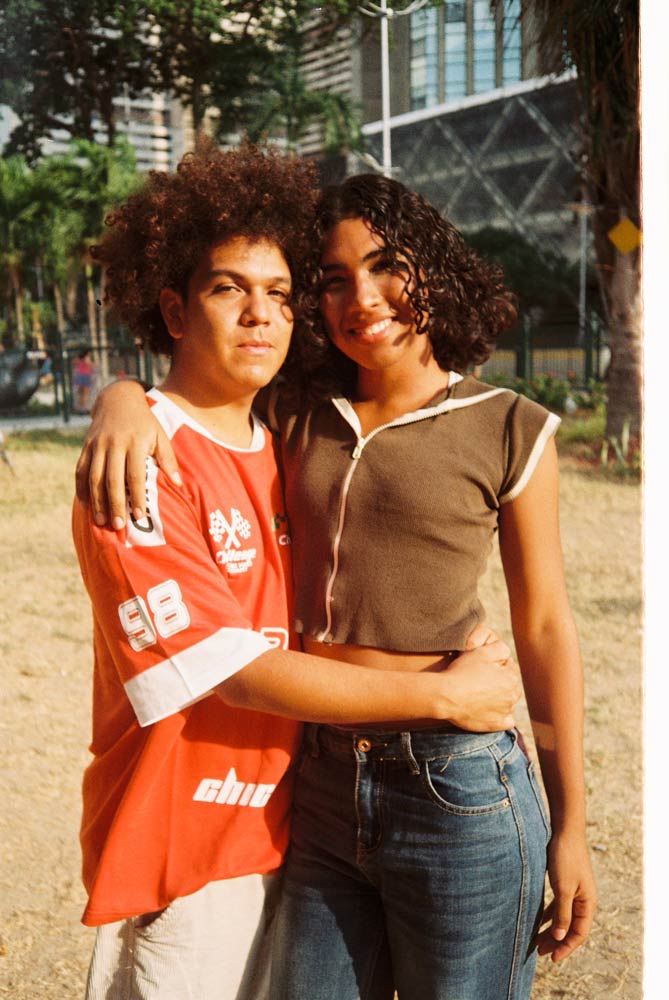
Venezuela is not being liberated.
It is being invaded.
And this is not only about the country it is about Latin America and the Caribbean too.
Sovereignty does not belong to a dictator. It belongs to the people. A dictatorship does not erase a nation’s sovereignty. But sovereignty also does not mean governments can do whatever they want. States have obligations to protect life and human rights, which did not happen in Venezuela. Human rights violations do not automatically justify foreign military intervention. History shows us that these interventions never lead to freedom.
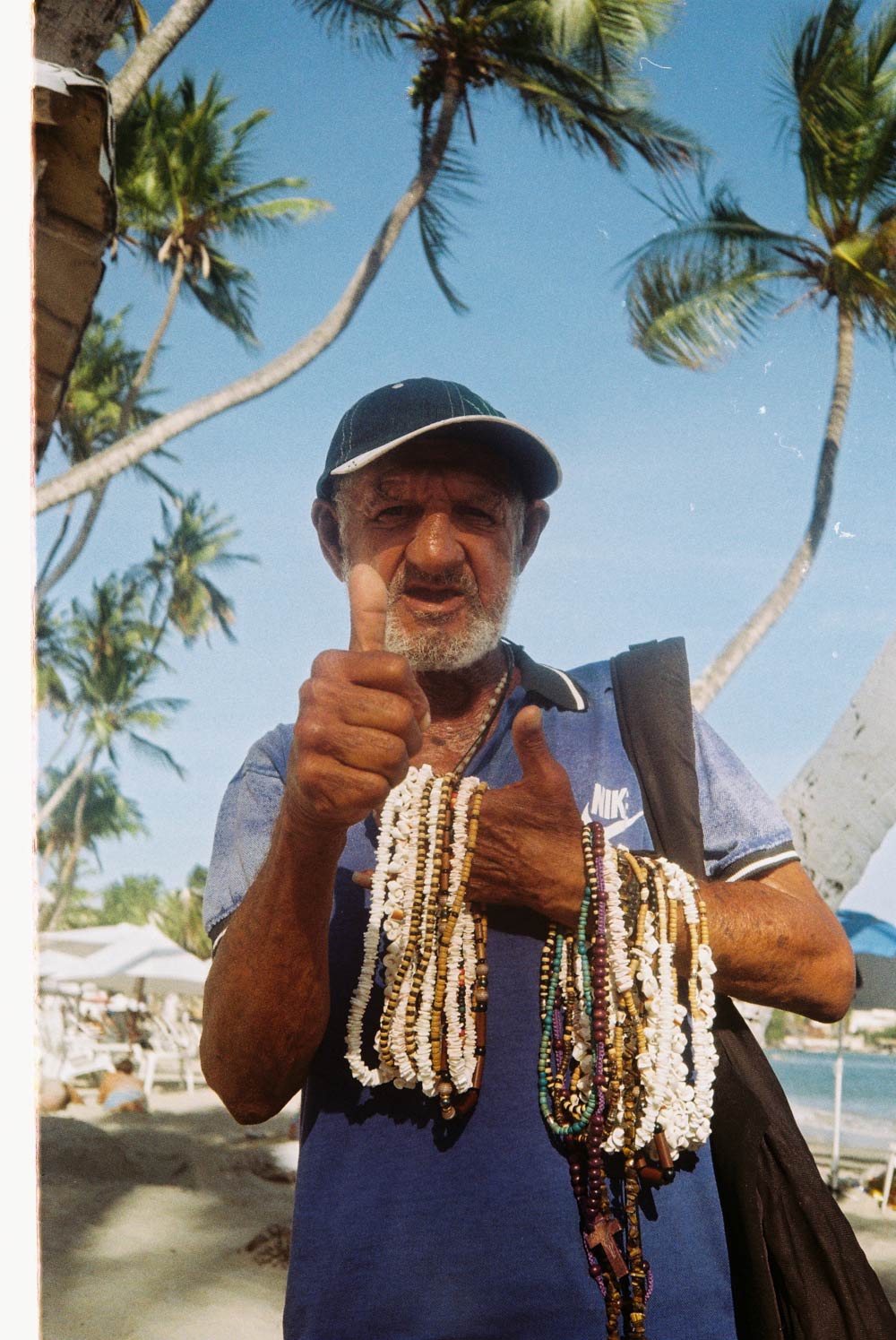
Believing that a genocidal, imperial state like the United States will save us or even care about us makes no sense. Thinking that an empire will liberate you is not freedom; it’s desperation shaped by racism and centuries of colonial conditioning. But let’s stop romanticizing all empires: the U.S., Europe, Russia, China. None of them are liberators. The same applies to figures like María Corina Machado, who has made it clear that she is ready to work with leaders responsible for genocidal violence.
Yes, Maduro and the government destroyed Venezuela. Yes, the oil was stolen. But the crime of one does not justify the crime of another. A dictatorship does not turn an invasion into a liberation.
Rejecting Maduro does not mean endorsing bombs or the United States.