

I am writing this from Armenia, a place where ecological vulnerability is not abstract. It is visible in the scarred hillsides of mining towns, in rivers that run cloudy after rain, in the slow anxiety of communities living near tailings and dust. I have stood at the edges of these landscapes and felt the weight of their histories of extraction, dispossession, and the quiet persistence of people who continue to live beside damaged land.
But most days, my first encounter with ecological crisis does not come from the ground beneath my feet. It arrives through a screen: a satellite image of wildfire smoke drifting across continents, a video from India showing the water level has dropped to the bottom of a well, or footage of logging in the Amazon, shared by someone I will never meet.
Living between these two realities, the wounded places I know intimately and the global emergencies I witness digitally, is the tension that brought me to this piece. Because the truth is, digital culture is both a tool for ecological resistance and a force that deepens ecological harm. It has become a “master’s tool,” and reclaiming it is an imperative that doesn’t guarantee, or rather, most probably won’t dismantle the master’s house. But it is worth trying, as humanity’s evolution has gone hand in hand with the technology it has developed. We cannot choose one side. We live, work, ad fight inside the contradiction.
We live in a moment when crises do not occur one after another, but all at once, overlapping and accelerating each other. Climate instability, resource depletion, and the relentless pace of digital technologies merge into a single, planetary weather system. Speaking about the environment today means speaking also about satellites, servers, lithium mines, data centres, as well as about rivers and forests. Nature has entered the circuits; the digital has dissolved into our sense of the living world. And our screens bring these worlds together.
They overflow with distress signals: drone footage of disappearing forests, satellite maps of smoke, TikToks documenting water shortages in India or waste-polluted rivers in Armenia. These images shape the emotional terrain in which ecological resistance takes place. They can ignite urgency or, through sheer repetition, dull our senses. They can build solidarity or turn catastrophe into spectacle. Digital culture becomes both a witness and participant in the crisis it reveals.
And yet inside these very circuits, resistance is growing. Communities have learned to use digital tools not only to consume information but to document harm, demand accountability, and gather evidence for ecological truth-telling: Indigenous forest defenders in Brazil fly drones over illegally logged territories; Kenyan organizers in the Save Lamu movement use mapping apps and citizen media to track the expansion of destructive megaprojects. In Armenia, environmental groups monitor toxic runoff, trace water contamination and use digital archives to counter official narratives. In these moments, technology becomes something else: a way to make visible what would otherwise be hidden. A terrain of ecological witnessing.
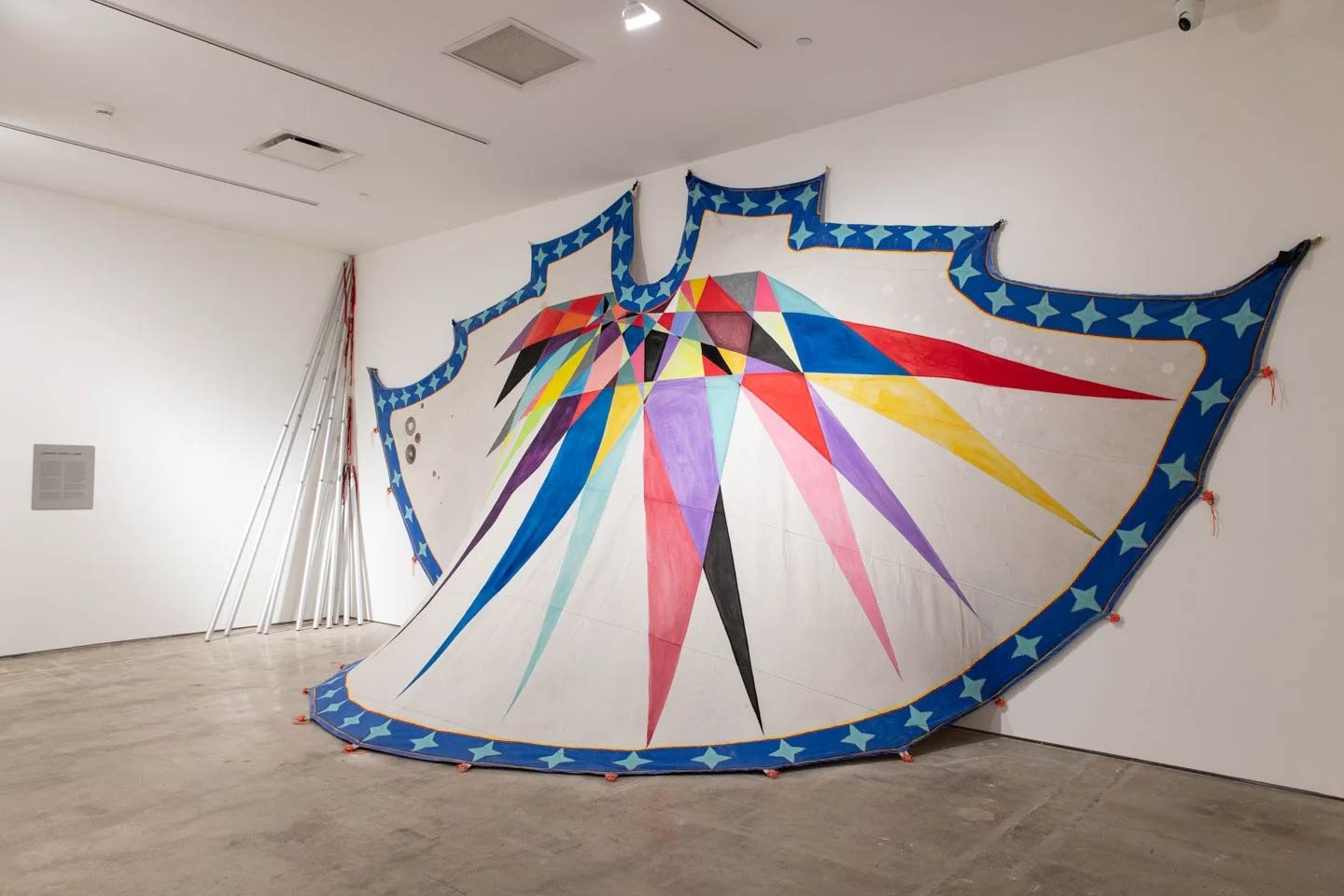
Artists and researchers contribute their own counter-visions. Cannupa Hanska Luger’s We Survive You (2021) asserts Indigenous futurity in the present tense, refusing narratives of disappearance. Krista Kim’s Mars House (2021) transforms virtual space into an experiment in how we might inhabit the planet with more intention. Forensic Architecture uses open-source digital tools to track environmental violence and state neglect, proving that digital evidence can support public truth rather than state surveillance.

But there is another truth: the very infrastructure enabling this resistance are themselves deeply entangled in extraction. The “cloud,” despite its name, is a physical landscape of water, minerals, and energy. The cobalt in our phones comes from mines in the Congo; the lithium in batteries is drawn from Chile’s salt flats; the rare earths enabling our screens are pulled from the soils of Mongolia and China. Data centers in Ireland, Arizona and the Netherlands draw millions of litres of water from fragile ecosystems. As Kate Crawford reminds us in Atlas of AI, every digital gesture, every upload, every click has a material footprint. Ecological resistance cannot treat the digital as immaterial.
They are made of land.
They are made of harm.
This is the contradiction at the heart of our moment: the digital is both weapon and wound.
These works embody what Demos calls “radical futurisms”, counter-imaginaries rooted in Indigenous knowledge, Black radical traditions, abolitionist aesthetics, and multispecies solidarity. They reject the colonial timelines of “progress” and instead imagine futures braided with justice-to-come.
Another tension lies in how we experience time. Ecological harm unfolds slowly: soil thins over years, aquifers drop quietly, species vanish without spectacle. These “slow violence,” in Rob Nixon terms, rarely fit the pace of digital media. Platforms reward the urgent, the dramatic, the instantly shareable. Long-term crises, the ones shaping our future, struggle for attention in a world built to forget. T. J. Demos describes this mismatch as chronopolitics: the politics of time and the unequal access to futures shaped by it.
In other words, the digital world is built for speed; the ecological world is built for duration. Living inside this gap requires new forms of attention.
This is where alternative media and artistic practices matter. When algorithms reward only what is new, they generate opportunities to witness processes that unfold over decades. They also offer a path to imagine ecological futures on platforms designed to erase duration.
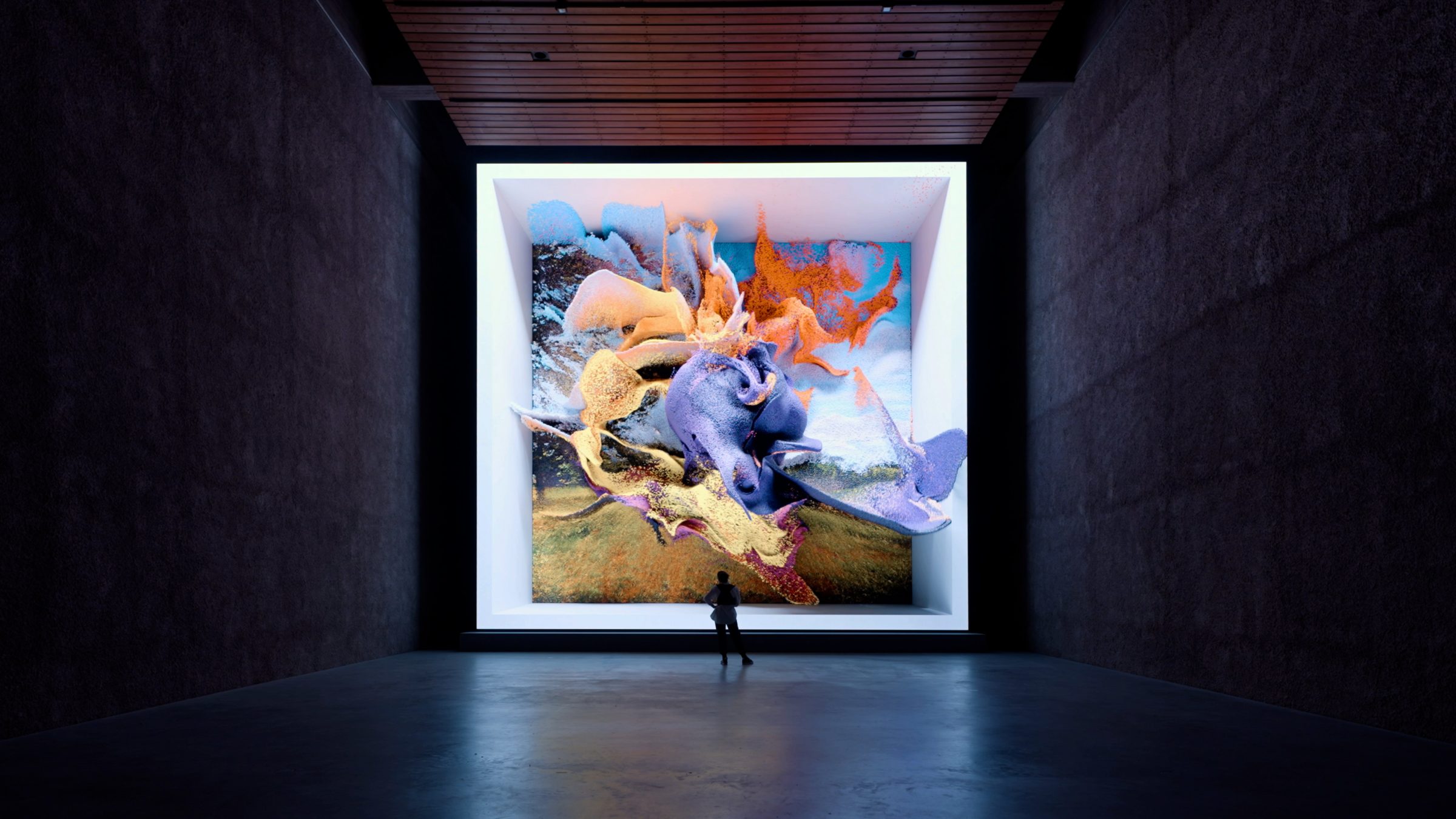
Indigenous digital cartographies like Native Land Digital disrupt colonial mappings by returning story and memory to place. Citizen-sensing projects measure air and water quality through community-built technologies. Climate archives such as Data Refuge preserve vulnerable environmental datasets at risk of political erasure. Refik Anadol’s Machine Hallucinations: Nature Dreams reimagines ecological data as a sensory landscape, allowing us to feel patterns we cannot see.
These practices cultivate attention, memory, and duration, qualities that ecological survival depends on. They model what Demos describes abolitionist aesthetics: ways of seeing that dismantle extractive habits and replace them with care, kinship, and imagination.
Through these entanglements, a new political subject emerges, whose ecological awareness is shaped by both lived experience and digital meditation. We feel climate change through heatwaves and disappearing rivers, but also through satellite maps and algorithmic feeds. We understand extractivism not only through local wounds but through the vast ecological webs we encounter online. This hybrid experience shapes our politics, our emotional life, and our collective imagination. And imagination is where the stakes feel most urgent to me. The future is not only a scientific or environmental problem. It is also a narrative problem, a question of what stories we allow ourselves to believe. Ecological resistance today is not one but many: unfolding across scales: rivers and servers, wetlands and websites, forest guardians and citizen sensors, Indigenous futurisms and open-source archives. These are not separate struggles, but a constellation held together by the desire to keep the world alive.
The storms ahead–literal and metaphorical–will demand alliances that cross borders, disciplines, and species. To write about these entanglements now is to insist that another future is still possible, even as the present narrows. It is to claim that the contradictions of the digital age are not reasons for despair, but starting points for deeper forms of responsibility.
A future where attention becomes a form of care.
Where data becomes a commons.
Where technology serves stewardship rather than extraction.
Where our stories and our ecosystems learn to breathe together once more–
In the same circuits, under the same sky, on the same fragile planet.