

The Cruel Irony of the Bezos-Sánchez Empire
Late on January 25, as snow dusted Washington, about 60 foreign correspondents at The Washington Post hit send on an email that felt like a last stand. They had dodged gunfire in Ukraine, documented Iran’s water crises and protester crackdowns, risked sources’ lives in gang territories. Now they faced their own existential threat: rumors of up to 300 company-wide layoffs, with foreign desks, sports, metro, and arts likely gutted. Their collective letter to owner Jeff Bezos was direct, almost pleading.
“Robust, powerful foreign coverage is essential to The Washington Post’s brand and its future success in whatever form the paper takes moving forward,” they wrote. “We urge you to consider how the proposed layoffs will certainly lead us first to irrelevance, not the shared success that remains attainable.” They offered flexibility on costs but drew a line: slashing overseas reporting in Trump’s second term, amid global flashpoints, would hollow out the institution they had built.
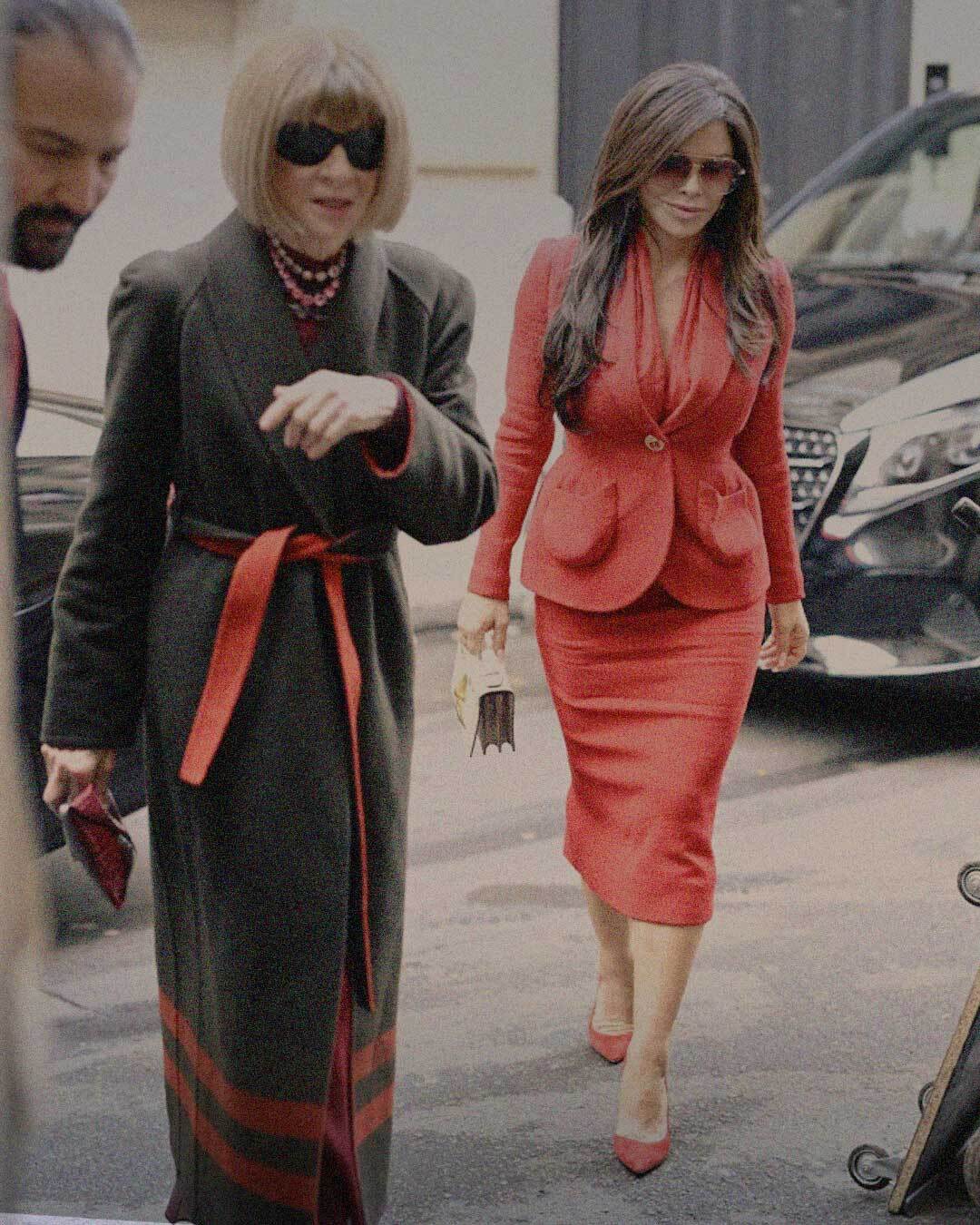
Whether Bezos opened that email remains unclear. As of this writing, he has not publicly responded to it. In fact, Bezos was 4,000 miles away, strolling hand-in-hand with Lauren Sánchez Bezos into Schiaparelli’s Haute Couture show in Paris. Flashbulbs popped as they arrived, Sánchez in a blood red skirt suit from the house and a white crocodile bag. Hours on, she switched to a steel-blue-gray vintage Dior pencil-skirt suit, its enormous fur collar evoking a mob wife, for Jonathan Anderson’s couture debut with the house.
The two didn’t just sit front row, either. Backstage at Dior, Bezos and Sánchez posed with Anderson and LVMH CEO Delphine Arnault. Sánchez lunched with Anna Wintour at The Ritz and was allegedly dressed by Law Roach, the “image architect” behind Zendaya’s accession to fashion darling, who once declared fashion’s power to challenge norms and amplify the marginalized. Roach reshared Sánchez’s Instagram stories, crediting the vintage Dior; later, they toured Schiaparelli’s atelier together. The partnership felt sudden and loaded.
Back in D.C., the newsroom simmered. Staffers posted on X under #SaveThePost, Yeganeh Torbati recounting government violence against protesters, Loveday Morris describing blasts rattling windows and the mortal risks to sources, tagging Bezos directly in urgent appeals. In a guild-prompted twist meant to amplify the message, the Washington-Baltimore News Guild encouraged tagging even Lauren Sánchez, though not every reporter followed through. The betrayal stung deeper after years of buyouts, a libertarian-tilted Opinions section, a rebranded mission (“Riveting Storytelling for All of America”) that rang corporate. Losses topped $100 million in 2024 and now the axe is hovering over desks that produced the scoops Bezos once praised when he bought the paper for $250 million in 2013. Now, Bezos parties on in Paris, his wife climbing fashion’s ranks.
While the billionaires party, a profound unease is permeating the American media landscape, exacerbated by political shifts and technological disruptions that empower owners like Bezos to sideline core missions in favor of personal ventures. The press, once a vigilant watchdog against authority, now frequently finds itself complicit with power structures, buckling under misinformation, partisan censorship, and budgetary constraints that stifle investigative depth. This dynamic deprives the public of the unflinching journalism that is capable of exposing foreign policy overreaches or everyday human struggle, amplified by economic slowdowns and subscription fatigue in an increasingly fragmented ecosystem. With eroding confidence driving audiences to social platforms, now eclipsing traditional TV and websites as the primary news source in the U.S., the fallout further deepens this public distrust.
To be clear, fashion isn’t innocent in this. It loves to posture as progressive, touting body positivity, diversity, resistance as it’s relevant, but rolling out the red carpet for the ultra-rich when the checks clear, especially when the checks come from people whose fortunes are built on real harm. Once upon a time, you couldn’t simply buy your way into the Met Gala; invitations were curated by Wintour based on cultural relevance, creative influence, and a carefully guarded sense of who truly belonged in the room. That’s all over now. The Bezoses have turned every norm in fashion on its head, sponsoring the 2026 Met Gala (funding the event and reportedly influencing invites), making their debut as a couple in 2024, and now leveraging those ties to claim space in couture’s inner circles. Bezos and Sánchez’s couture jaunt is just the latest proof that fashion’s gates, once guarded by creativity and taste, now swing widest for raw wealth and access.
Wintour lunches and their prominent sponsorship role in the Met Gala don’t help quell the whispers that Bezos is eyeing Condé Nast (Vogue, Vanity Fair, The New Yorker) as a “wedding gift” to Sánchez. Rumors denied yet persistent, revived by every Paris sighting.
Not everyone in fashion is staying silent. Some insiders are pushing back hard against the normalization. Gabriella Karefa-Johnson, a longtime voice in the industry, posted bluntly on X: “The hyper normalization is doing my head in… keep your mouth shut about ICE if you’re mingling with them, seating them, dressing them. Accepting their cash.” She called out Amazon’s cloud systems as the backbone of DHS deportation operations and billions in government contracts that sustain what she called “Trump’s terror machine,” concluding that Bezos and Sánchez are at couture simply because they are rich—and their wealth comes from profoundly harming millions daily. “I feel crazy,” she wrote. While couture has always been a bastian of the uber-rich, Karefa-Johnson’s frustration underscores how even fashion’s own are starting to question the cost of that welcome.
If that Conde-Nast deal ever materializes, the consequences would compound because control over fashion’s most influential titles would allow Bezos the opportunity to shape narratives around billionaires, soften coverage of labor abuses, environmental costs, or surveillance contracts. The same hand that funds AWS’s CIA contracts, DoD cloud deals, ICE enforcement tools, fossil-fuel operations, warehouse injuries, anti-union tactics, and small-business-crushing monopoly would quietly steer the stories about wealth and style. Already deferential to its biggest advertisers and attendees, fashion journalism would fold into the same closed loop, fusing tech dominance with cultural gatekeeping into one unassailable private empire—all of it ultimately bankrolling the yachts, the space joyrides with Katy Perry, the private-jet hops to couture shows and fashion influence, to polish an image that the Post’s own reporters once might have skewered.[x] It’s almost elegant the way one empire’s dirt gets laundered through another.
It’s cruelly ironic how wide the gap between the risks assumed by WaPo correspondents tasked with holding power to account and the comfort with which their owner moves among the powerful in Paris actually is. Fashion has political power, as Roach once said. It can challenge and provoke. It can also resist. But when it courts figures like Bezos, whose empire thrives on the very inequalities it sometimes pretends to critique, it becomes another asset in his already enormous portfolio.
But there is no challenge, no provocation. There is no major resistance. Instead, there’s champagne and constant disassociation. Somewhere between the clink of glasses and the photos, Bezos and his wife get a glow up while The Washington Post newsroom waits, knowing the cuts are coming but not yet here. No one is confused about what happened; this is simply how the trade now unfortunately works.
Wealth drifts through media, fashion, culture, picking up prestige and shedding people along the way. Whether Bezos ever read the letter is beside the point. The stranger thing is how little anyone expects him, or anyone like him, to answer anymore.